Life-science instruments
Synthetic Genomics
Senior Systems Engineer · September 2013–June 2018
DNA-assembly hardware, measurement tools, and laboratory automation
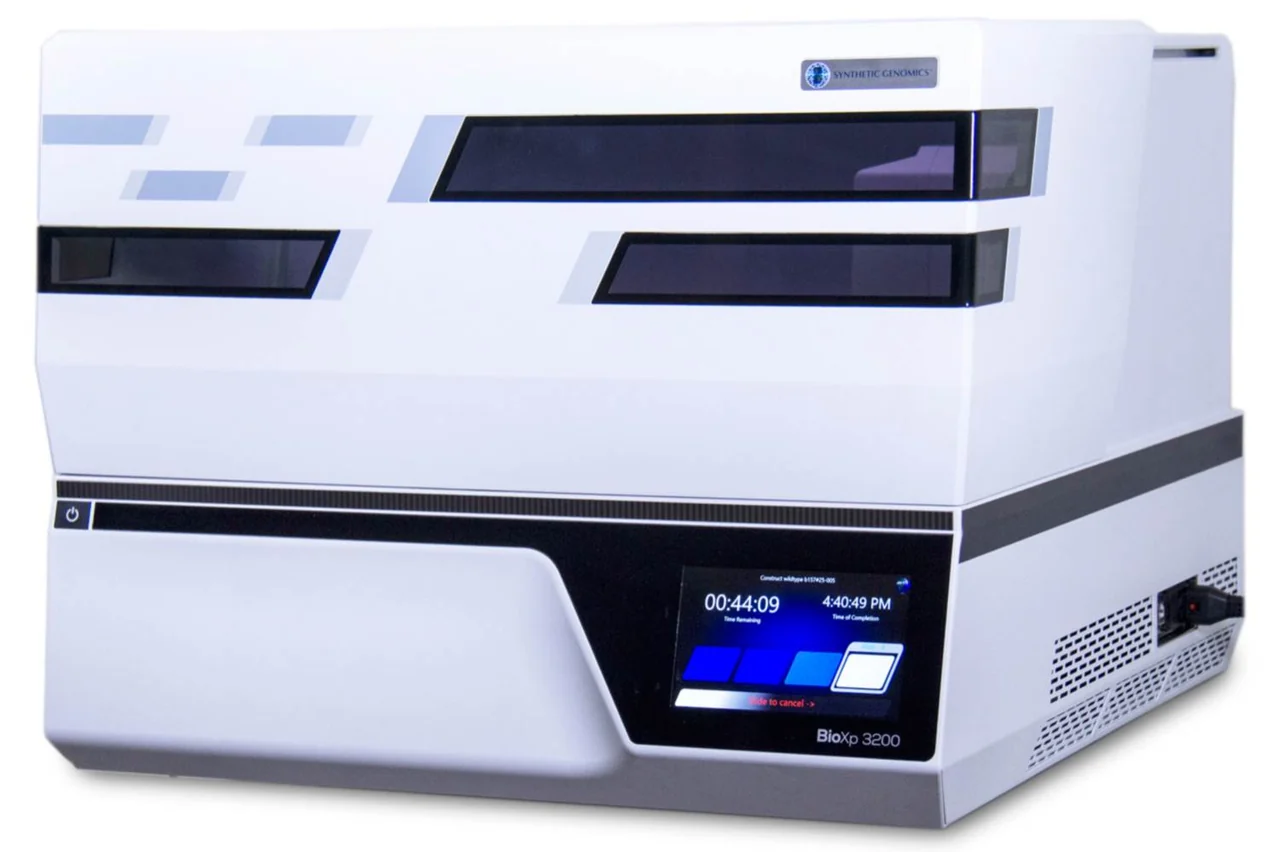 Enlarge imageEnlarge: BioXp 3200 laboratory instrument.
Synthetic Genomics’ BioXp 3200 automated the bench work of building custom DNA from shipped pools of short strands. Across nearly five years, I designed core optical, motion, and thermal hardware inside the instrument, built a 48-probe thermal measurement system and LabVIEW suite to verify what actually happened on the reaction deck, and led safety certification and factory quality procedures for the team’s first commercial shipments.
Later, I designed an automated RNA-production instrument and a centralized power-and-control module for the Digital-to-Biological Converter (DBC) workcell—directing integration across internal engineers, software specialists, and outside manufacturers to bring DNA synthesis, DNA assembly, and RNA production onto one shared platform.
Designing BioXp hardware
Before starting an automated DNA build, BioXp had to verify its supplied Oligo Vault reagent cassette and inspect biosecurity seals for signs of tampering. I co-invented the patented tamper-resistant assembly (U.S. Patent 10,017,306) and designed the compact camera housing, circuit board, and integrated UV/visible lighting module—alongside the CNC-machined adapter joining the horizontal and vertical motion axes and the deck thermal-cycler hardware.
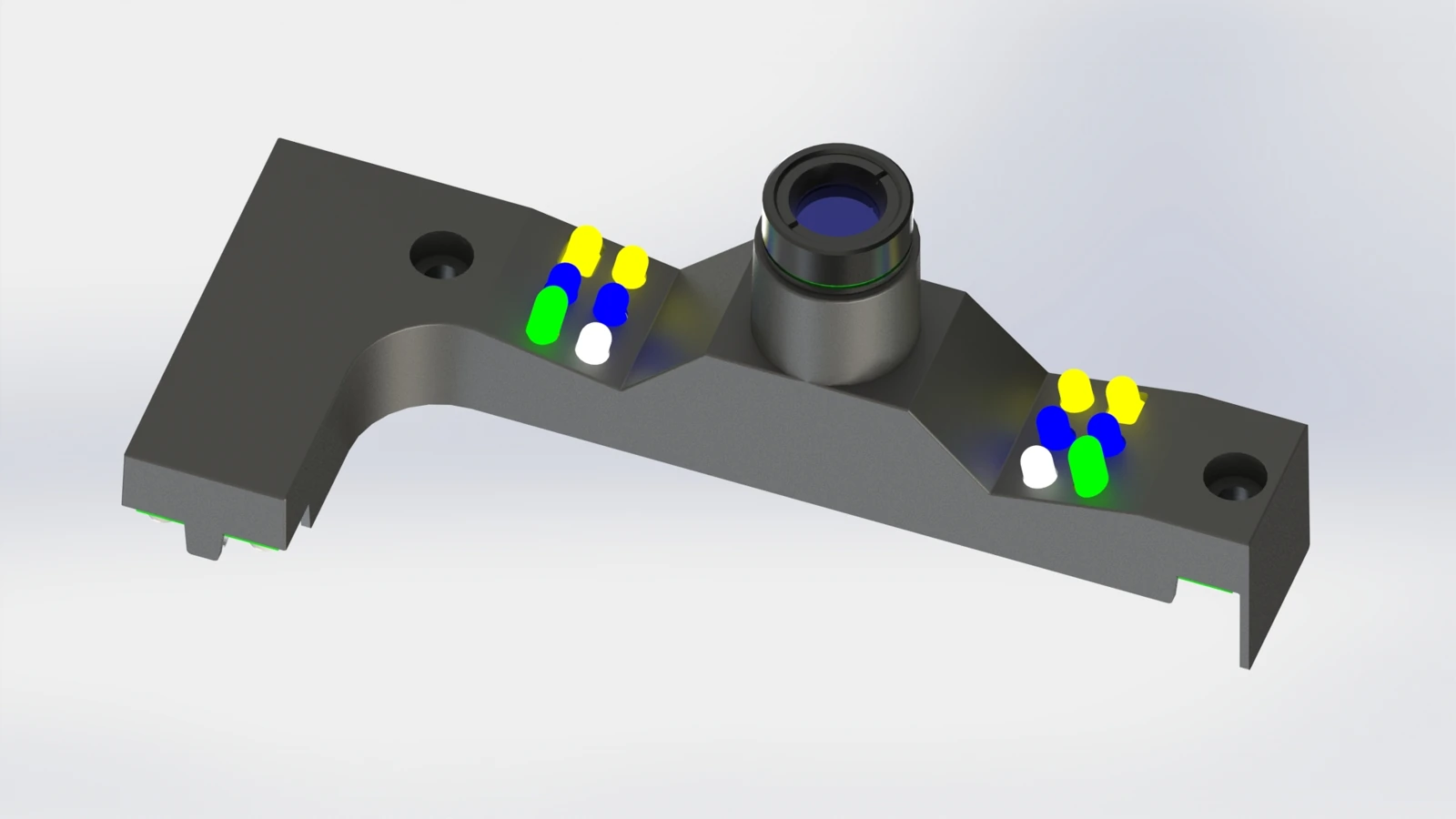 Enlarge imageEnlarge: Complete camera and illumination assembly viewed from the lens side.
Measuring what happened at the reaction area
Commanding a heater or a pipette in software doesn’t prove the sample experienced the right conditions. I designed the 48-probe ThermaProfiler—mechanics, reaction-mass probes, custom electronics, enclosure, and LabVIEW spatial-mapping software—and created multi-dye plate-reader assays to measure cumulative liquid-handling error without interrupting a run. With the team, I also upgraded manufacturing calibration fixtures and software, cutting combined position and thermal calibration from more than seven hours per machine to under forty minutes.
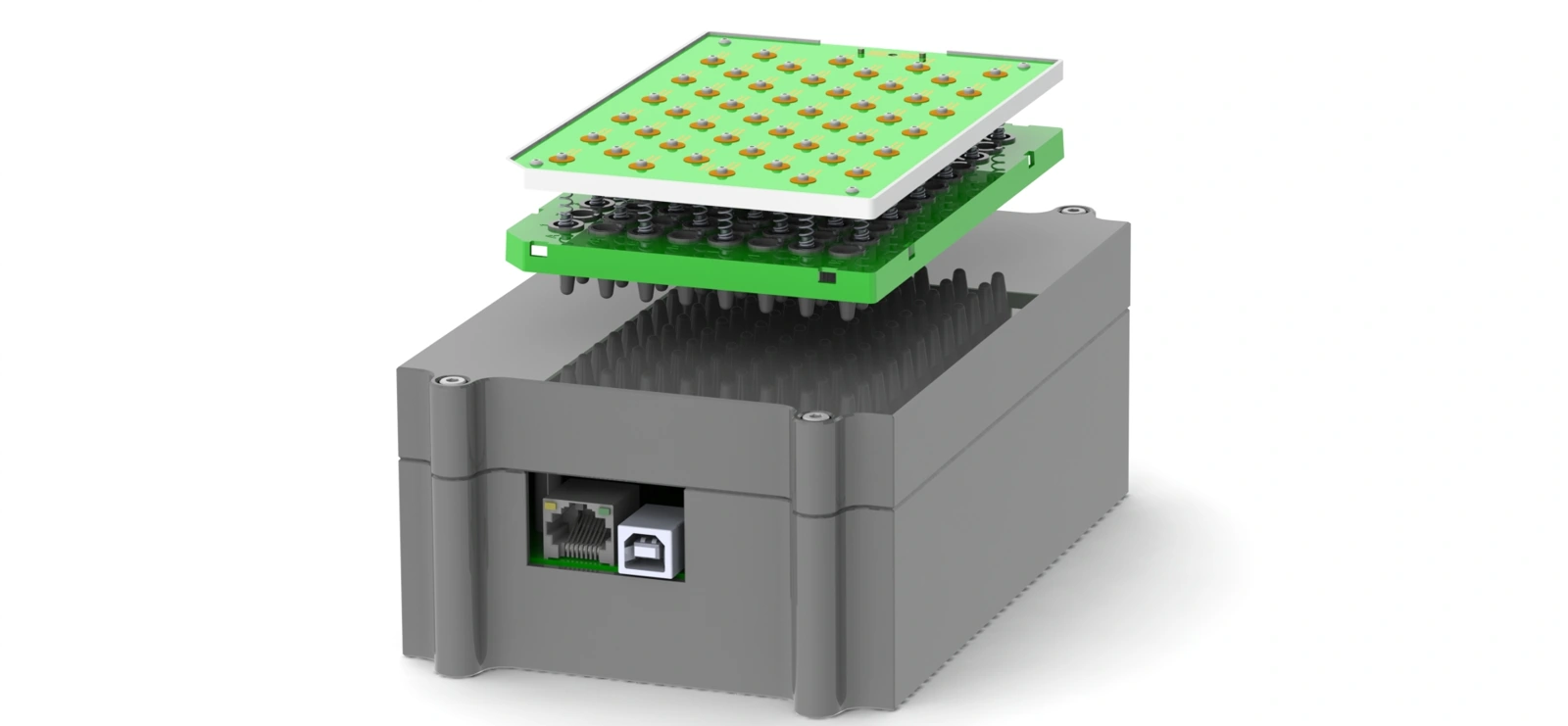 Enlarge imageEnlarge: Rendering of the ThermaProfiler probe array above its separate electronics enclosure, shown together for scale.
Preparing BioXp for release and manufacture
To clear BioXp for its first commercial sale, I coordinated independent NRTL electrical-safety and EMC testing, worked with the product team to resolve thermal and interlock findings, and put incoming, production, and RoHS/CE quality procedures into daily factory use.
To catch faulty modules before final instrument assembly, I also scoped a guided subassembly test strategy prioritizing electrical-board checks and simple sensor verifications linked to each module’s build record.
Designing illumination for algae research
I developed an automated culture-lighting system for an internal algae-research group—working through requirements, engineering design, and budget with the researchers in that group to deliver the system on time and under budget.
For a next-generation light box requiring uniform, programmable illumination, I evaluated optical and cooling simulations alongside the tradeoff between a simpler shared LED-driver layout and a distributed board design with board-level fault isolation.
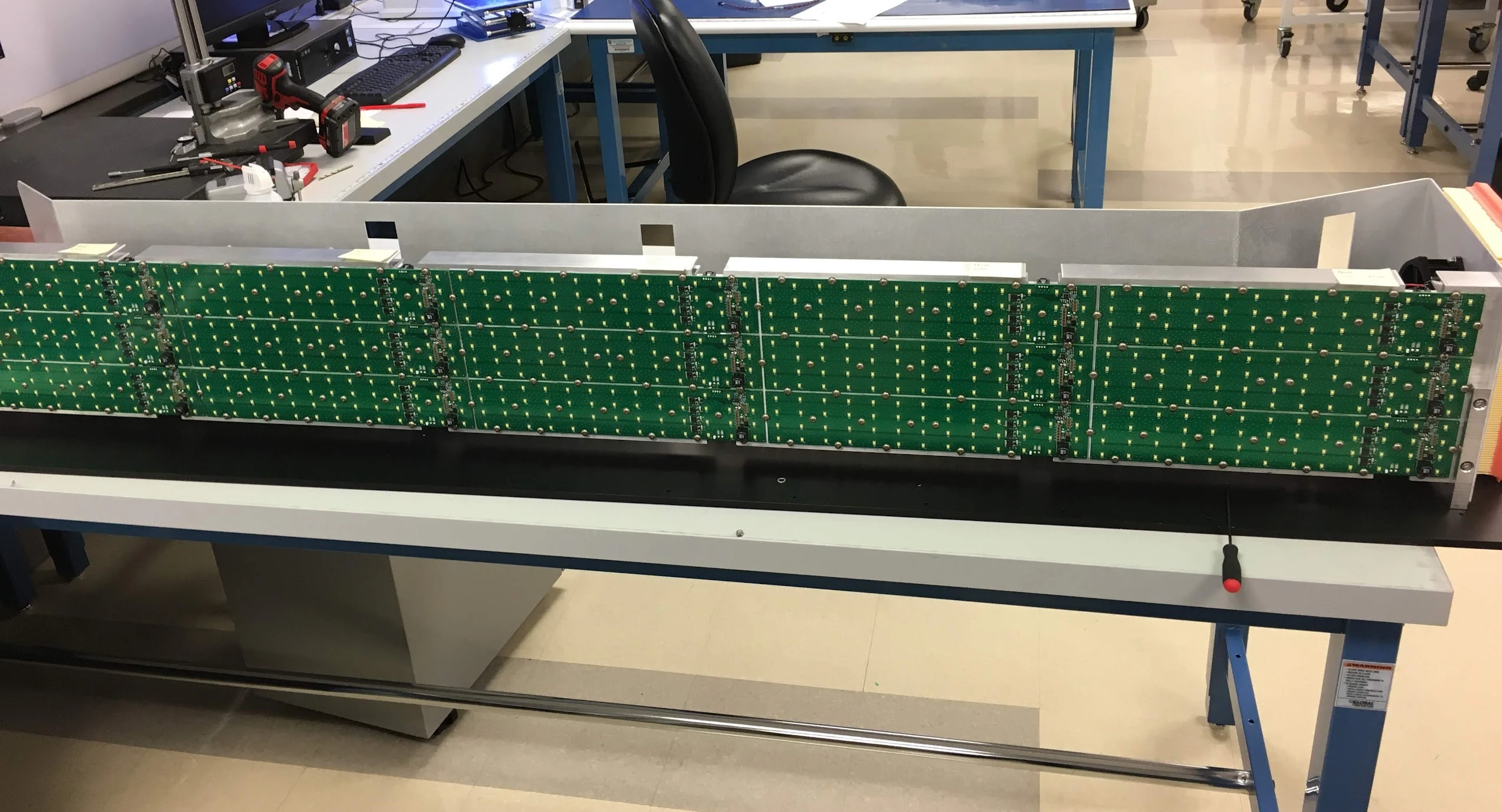 Enlarge imageEnlarge: Tiled multi-board LED and driver PCBA assembly inside the sheet-metal light-box housing built for programmable algae-culture illumination.
Developing an instrument for RNA production
To extend automated workflows from DNA into purified RNA, I defined equipment requirements and designed the mechanical clamping, dual-zone thermal control, electrical hardware, and pneumatics around a replaceable microfluidic cartridge—iterating closely with our scientific team on chemistry interfaces and outside vendors on cartridge fabrication.
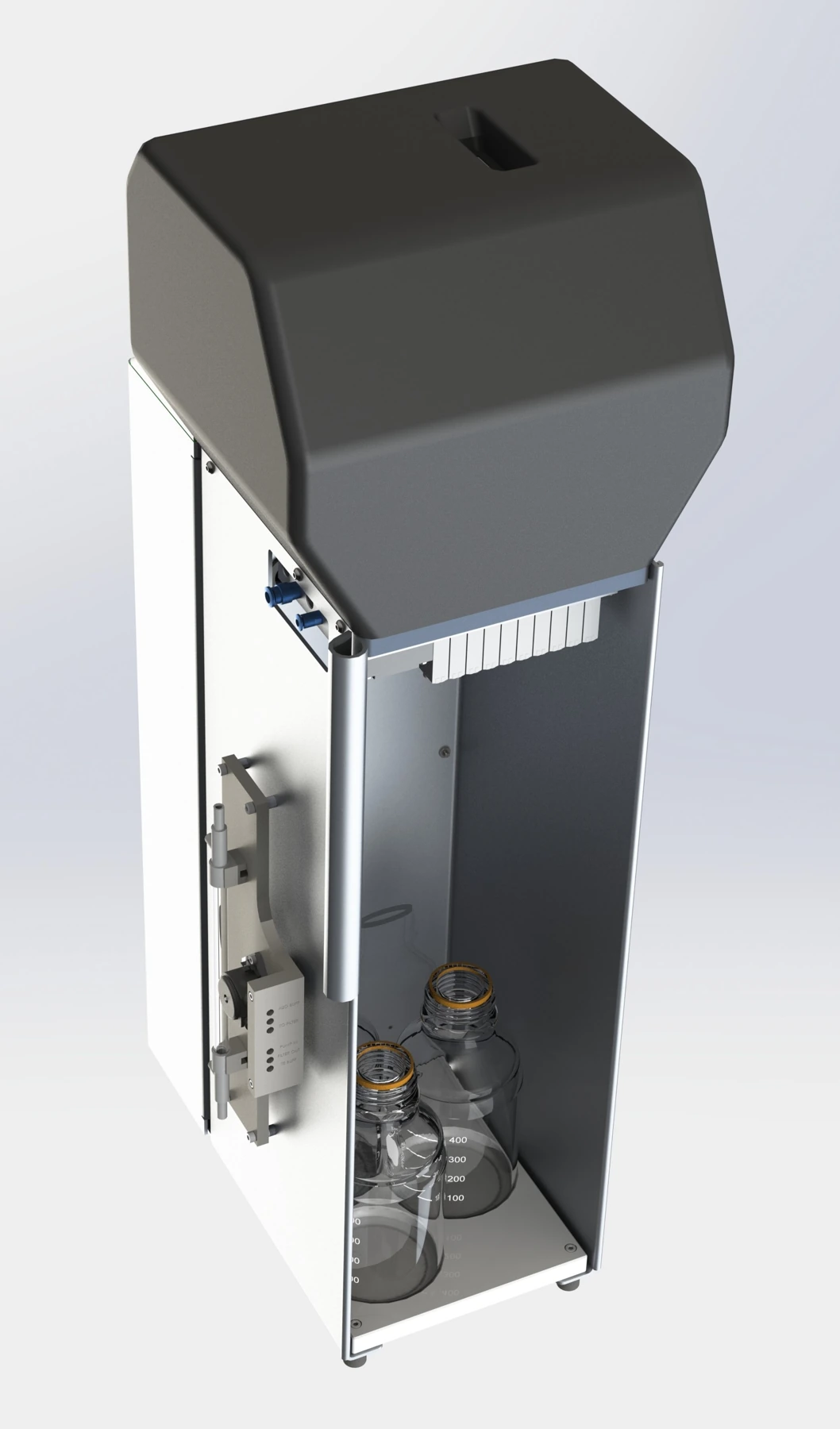 Enlarge imageEnlarge: Complete RNA instrument with its enclosure and accessible lower assembly.
Connecting three instruments in one workcell
The later DBC workcell united short-strand DNA synthesis, DNA assembly, and RNA production on one automated deck. I designed its shared power, pneumatic, vacuum, and computing module and directed physical and interface integration—guiding a contract mechanical engineer on the detailed workcell layout while software and firmware specialists built the sequencing controls. Individual process stages were demonstrated ahead of full workcell integration as my tenure concluded in 2018.
Published DBC research
An earlier DBC system demonstrating digital-to-biological conversion was published in Nature Biotechnology in 2017 and acknowledges my contribution; while separate from the later unified workcell above, the paper and public talk share the wider program context.
Experience used here
CAD / SOLIDWORKS · Mechanical and electrical design · Laboratory automation · LabVIEW · Measurement and calibration · Microfluidic-device integration · EMC · NRTL coordination · CE and RoHS documentation · Quality systems · Vendor development · Engineering leadership