Synthetic Genomics
Measuring BioXp’s temperature and liquid transfers
Senior Systems Engineer · 2013–2018
BioXp assembled DNA through dozens of automated liquid transfers and temperature cycles, and we needed to know what samples actually experienced inside the wells—not just what the software commanded. Starting in 2015–2016, I developed the complete 48-probe ThermaProfiler: its mechanical fixture, reaction-matched probes, custom acquisition electronics, enclosure, and LabVIEW visualization software.
Alongside thermal profiling, I developed multi-dye optical assays to check cumulative pipetting accuracy and worked with the team to slash factory calibration time per machine.
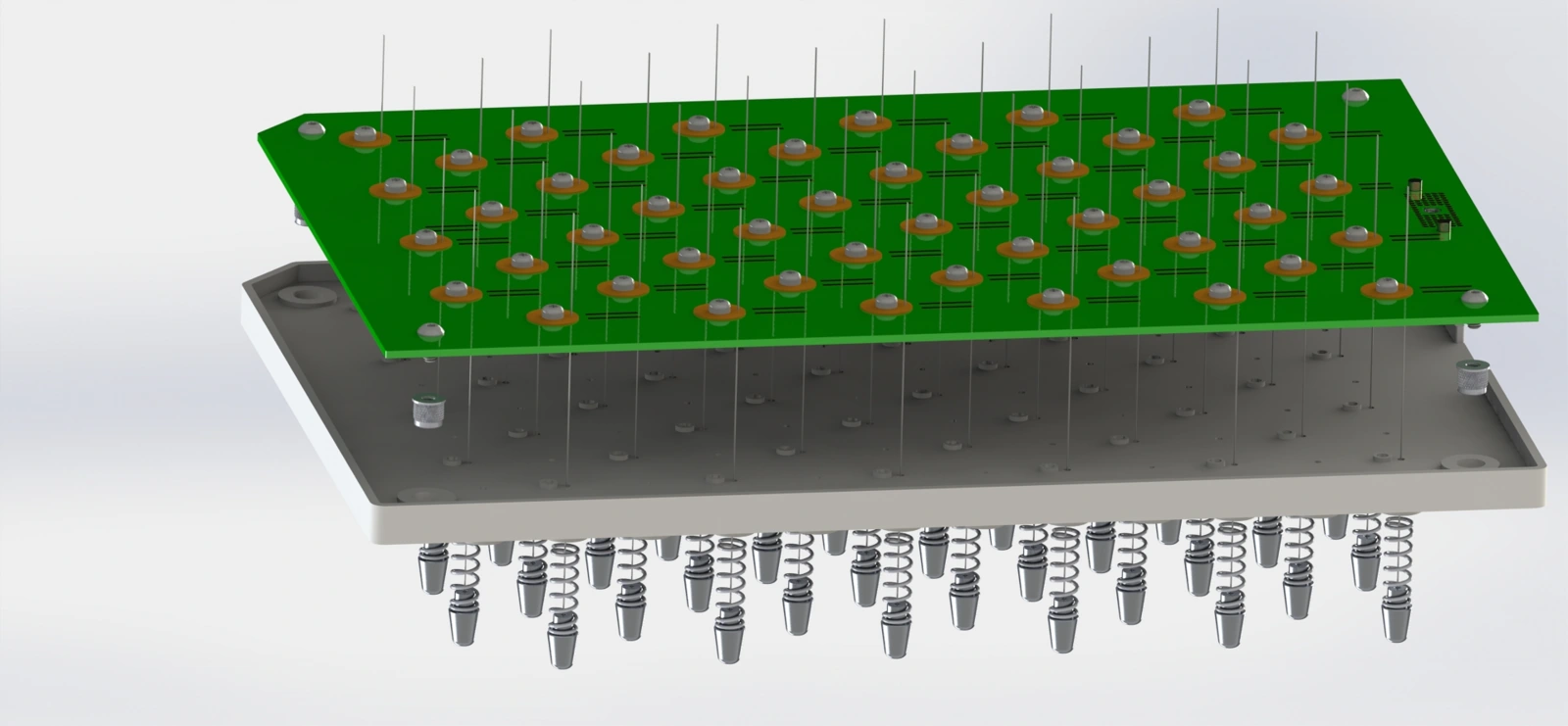
48 probes across the reaction area
- Spring-loaded contact.
- Probe body designed to approximate a small liquid reaction.
Designing the probe around the reaction
A bare temperature sensor doesn’t heat and cool like liquid in a sample well. I sized each probe body around the thermal mass of a 50 µL water sample so its transient response mirrored a real biological reaction, using spring-loaded contacts to keep seating pressure uniform across all 48 wells.
To move away from painstaking hand assembly, I then worked with a sensor supplier to mold the thermistor sensing element directly into a custom probe body—cutting build time and substantially lowering per-probe cost while verifying response curves against thermal models and bench hardware.
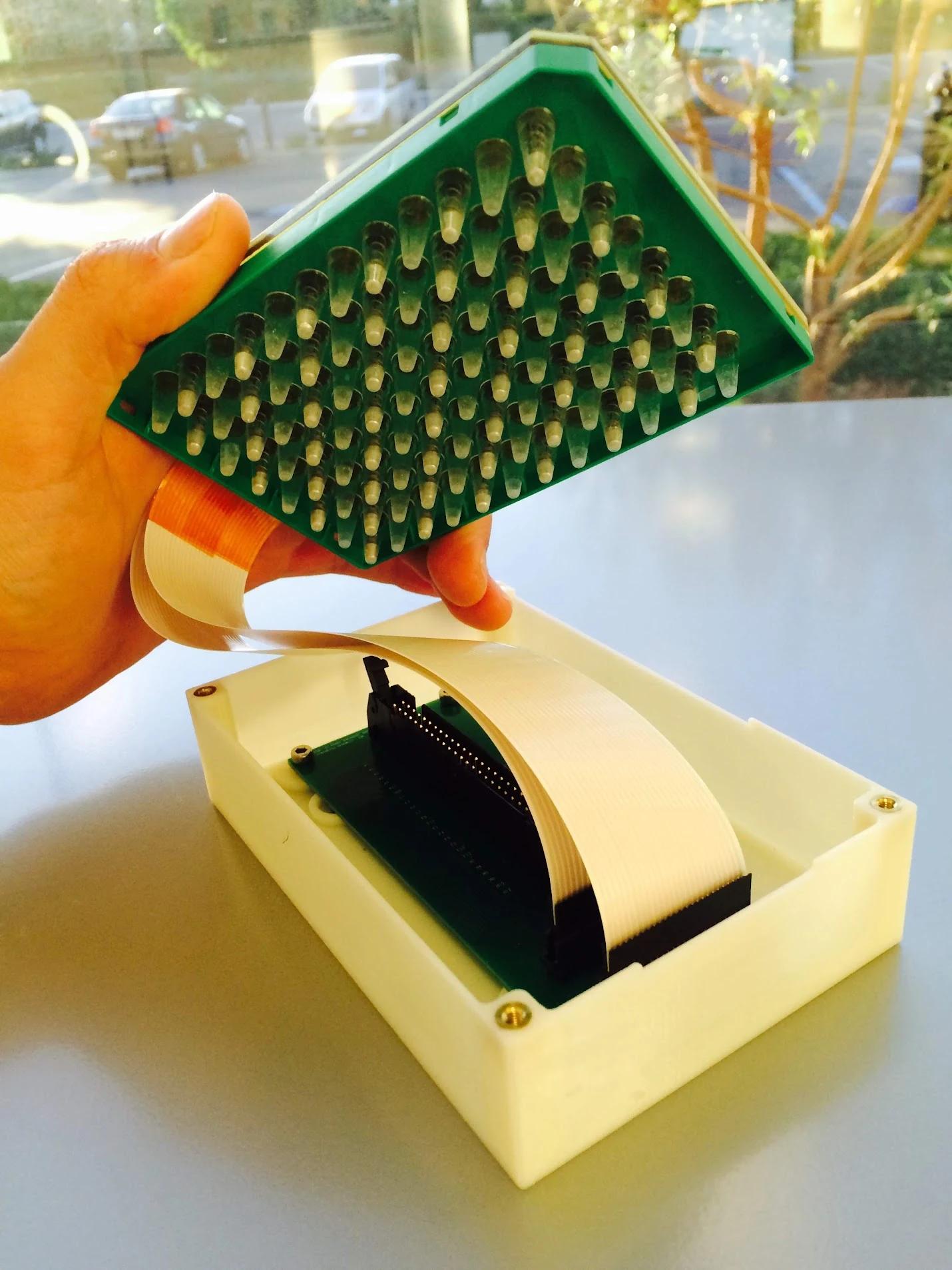 Enlarge imageEnlarge: Custom multi-well temperature-calibration fixture built at Synthetic Genomics: a PCB array of potted thermistor probe tips matched to thermocycler wells, connected by ribbon cable to a breakout enclosure for automated thermal verification.
Comparing temperatures across the reaction area
I designed the original data-acquisition electronics and enclosure and wrote the LabVIEW application that read all 48 channels and applied individual probe calibrations in real time.
Live plots tracked heating and cooling ramps at each well while an interpolated spatial heat map revealed hot or cold zones across the plate at a glance, logging full run files for R&D troubleshooting and factory acceptance checks. A supplier later produced a revised version of the electronics assembly for ongoing use.
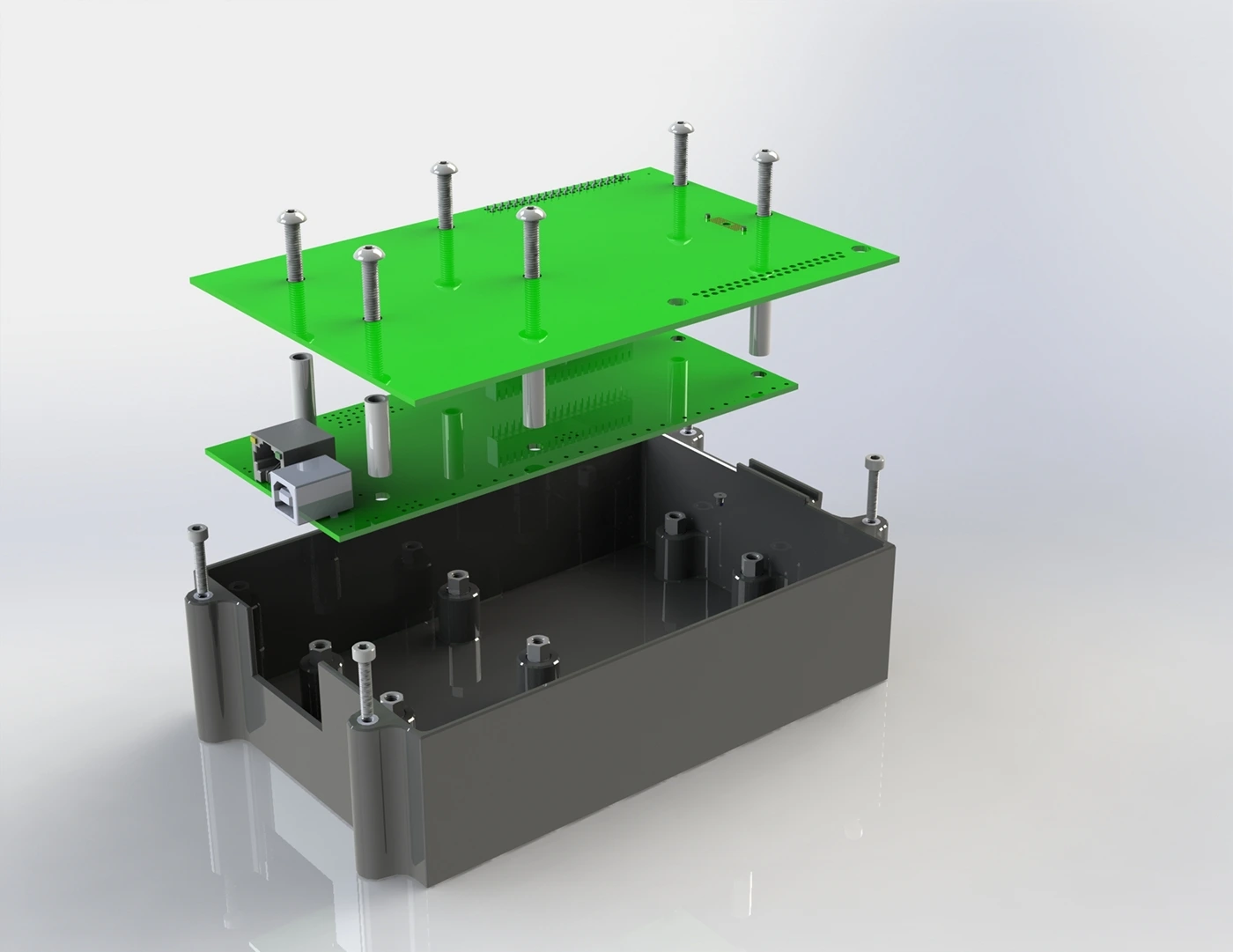 Enlarge imageEnlarge: Exploded enclosure showing the acquisition board, signal-conditioning circuit board and their mechanical connections.
Temperature across the reaction area
Displayed map scale: 19.82–21.84 °C
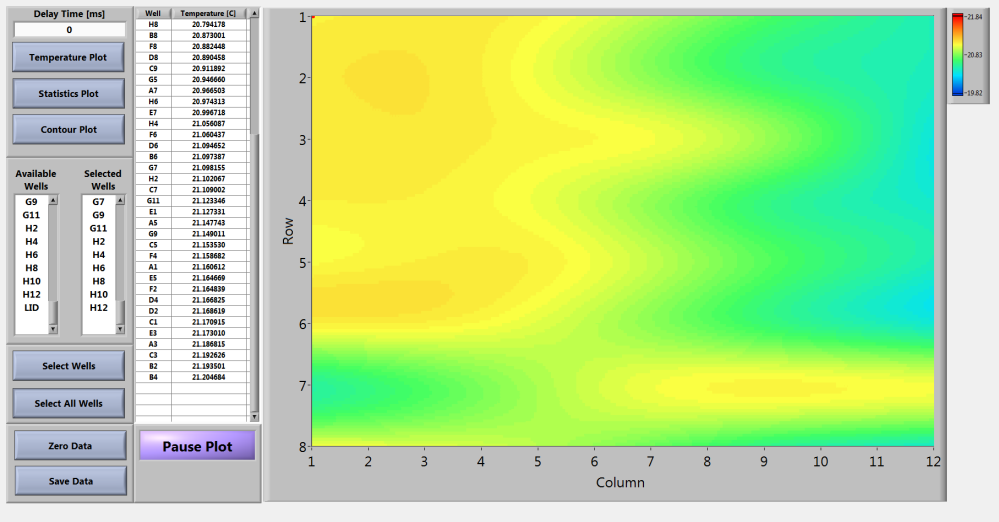
Map scale
Individual probe readings
Checking the complete liquid-handling process
Automated DNA assembly transfers and mixes multiple tiny reagent volumes in sequence; small pipetting errors can compound over a run, yet pausing to weigh or check every single transfer breaks the workflow.
I developed an optical verification assay using distinct dyes with different light-absorption wavelengths to stand in for each reagent stream. Scanning the finished plate once in a standard plate reader let us separate each dye’s optical signature in the final mixture—revealing accumulated transfer error across the entire multi-step sequence without stopping the machine mid-run.
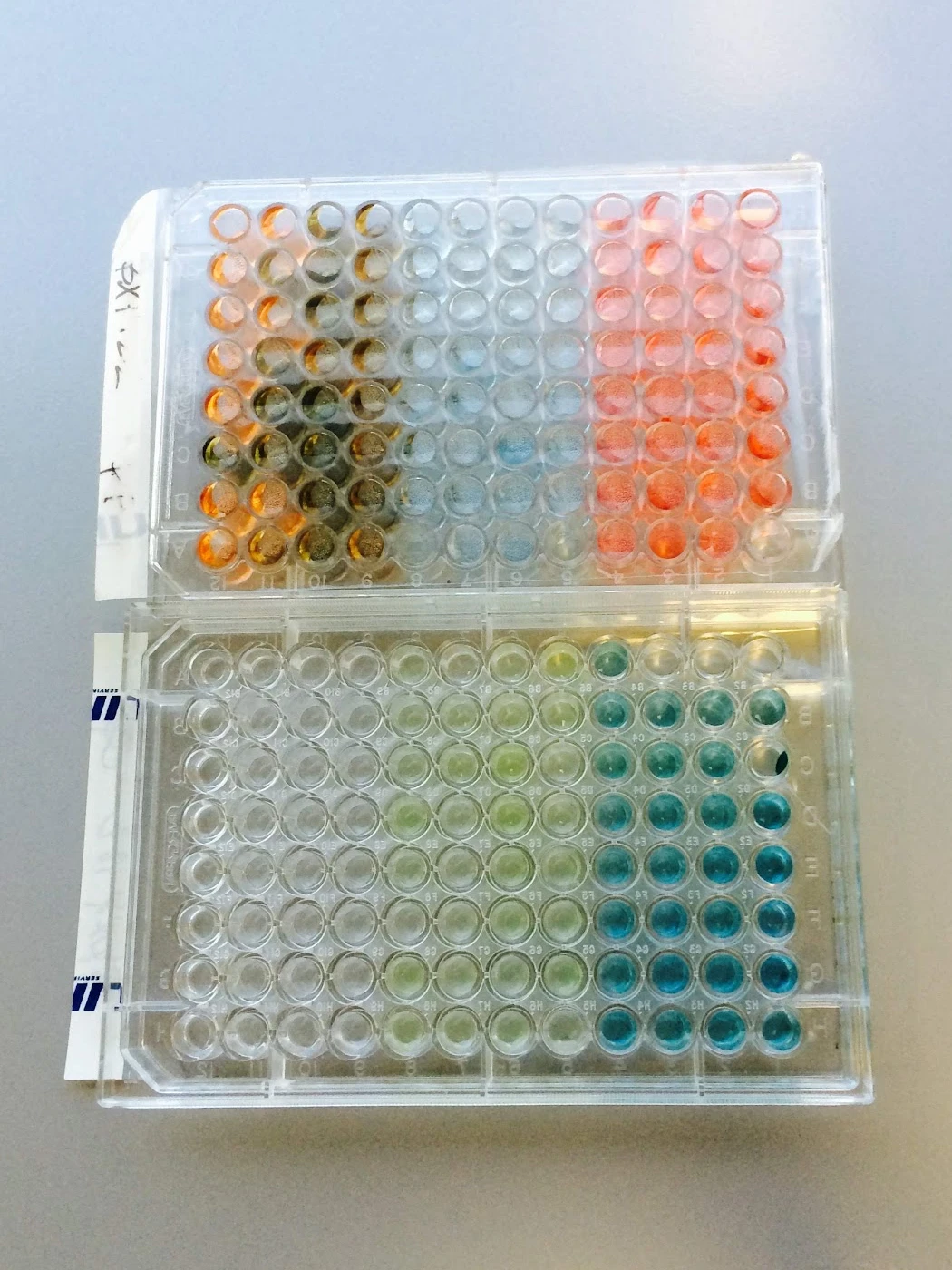 Enlarge imageEnlarge: 96-well multi-dye test plates used at Synthetic Genomics to verify multi-channel dispense accuracy, gradient uniformity, and cross-well carryover.
Shortening manufacturing calibration
As BioXp entered manufacturing, manual alignment and thermal checks took more than seven hours per instrument. Working together on dedicated alignment fixtures, physical reference standards, and automated calibration routines that eliminated manual data handling, our team compressed both factory steps dramatically:
- Position calibration: more than 4 hours → less than 20 minutes.
- Thermal calibration: more than 3 hours → less than 20 minutes.
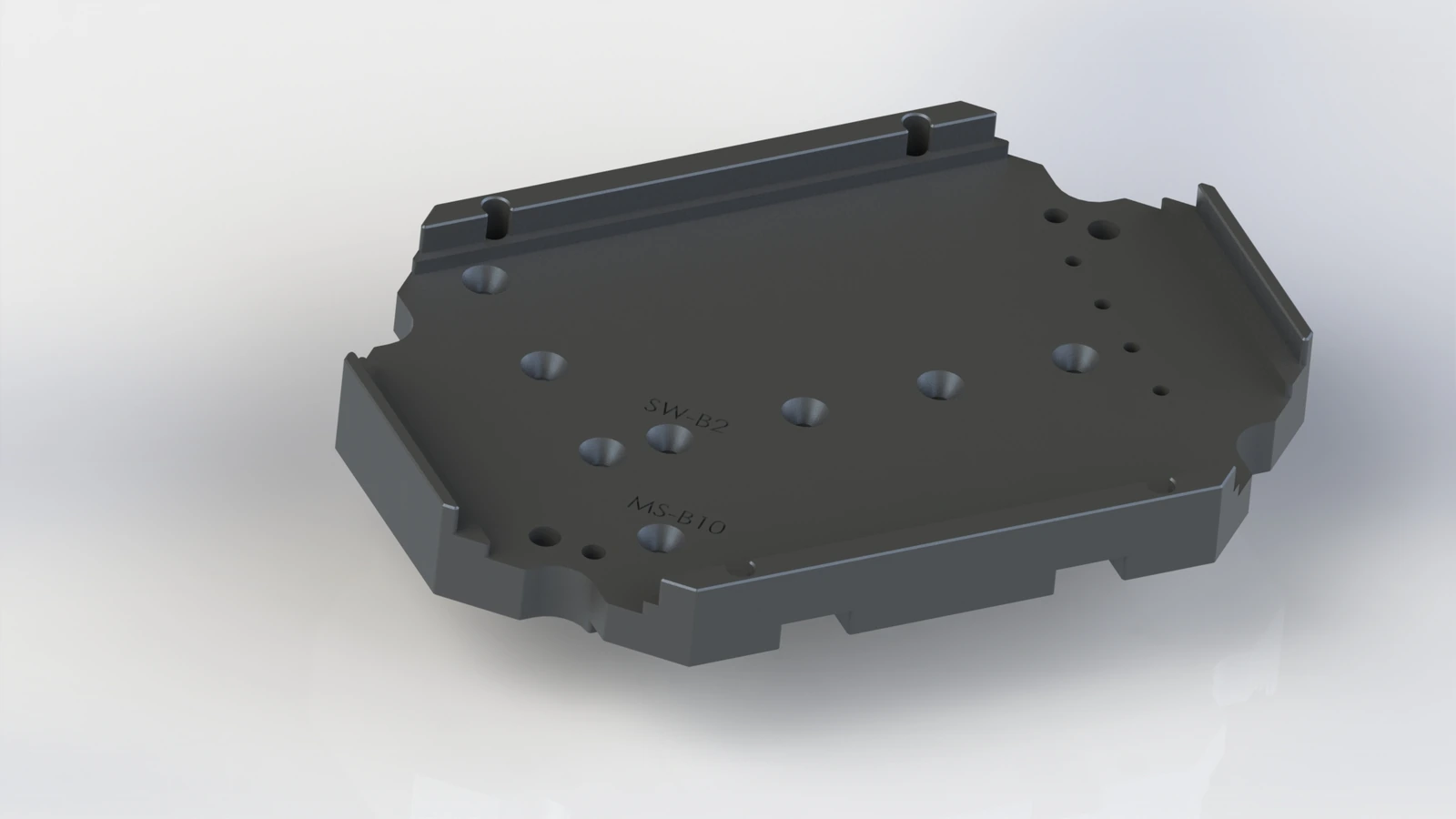 Enlarge imageEnlarge: Rendering of a position-calibration fixture with reference openings and locating edges.
Experience used here
Mechanical and electrical design · Thermistor instrumentation · LabVIEW · Data acquisition · Channel calibration · Liquid-handling validation · Absorbance measurement · Thermal analysis · Manufacturing calibration · Vendor coordination