Synthetic Genomics
Integrating the Digital-to-Biological Converter workcell
Senior Systems Engineer · 2016–2018
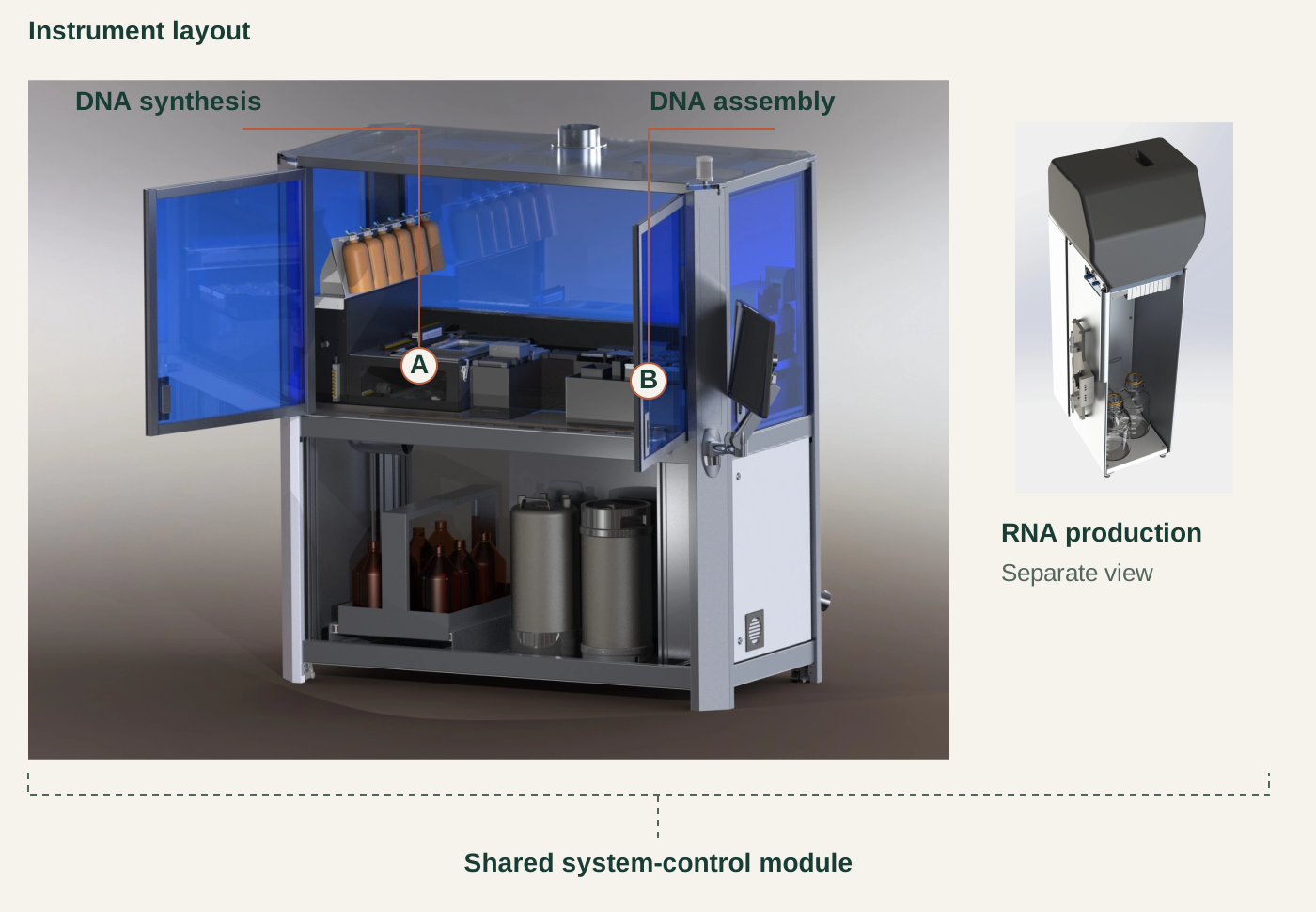
The next-generation Digital-to-Biological Converter (DBC) workcell set out to run three complex instruments as a single automated system: synthesizing short DNA strands, assembling them into full DNA constructs, and using that DNA to produce purified RNA. I designed the RNA instrument and the workcell’s shared power-and-control module, and led physical and interface integration across internal engineers, software developers, and outside manufacturing partners.
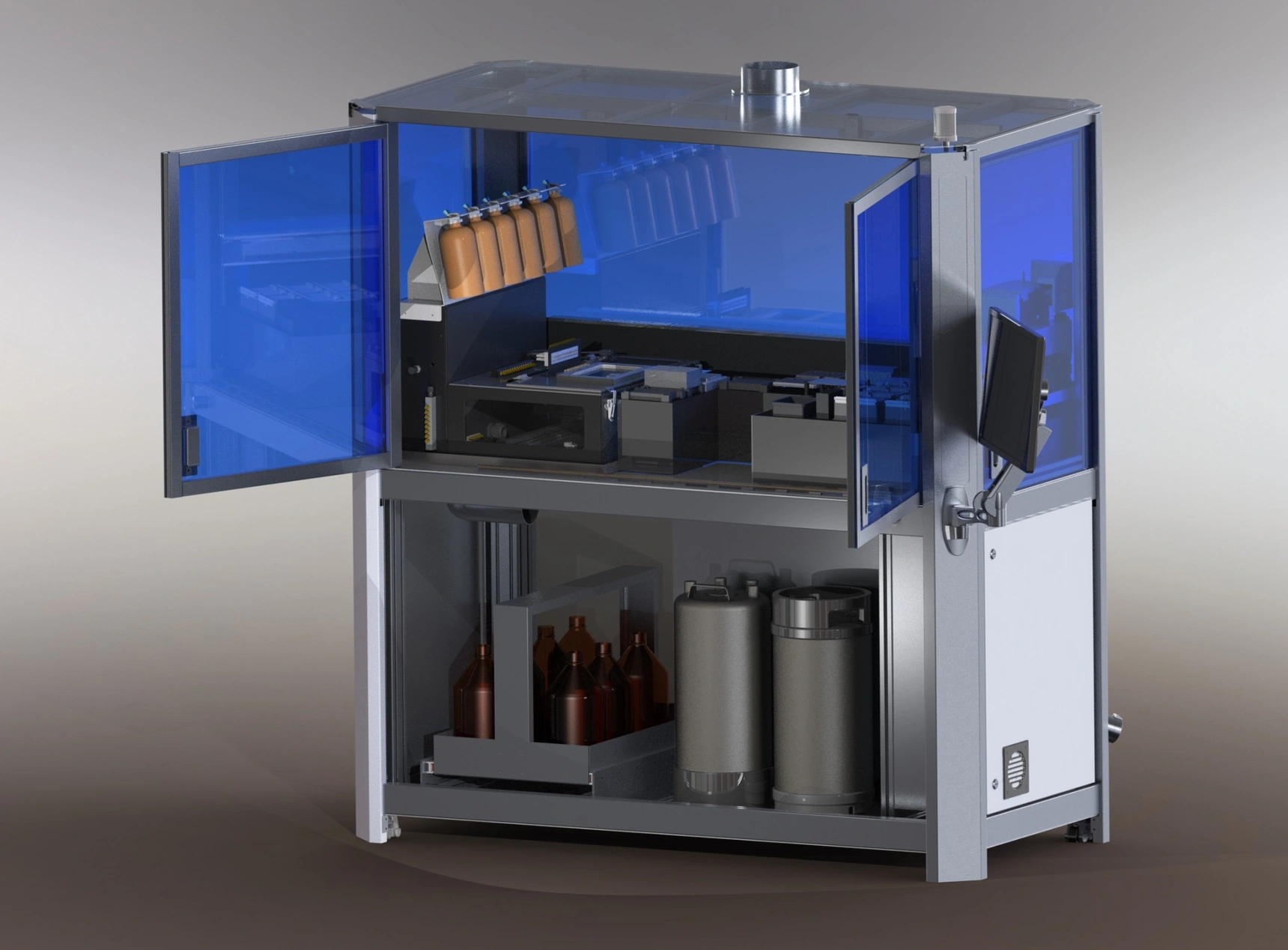 Enlarge imageEnlarge: The open Digital-to-Biological Converter workcell showing the three integrated instruments inside the shared enclosure.
Designing the shared power-and-control module
Rather than duplicating power distribution, pneumatic pressure, vacuum, and computing inside three separate machines, I consolidated those services into one shared power-and-control module—giving every instrument team a single, standardized utility interface.
I designed the module, selected an external manufacturing partner to build it, and coordinated electrical, pneumatic, and data hookups across the instrument teams while software and firmware specialists developed the supervisory control and sequencing software.
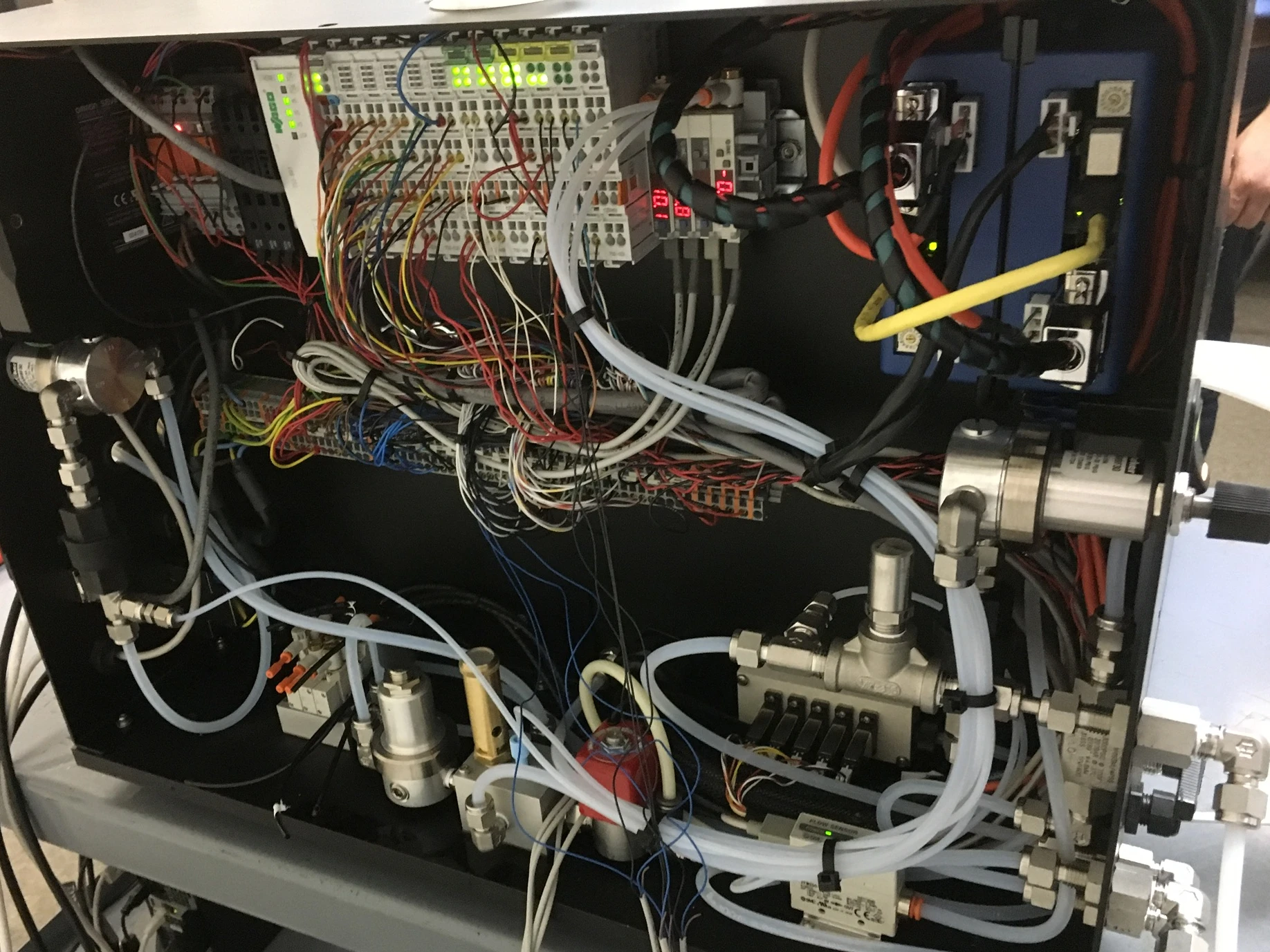 Enlarge imageEnlarge: Inside one of the fabricated DBC control enclosures, integrating DIN-rail I/O modules, pressure regulation, solenoid valve banks, and bulkhead utility distribution.
Making the instruments work together
Passing biological samples automatically from stage to stage meant bringing three very different machines and their sample handoff zones inside the reach of a shared overhead robotic deck—without blocking human technicians from opening enclosure doors to load consumables and service hardware.
Directing a contract mechanical engineer on the workcell layout, I reconciled moving-gantry clearances, inter-instrument connections, and reagent access—coordinating mechanical changes across internal engineers and outside vendors while designing the RNA instrument specifically around its slot in that shared deck.
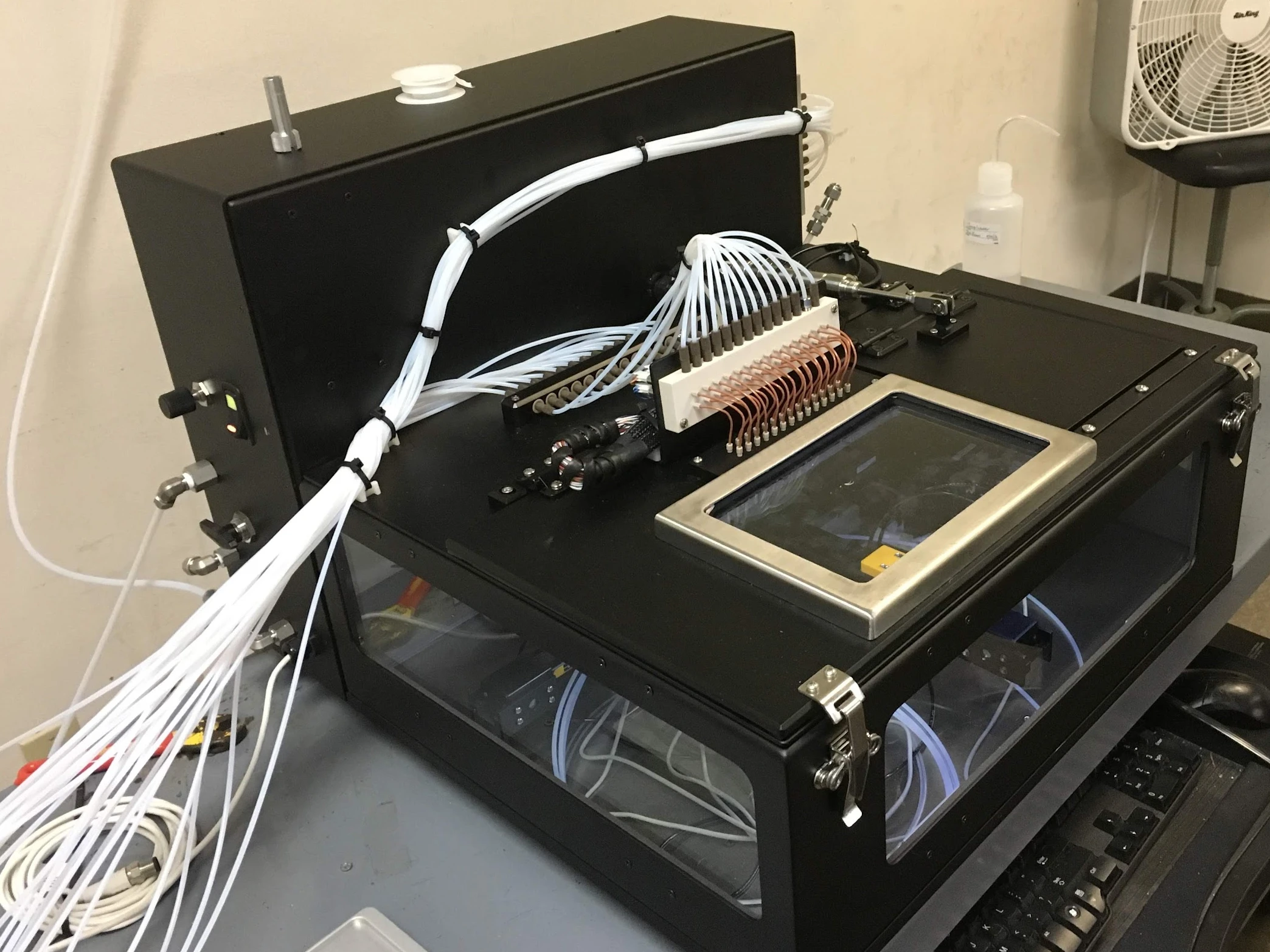 Enlarge imageEnlarge: Benchtop DBC oligo-synthesis stage during hardware integration, showing the multi-channel fluidic manifold, routed PTFE reagent lines, and enclosed reaction bay.
From layout to fabricated workcell
As outside suppliers fabricated the structural frame and sub-modules, I led on-site integration with our technicians, hardware engineers, and software staff. By early 2018, the full enclosure, overhead deck gantry, and shared control module were assembled on site and undergoing integration alongside the enlarged DNA-assembly stage.
Because hardware revisions on the RNA module introduced an updated motion controller and valve interface, physical mounting was only half of integration: I coordinated mechanical installation and shared-utility hookups while software specialists updated the matching drivers and firmware. Individual process stages had already been demonstrated as we brought the fabricated deck, gantry, and modules together toward unified multi-stage runs when my role concluded in mid-2018.
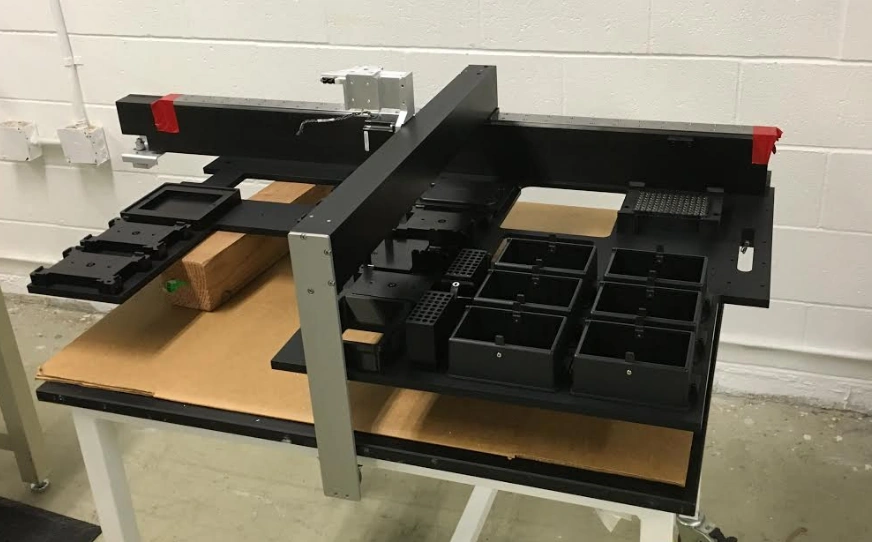 Enlarge imageEnlarge: DBC deck and gantry assembled on a workbench during development.
The earlier published DBC demonstration
In 2017, Synthetic Genomics published an earlier DBC demonstration in Nature Biotechnology converting digital sequence files into biological material, acknowledging my contribution. While that published study used a first-generation setup preceding the unified shared-deck workcell shown here, the paper and public talk capture the broader scientific goal behind the program.
Experience used here
System architecture · Mechanical and electrical design · Laboratory automation · Power distribution · Pneumatics and vacuum · Programmable controller integration · Vendor coordination · Engineering leadership