Wildcat Discovery Technologies
Improving coin-cell assembly with ergonomics and 5S
Mechanical Engineer · 2011–2013
Technicians assembled Wildcat’s coin cells—small test batteries—by hand at lab hoods, one component at a time. Because the electrical test racks could evaluate hundreds of cells in parallel, manual assembly often set the limit on how many battery formulations the lab could screen each week. I redesigned the holding fixtures, transfer tools, and hood workstations together to speed up that repetitive bench work.
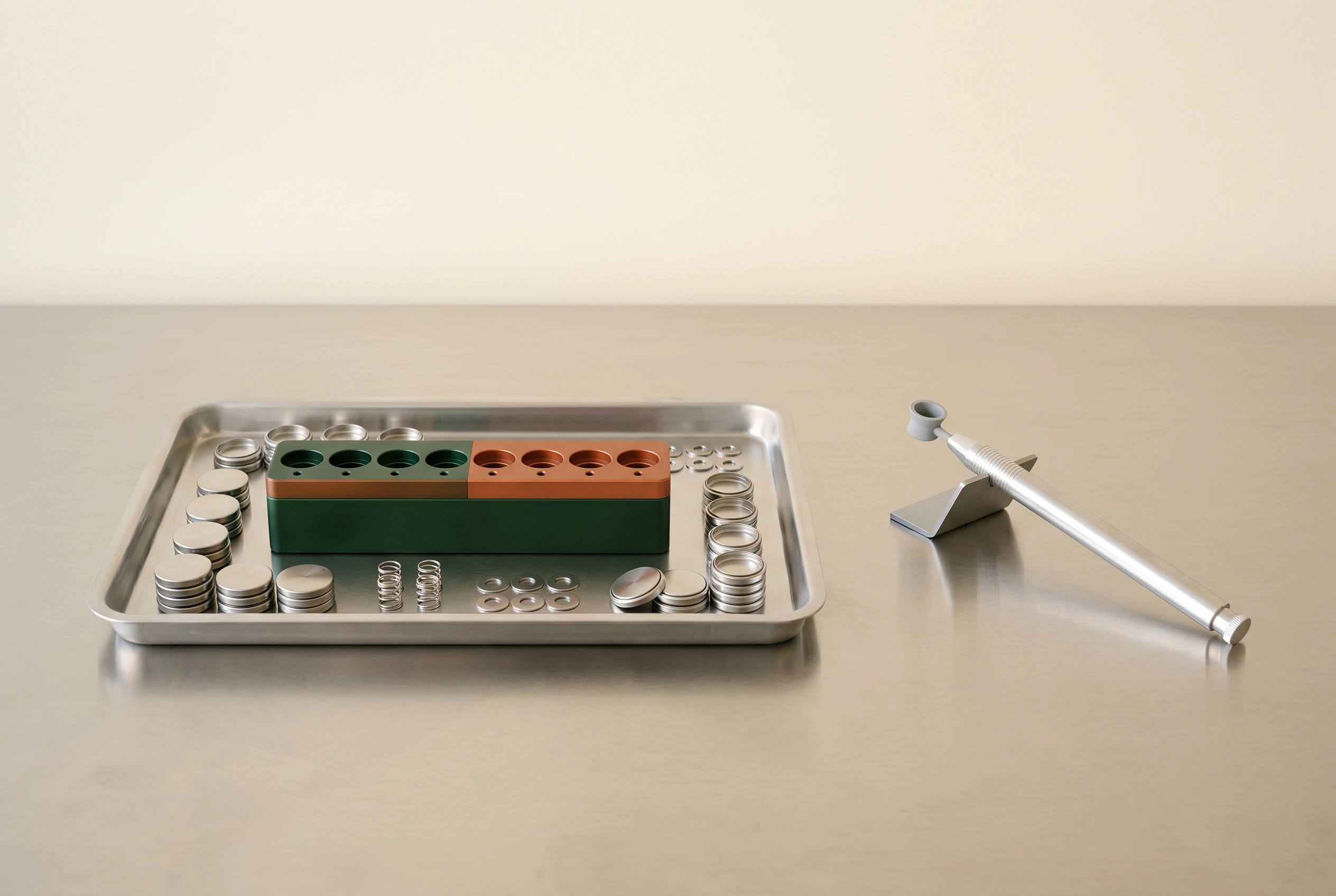 Enlarge imageEnlarge: Multi-cell assembly holding fixture, blank stainless-steel coin-cell components, and handheld manual suction transfer tool on a laboratory hood surface.
A fixture had to fit the assembly steps
At the hood, technicians worked in nitrile gloves with delicate battery parts and hand tools scattered across the bench—picking and stacking components one cell at a time. Across a full shift, wasted reach, repetitive tweezer work, and shifted layers slowed down builds and ruined cells.
I designed multi-cell fixtures that sat inside trays pre-loaded with battery components, along with a manually actuated suction tool that lifted and placed parts across multiple cells at once. Pairing those fixtures with a 5S workstation layout—keeping everyday parts and tools within easy reach and less-used items further back—made assembly much easier on technicians and increased daily cell output with the same team.
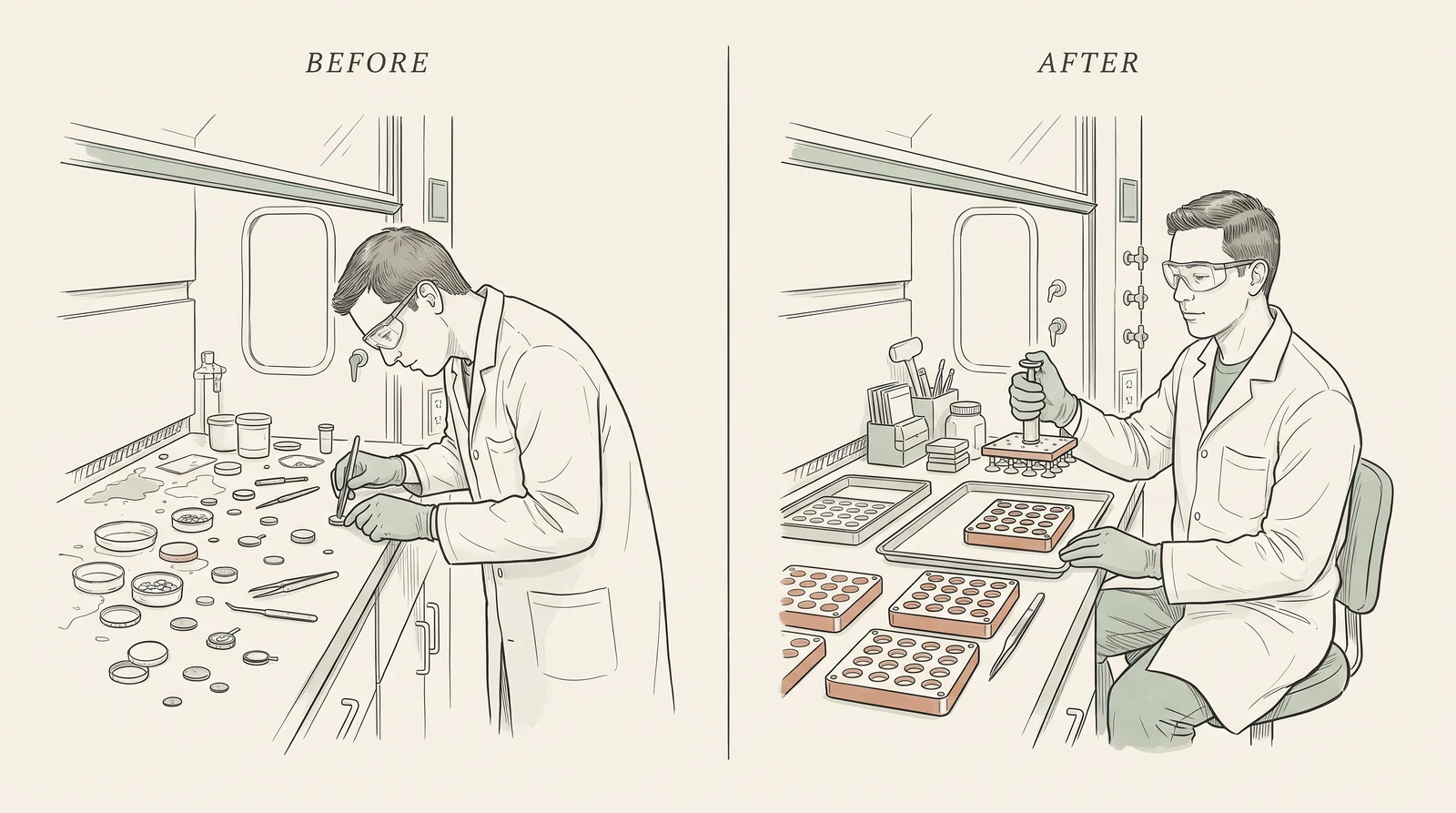 Enlarge imageEnlarge: Before and after sketch of coin-cell assembly at a lab hood, comparing scattered one-cell-at-a-time part handling with organized 5S trays, pre-loaded multi-cell fixtures, and a manual suction transfer tool.
Experience used here
Mechanical design · Ergonomics · 5S · Assembly tooling · Workstation design · Battery research