Wildcat Discovery Technologies
Putting a stored liquid-handling robot to work
Mechanical Engineer · 2011–2013
While technicians spent hours mixing experimental battery solutions by hand, Wildcat had a liquid-handling robot sitting unused in storage. Rather than buying new equipment, I adapted the stored machine for solution synthesis—reusing its motion gantry and liquid-transfer hardware to prepare chemical mixtures automatically.
Once that setup was running daily mixture prep in the lab, it also gave us a practical way to test automated battery-slurry coating, where accurate dispensing alone did not guarantee an even film across the target area.
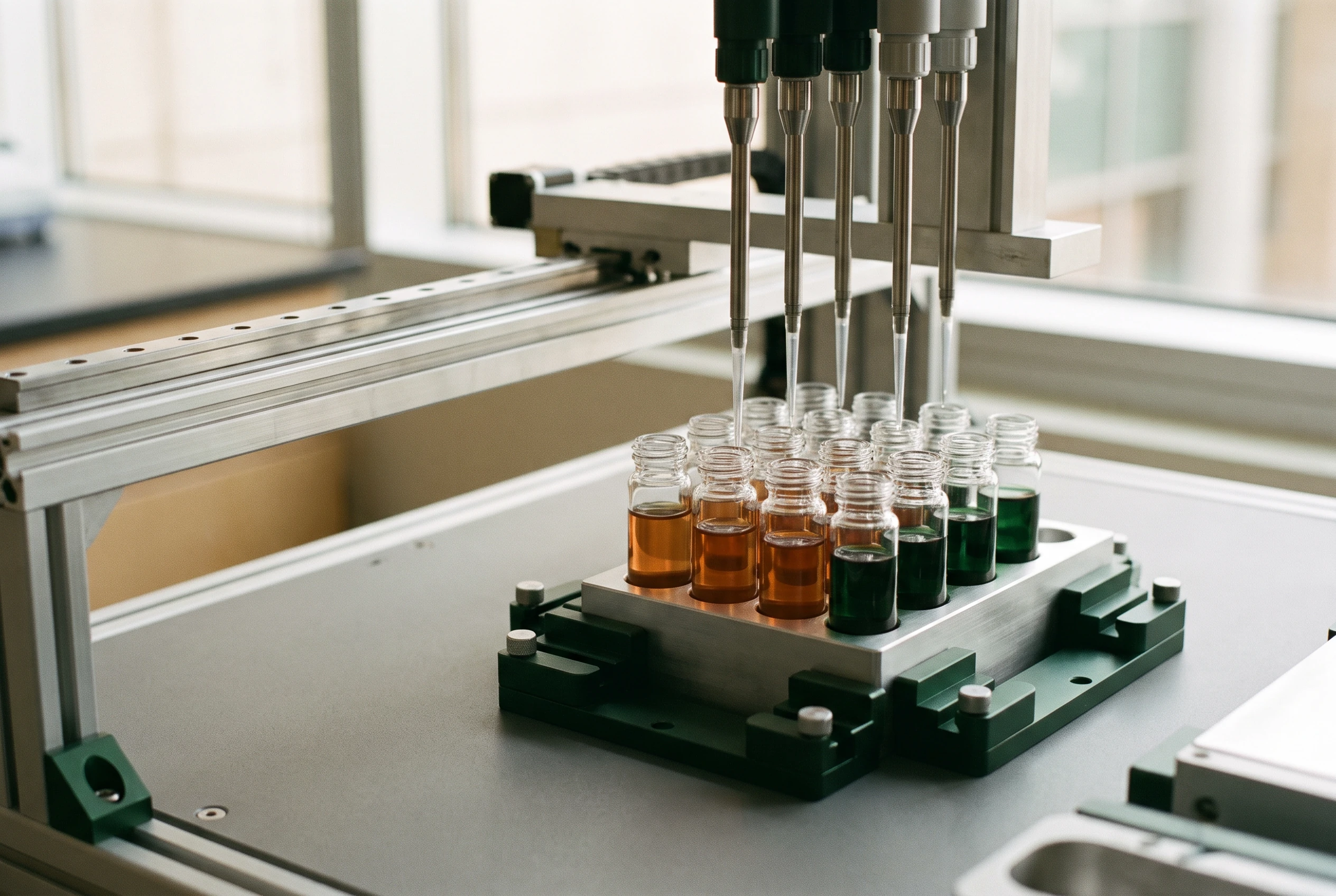 Enlarge imageEnlarge: Automated liquid-handling XY gantry and four-channel pipetting manifold poised over a custom-machined aluminum sample-vial block.
Letting technicians specify the mixture
The stored robot already handled movement and pipetting reliably; making it useful on the floor meant fitting it to our containers and giving technicians simple controls. I designed custom sample holders around the lab’s vessels and built a LabVIEW interface where technicians entered their target mixture ratios and started a run—turning an idle machine from storage into a daily lab tool.
Getting slurry to cover the intended area
Once solution mixing was running, I tested whether the robot could also coat sample substrates with battery slurry. Slurry had to wet and spread evenly across the metal cup without running past its edges—simply dispensing the right volume in the center often left partially wetted cells with bare metal along the rim.
To test surface prep repeatably, I built a motorized dual-torch flame-treatment stage to pass substrates under controlled heat before deposition, and evaluated it alongside plasma treatment and mechanical vibration to see how each improved wetting and edge coverage. That study gave the team a clear picture of what surface treatment and vibration could solve—and where thicker slurries required dedicated coating equipment rather than a modified liquid handler.
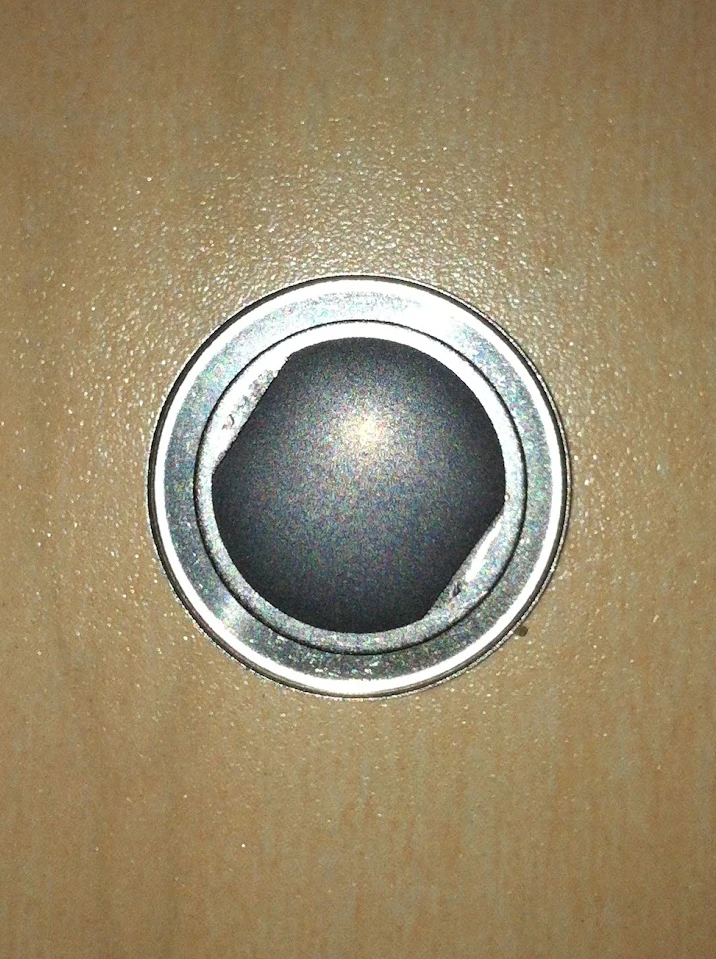 Enlarge imageEnlarge: Partially wetted coin-cell cup after dispensing alone, where dark battery slurry beaded up and pulled away from the metal edges.
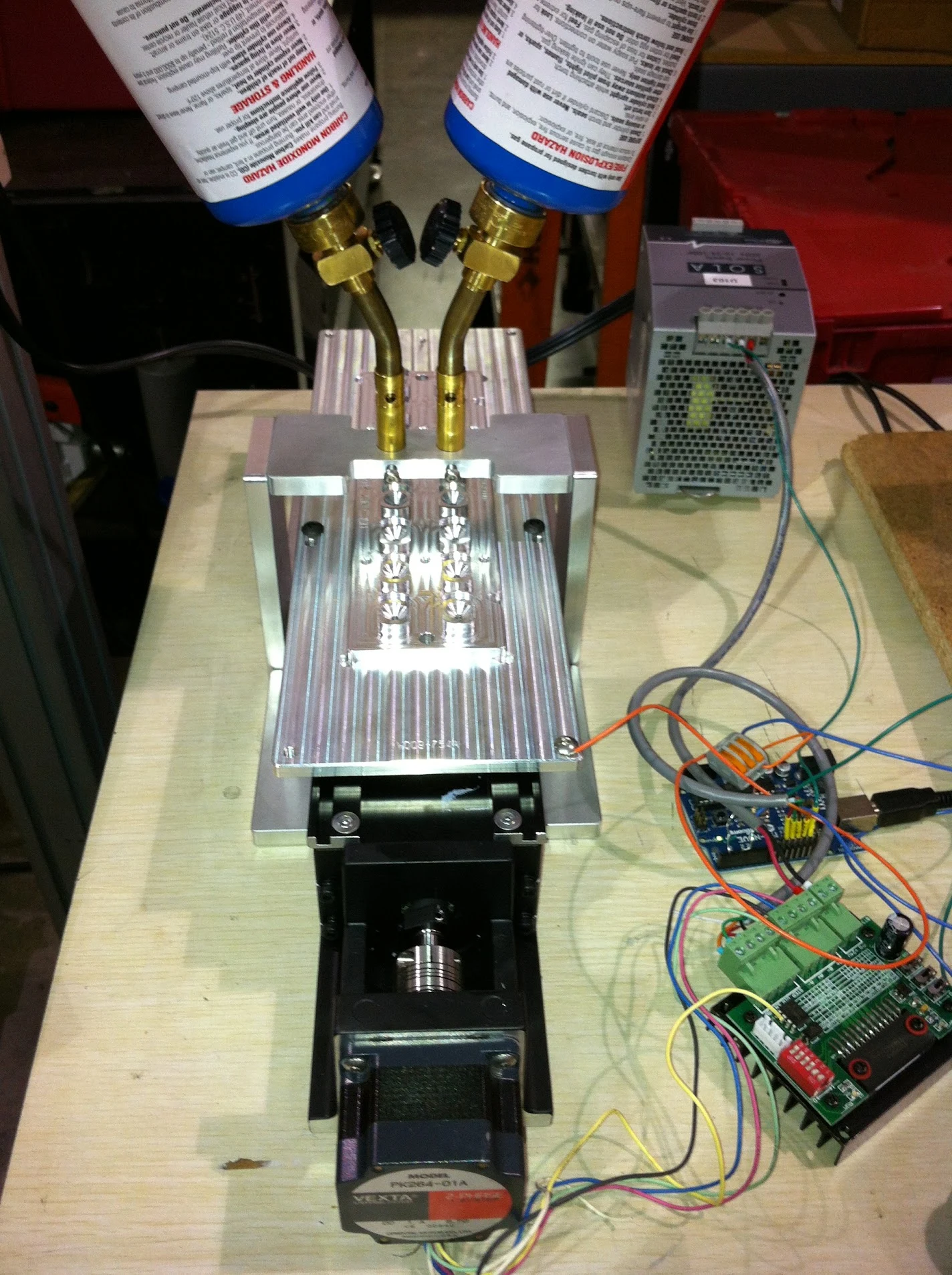 Enlarge imageEnlarge: Prototype flame-treatment stage built to treat substrates before deposition, showing dual propane torches over a machined manifold driven by a Vexta stepper stage and Arduino controller.
Experience used here
Laboratory automation · Custom robot tooling · LabVIEW · Liquid handling · Process development · Equipment adaptation