UC San Diego
Automating combustion measurements
Electromechanical Development Engineer · 2009–2011
When I joined the laboratory, a single run on an opposed-jet burner could mean twelve hours at the rig—turning a hand micrometer to advance a probe a fraction farther into a flame between opposing gas streams, taking a photograph and a sensor reading at each stop, and then counting pixels in the images afterward to calculate how far the probe had moved.
I quickly looked for a way to automate that repetition. With the lab lead’s support, I negotiated discounts on LabVIEW and image-analysis software, arranged discounted computer-controlled gas-flow controllers, and tracked down used industrial cameras to stretch our budget.
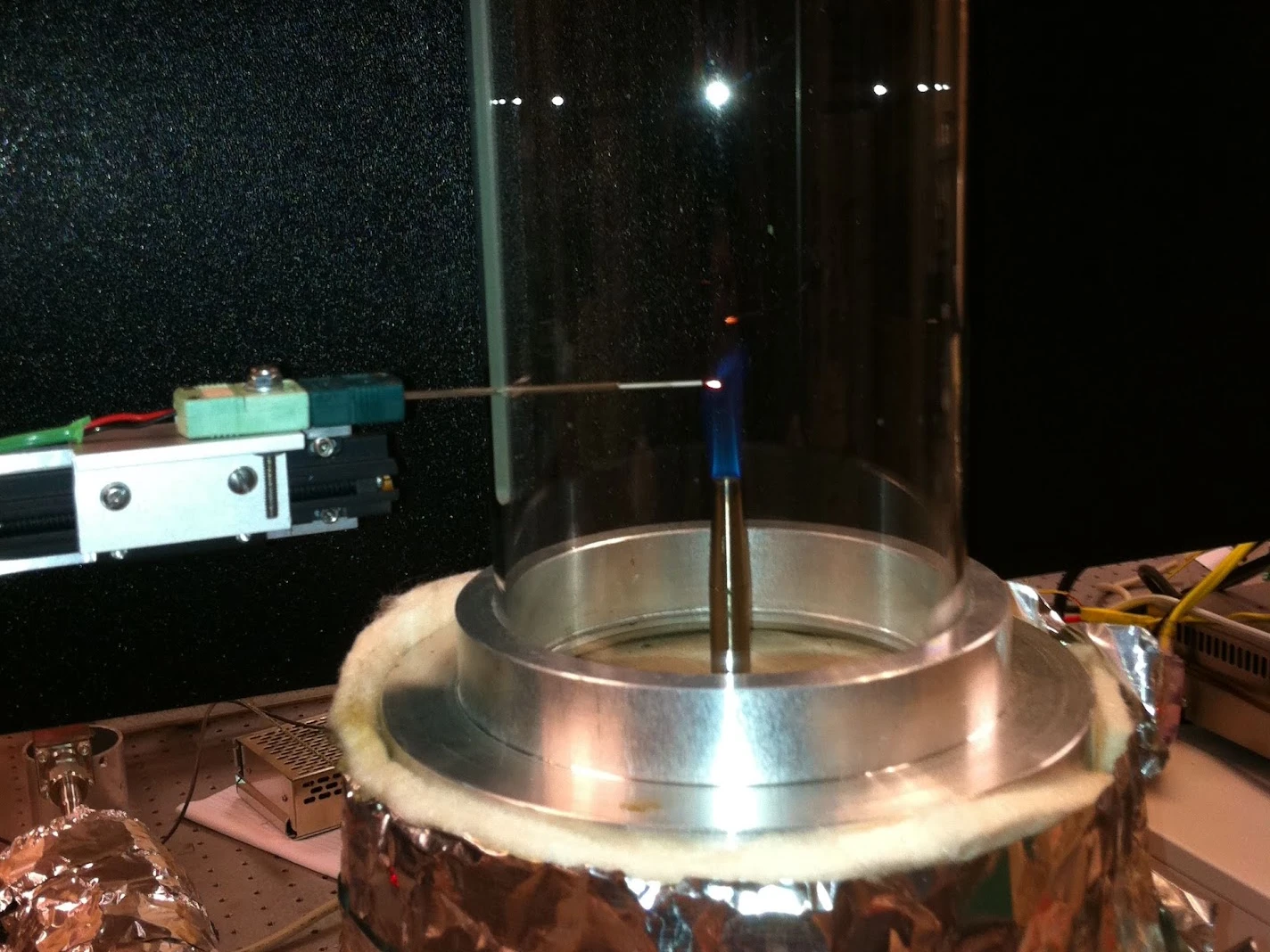 Enlarge imageEnlarge: Motorized positioning rail driving a thermocouple probe directly into a laminar jet flame inside the quartz burner shield during an automated traverse.
Building the automation
I assembled the hardware and wrote the LabVIEW software uniting probe motion, gas flows, camera triggers, and instrument readings. Getting older laboratory instruments onto the system also took improvisation: when our mass spectrometer’s software offered no interface for exporting data, I used NI Vision to read and capture the live results straight off its screen.
Controlling the gas-flow controllers over serial connections let the software step cleanly through flow and mixing conditions while keeping every reading and photograph tied to its exact position in the flame.
Adapting the automation to different experiments
Once the initial rig was running, I extended the automation across several experimental setups during my time at UCSD, including a burner operating inside a sealed pressure chamber. The software took over the repetitive work of stepping the probe and logging images and measurements—tasks that had previously consumed entire days by hand—as shown in the opposed-jet and pressurized-flame experiments below.
Opposed gas jets
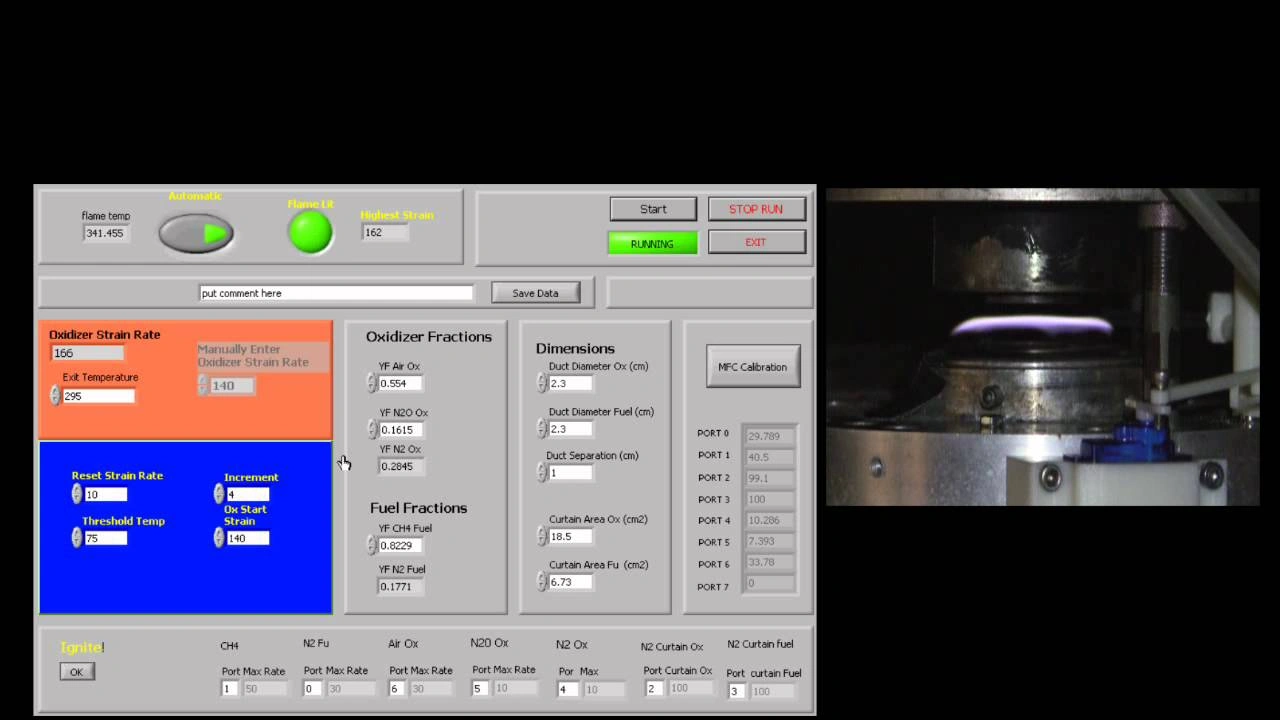
Automated measurements between opposing gas jets, from the 2009–2011 UCSD work.
Pressurized flame
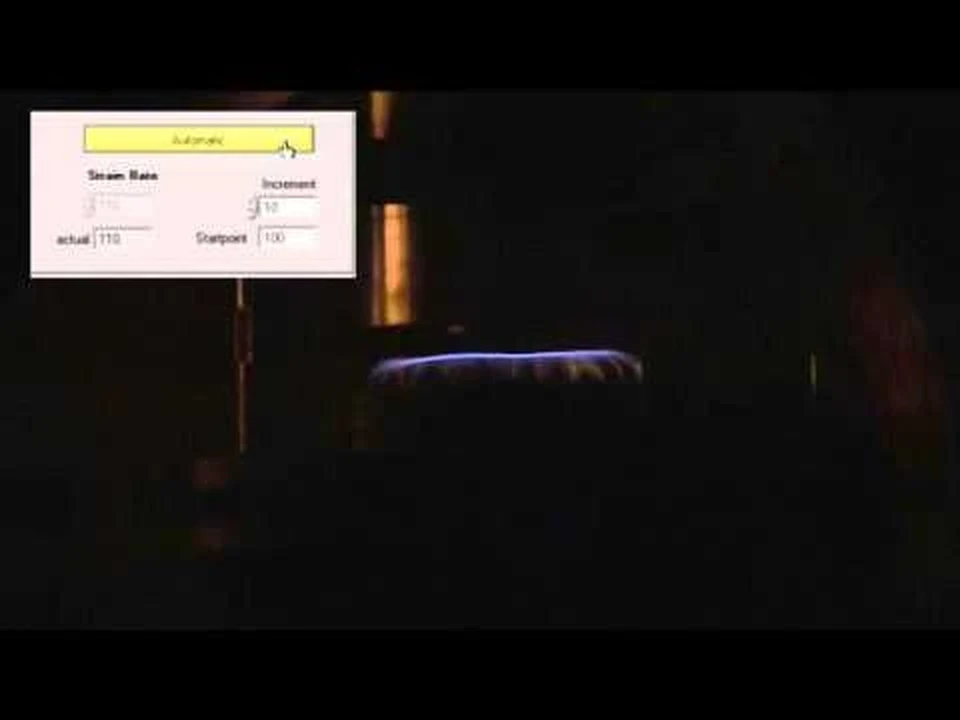
Automated measurements in a pressure chamber, from the 2009–2011 UCSD work.
Experience used here
LabVIEW · Instrumentation hardware · Laboratory automation · Motion control · Machine vision · Data acquisition · Mass-flow control