Combustion research
UC San Diego
Electromechanical Development Engineer · 2009–2011
Experimental apparatus and automation for combustion research
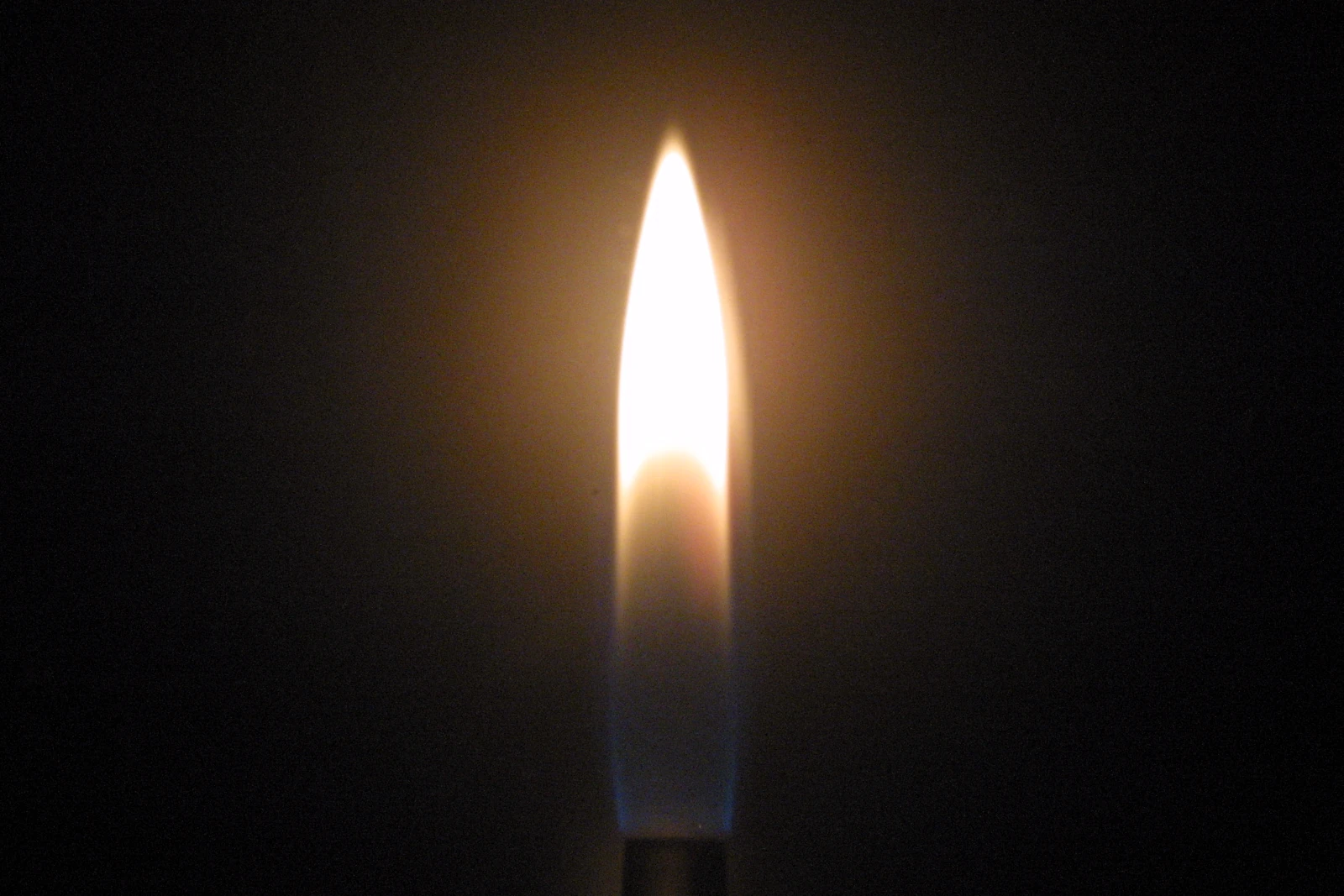 Enlarge imageEnlarge: Controlled flame with a blue base and bright upper region against a dark background.
Across two and a half years in UC San Diego’s combustion laboratory, my role grew from taking flame measurements manually to automating multiple experimental rigs, designing a custom coflow burner, and managing a $500,000 Air Force Research Laboratory grant.
Rather than spending whole days repeating manual probe adjustments, I pitched the lab lead on automating the experiments—writing the LabVIEW software and integrating motorized motion hardware, industrial cameras, gas-flow controllers, and analytical instruments across the lab.
Automating the repeated measurements
When I started, an experiment meant moving a probe into a flame by hand, snapping a photograph and a reading, and repeating that step at every position across the flame. Wanting to spend less of the day on manual repetition—and backed by the lab lead—I assembled the hardware and wrote LabVIEW software to step the probe, adjust gas flows, and record synchronized images and measurements automatically, adapting the system across several experimental rigs at UCSD.
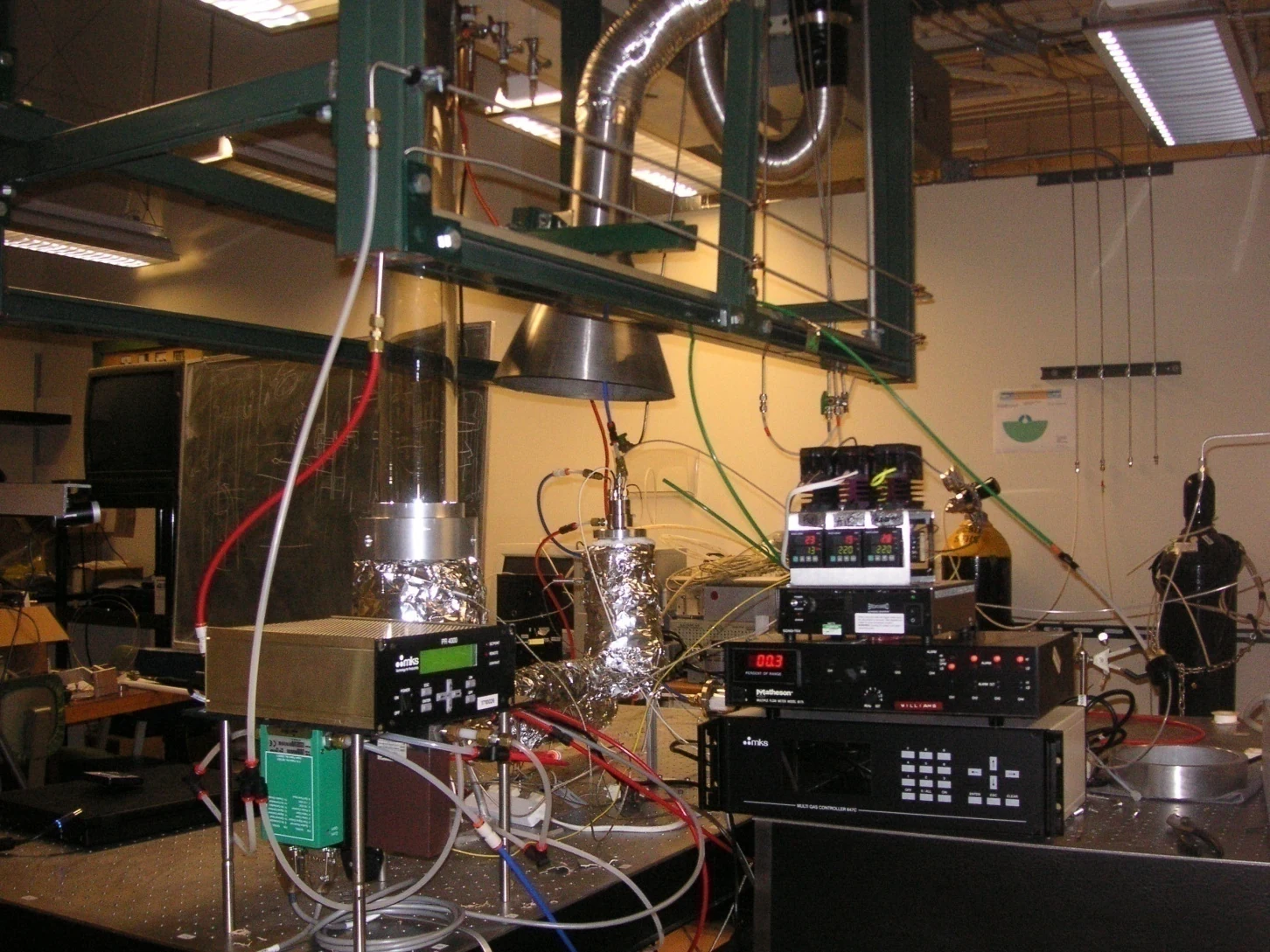 Enlarge imageEnlarge: Combustion laboratory equipment with tubing, control electronics and a suspended frame.
Designing the burner and fuel system
I designed a coflow burner in SOLIDWORKS, coordinated part fabrication with outside machine shops, integrated fuel and temperature controls, and managed a $500,000 Air Force Research Laboratory grant for a low-flow liquid-fueled burner.
Running liquid-fuel experiments also meant building hardware to vaporize the fuel and keep it vaporized all the way to the nozzle—delivering controlled, repeatable starting conditions for every test.
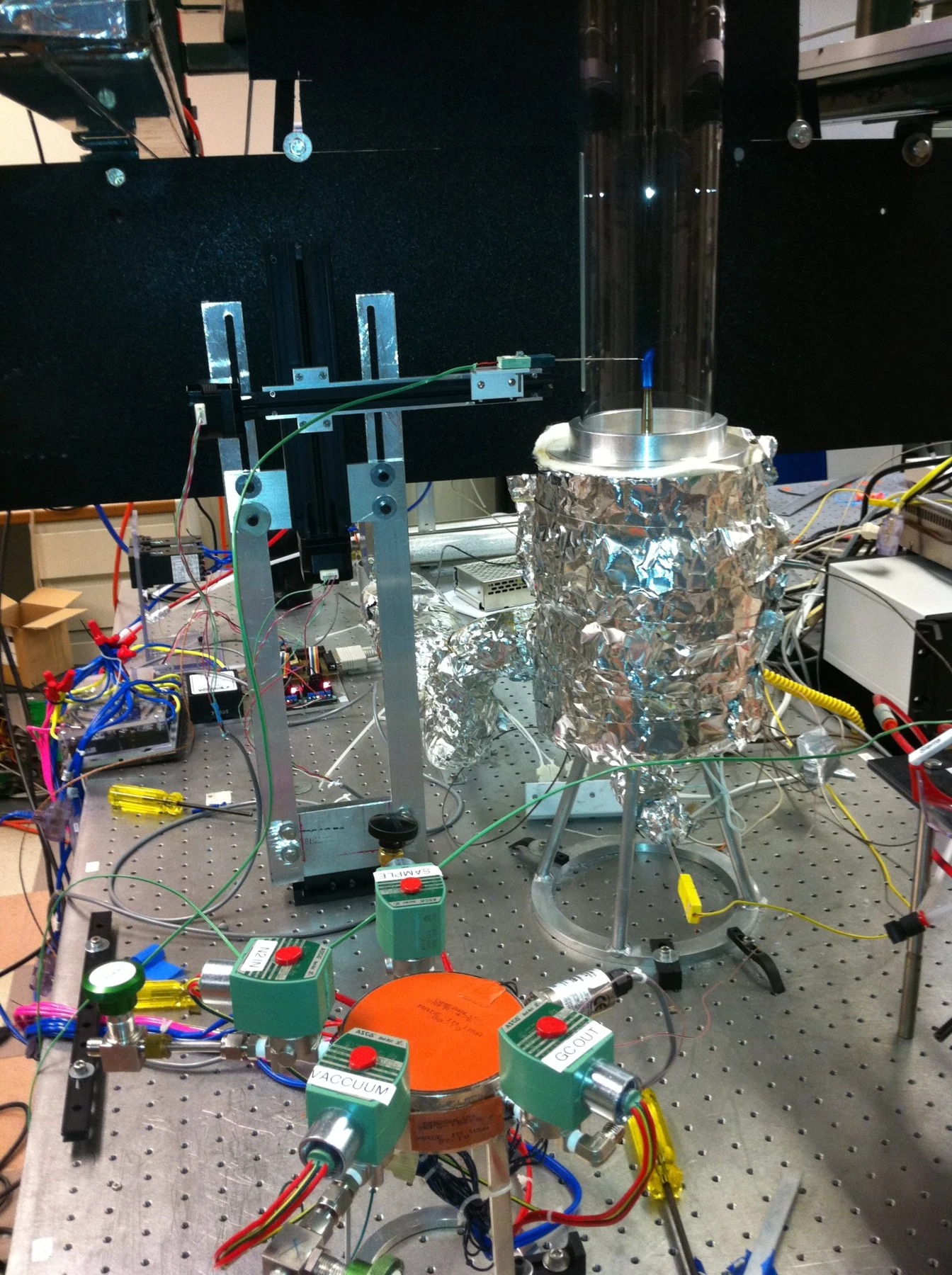 Enlarge imageEnlarge: Coflow burner with vertical positioning equipment, insulated body, valves and tubing.
Contributing to the research
Together, the burner hardware and automated measurement rigs supported investigations of flame behavior across varying flow and fuel conditions, with my experimental work contributing to five co-authored journal and conference publications.
Experience used here
Research equipment · CAD · SOLIDWORKS · Fabrication coordination · LabVIEW · Laboratory automation · Motion control · Imaging · Data acquisition · Grant management