RTSystemDesign
Cleanroom controls that kept running without the PC
Client development and system integration · 2013–2016
Cleanrooms maintain air quality by running ceiling HEPA fan-filter units continuously; operators wanted one central computer screen to set fan speeds and check alarms, yet airflow could never depend on a Windows PC staying connected. I worked through the operational requirements with the client, brought in a mechanical engineer on the filter hardware, and integrated the fan controllers and room sensors in LabVIEW.
We built and validated a four-fan demonstration system uniting speed control, environmental readings, and alarm logs on one screen—and then priced out multi-room facility expansions comparing component cost against total installation wiring.
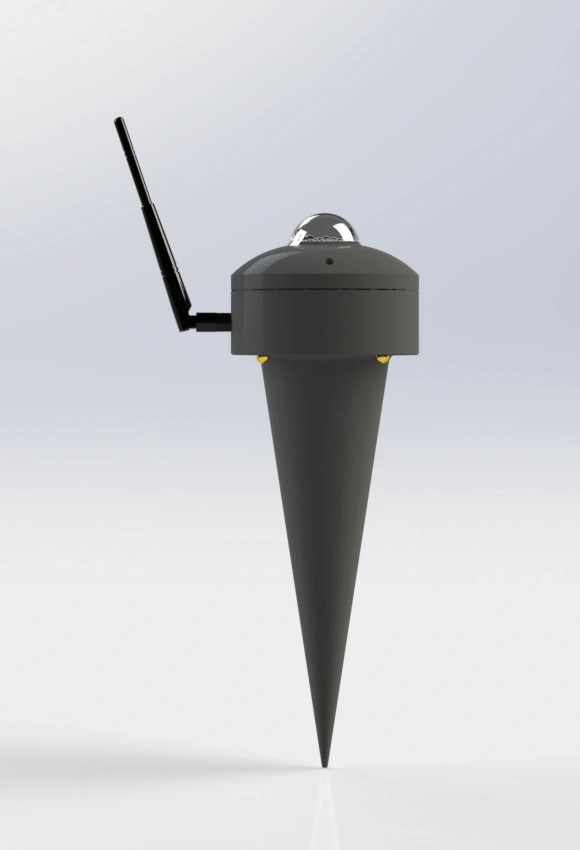 Enlarge imageEnlarge: Assembled environmental-sensor concept with an antenna.
Keeping fan control independent of the computer
Closing an application or rebooting a control computer should never shut down cleanroom airflow. We adapted wiring across mismatched connector pinouts, assigned each fan unit a unique network address, and stored active operating settings locally on each fan’s onboard controller.
We verified that fail-safe directly on the rig by closing the LabVIEW interface and powering off the PC mid-run: every fan held its operating speed uninterrupted, and when communication returned, the software read the live hardware state back from each unit automatically.
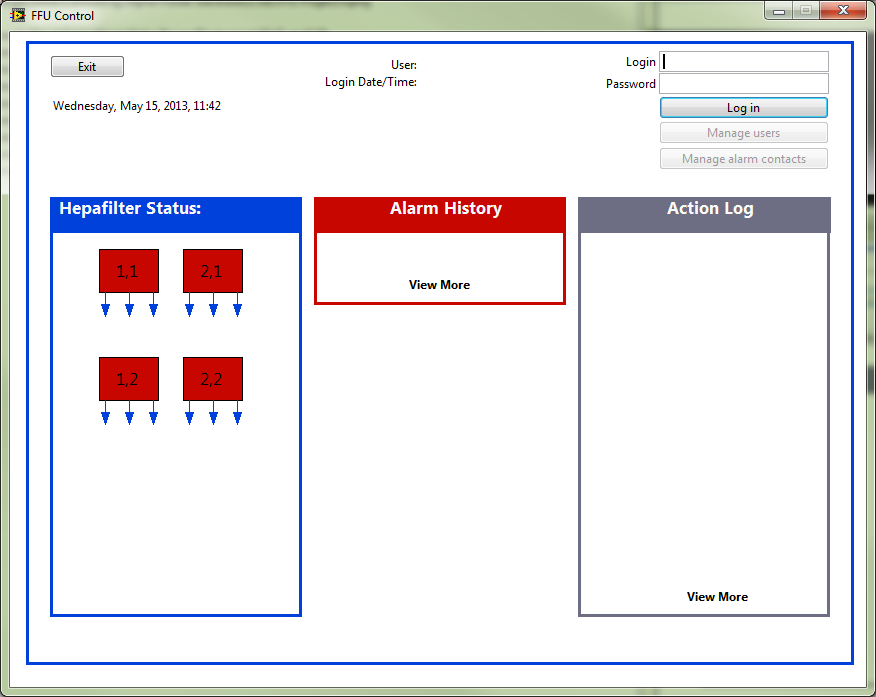 Enlarge imageEnlarge early cleanroom control interface
Seeing what happened during a run
When a room condition drifted, operators needed a clear trail of what changed and when. We added timestamped setpoint-change and alarm logs to the LabVIEW screen alongside live temperature, humidity, and room-pressure readings exported automatically to spreadsheet-ready files.
While the four-fan demonstration stored logs on the local workstation, our follow-on facility proposals weighed local logging against remote network access—accounting for the hosting, IT setup, and ongoing maintenance remote monitoring would require.
Comparing the cost of extending the system
As the client explored scaling controls across multiple cleanrooms—each with independent setpoints and alarm thresholds—they also asked what a stripped-down system using simple on/off switching for fans and lights would save compared with full variable-speed control.
Our engineering and cost comparison showed why cheaper circuit boards wouldn’t automatically yield a cheaper installation: a low-cost central relay panel required electricians to pull individual power runs from every fan and light back to one cabinet, whereas placing distributed controllers at each unit slashed facility wiring enough that total installed cost approached the full speed-control architecture. Accounting for electrical switching loads and installation labor alongside part prices gave the client an honest basis for comparing those proposals.
Developing a standalone environmental sensor
Alongside our paid cleanroom work, RTSystemDesign used internal R&D time in 2014 to design a separate product concept for a compact, modular wireless sensor built to log environmental conditions and make readings accessible remotely.
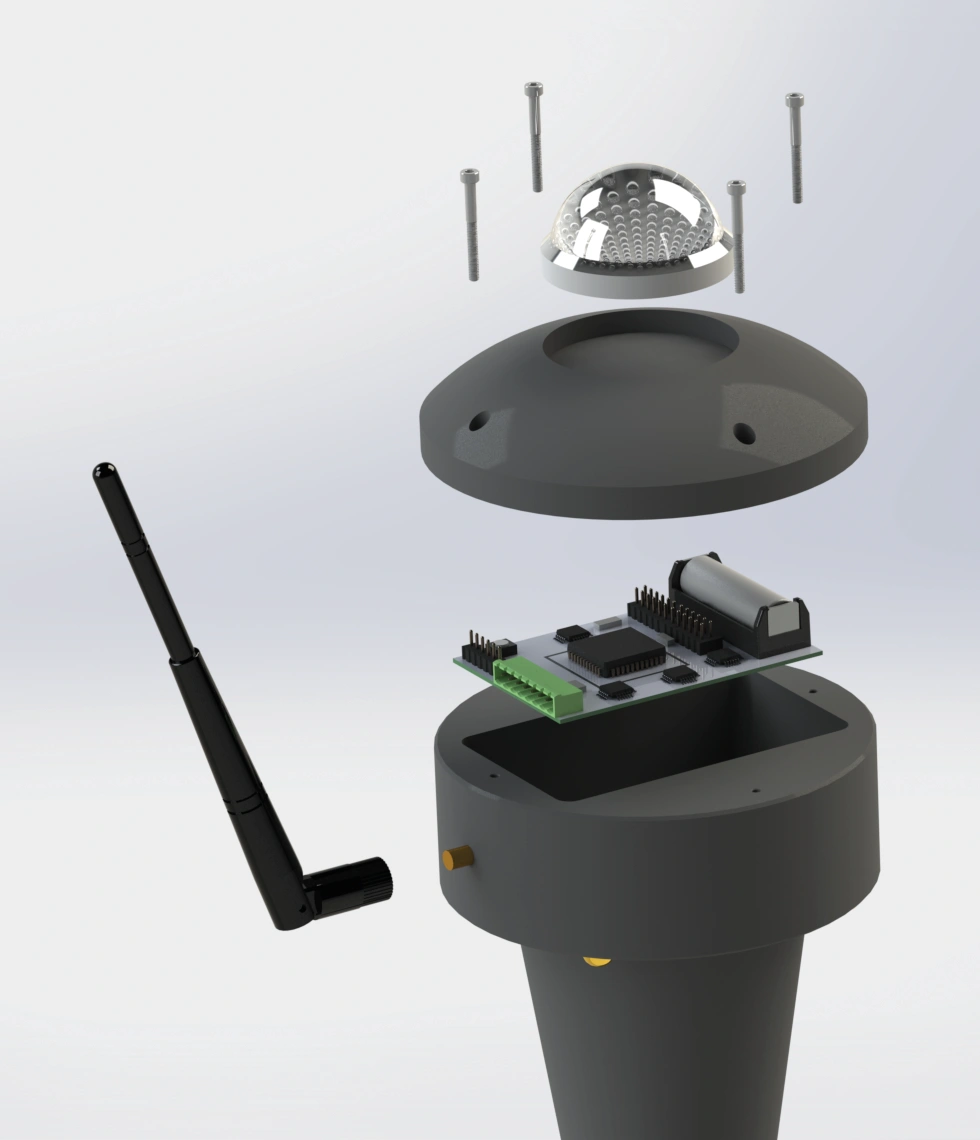 Enlarge imageEnlarge: Exploded environmental-sensor concept showing its enclosure and electronics.
Experience used here
Sensor integration · LabVIEW · Customer requirements · Remote monitoring · System integration · Product planning