RTSystemDesign
Bootstrapping an engineering company from two people to ten
Co-founder & CEO / Principal · 2013–2016
I co-founded RTSystemDesign with no outside investors—funding the business, growing our team from two to ten contributors, and exploring our own product ideas entirely through paid client engineering projects. Within our first six months, we generated $200,000 in client revenue by taking on multidisciplinary hardware problems that needed mechanics, electronics, and software to work together under tight deadlines.
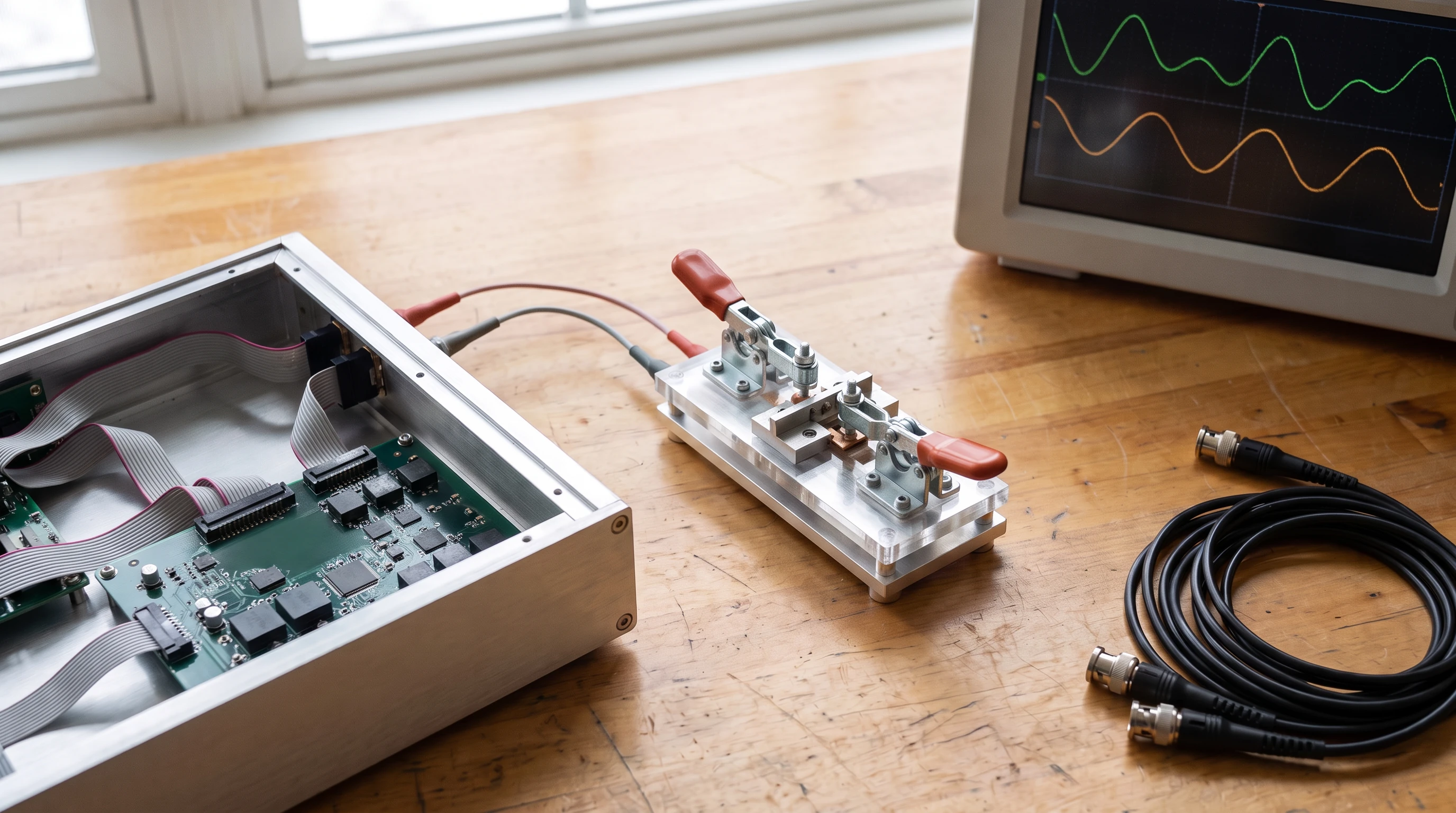 Enlarge imageEnlarge: Scoping client projects sustainably meant pricing electrical assembly, custom bench test fixtures, firmware and software integration, and validation alongside initial CAD hours.
Recruiting specialist talent around paid projects
Because we were self-funded, we couldn’t hire a bench of specialists ahead of revenue—every project dictated who we needed next, and I was candid with clients about what we had in-house versus who I would bring in. For an early cleanroom control project, I brought on a mechanical engineer to develop the filter hardware while integrating centralized LabVIEW fan control and environmental logging. When a laser-measurement contract required five-nanosecond timing steps on a tight deadline, I walked UC San Diego’s engineering buildings to recruit an FPGA specialist while designing the interface electronics and enclosure myself.
Pricing and scoping for the work after the CAD is done
New engineering firms often lose money because they quote the design hours and forget everything required to hand a working machine to a customer. I scoped proposals around the entire job—component sourcing, board and enclosure assembly, bench validation, system integration on the client’s site, and clear operator guides—so our project margins actually supported growing the team.
Running the business while designing hardware
Alongside designing circuits, enclosures, and LabVIEW interfaces, I handled client sales, proposals, contract terms, bookkeeping, and marketing. Keeping overhead low and tying specialist staffing directly to active contracts let us expand steadily to ten people on client cash flow.
Using client cash flow to explore our own products
Paid service work also funded internal R&D. Drawing on what we saw in facility monitoring, we designed a compact, modular wireless sensor concept in 2014 for logging and viewing environmental conditions remotely—keeping our internal product experiments clearly separated from paid client deliverables.
Experience used here
Bootstrapping · Business development · Project scoping · Recruiting · Team leadership · Customer relationships · Engineering delivery