Racer Biosciences
Helping researchers evaluate and buy F1-X
President and General Manager · Consulting · 2025–2026
Selling a scientific reagent requires solving two different problems at once: a researcher at the bench needs clear technical data to decide whether the product is worth testing, and their university or company needs a practical way to pay for it.
I rebuilt Racer’s website and connected store around both needs, and then partnered with another member of the team to build a recurring science-story program that kept Racer in front of researchers between product releases.
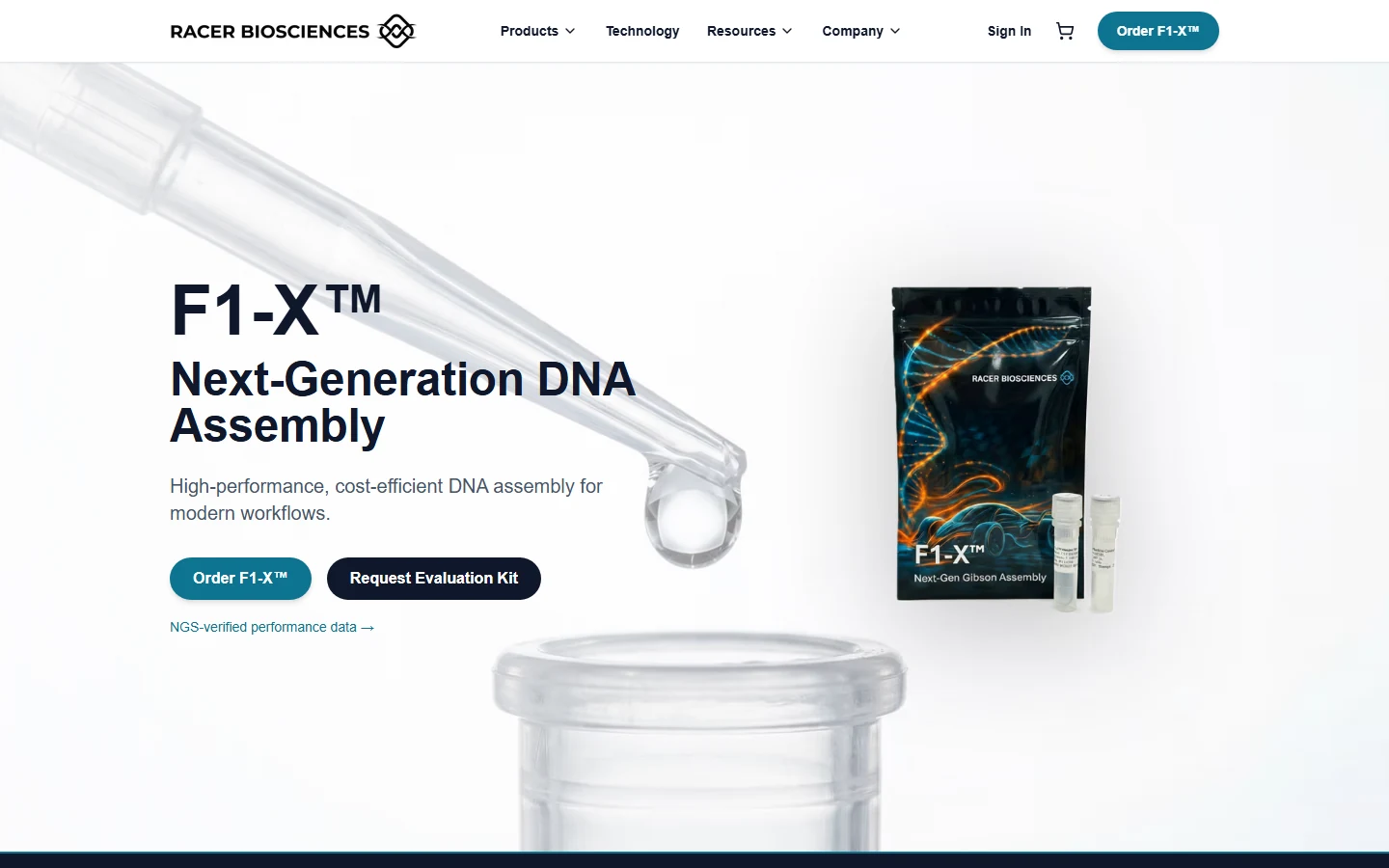 Enlarge imageEnlarge: Racer Biosciences digital storefront and F1-X DNA Assembly product introduction on racerbio.com.
Putting the scientific evidence right beside the next step
Early feedback from testers told us why researchers looked for alternatives to their current DNA-assembly kit: failed multi-piece assemblies and high reagent cost. When I audited our original website, though, the core message was generic, the scientific proof was buried, and visitors had no clear path from reading about the technology to requesting a sample or buying a kit.
Working with a teammate—who supplied and reviewed all of the experimental data and application notes—I reorganized the site around the questions a visiting researcher actually asks: what Racer builds, how the chemistry works, and what data supports it. I then directed AI coding agents to build a custom Next.js website connected directly to Shopify’s Storefront API, so visitors could view live pricing, request an evaluation sample, or check out without ever leaving the site.
Before launch, I reviewed the site from five different perspectives—researcher, buyer, designer, marketer, and developer—and ran automated checks across every page and form. In the first month live, the site recorded 39 form submissions—including early-access applications from universities and research institutes—with nearly three-quarters of tracked page loads over a two-week window landing directly on the F1-X product page.
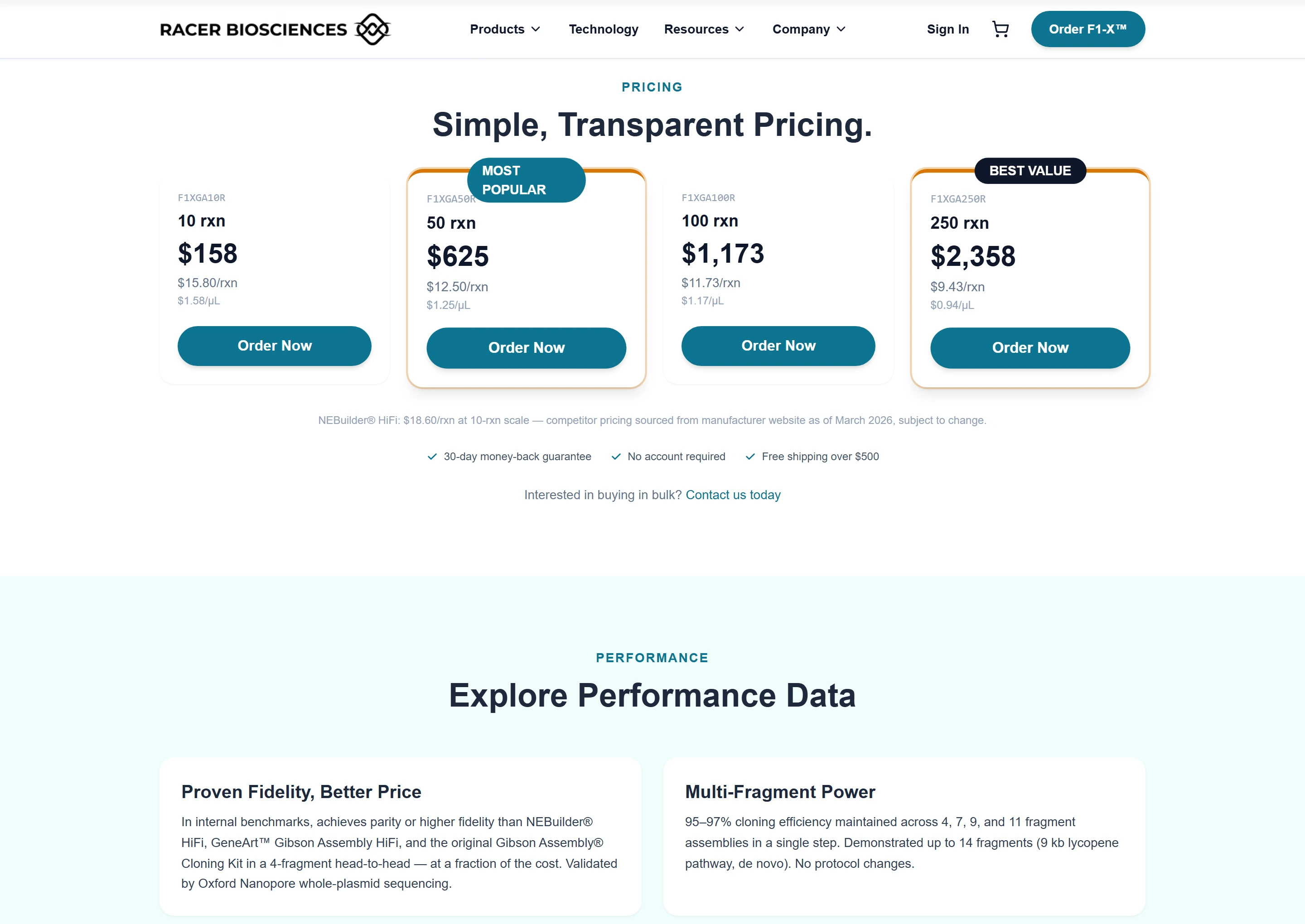 Enlarge imageEnlarge Racer Biosciences live storefront pairing transparent four-tier kit pricing with experimental performance data
Building a checkout path for university purchasing
While some biotech startups pay with a corporate credit card, many university labs require an approved vendor account, a formal purchase order (PO), and Net 30 invoice terms.
To support institutional buyers on the website, I built a four-step purchase-order flow linking HubSpot and Shopify:
- Requesting terms: A buyer submits a short form with their accounts-payable contact and tax-exempt details, which syncs to HubSpot.
- Account approval: Once Racer approves the account, a tag in Shopify marks the customer as PO-approved and updates HubSpot automatically.
- PO checkout in the cart: When an approved buyer logs in, the cart displays a “Submit Purchase Order (Net 30)” option where they can enter their institution’s PO number directly.
- Automated invoicing: Submitting the PO creates a Shopify draft order and automatically emails the official invoice to the buyer.
Alongside that online flow, I also handled university orders that came through direct quotes and campus purchasing portals, where vendor registration and accounts-payable rules still needed personal follow-through.
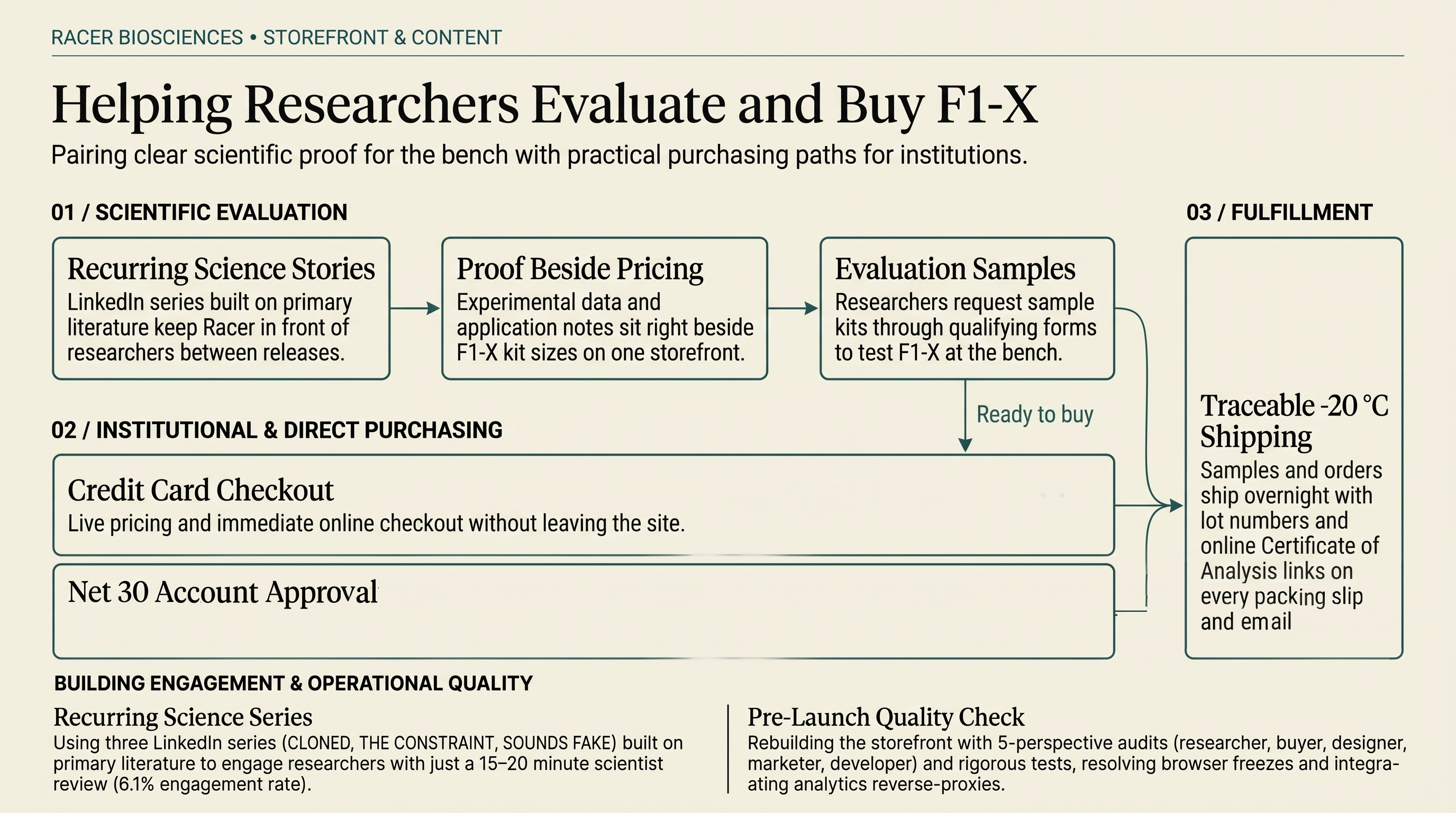 Enlarge imageEnlarge: Storefront architecture pairing recurring literature engagement with direct credit card checkout, Net 30 account approval, and traceable -20 °C cold shipping.
A recurring science-story program built to respect bench time
Most early-stage reagent companies only post on social media when they have a product announcement. To build an audience of working researchers, I created three recurring LinkedIn series: everyday medicines and products made possible by DNA cloning (CLONED, from insulin to Ozempic), the engineering constraints behind historic breakthroughs (THE CONSTRAINT), and real biotechnology stories that sound made up (SOUNDS FAKE, such as farming spider silk without spiders or producing vanilla flavor without vanilla pods).
Because our teammate’s bench time was our scarcest resource, I built an automated content pipeline that turned a written brief and primary scientific literature into a formatted draft and layout. Designed to turn hours of blank-page drafting into a focused 15-to-20-minute scientific review, the workflow put her in charge of strict editorial rules (every claim sourced, historical credit stated accurately, and no hype) and final scientific sign-off, while I handled visual layout, LinkedIn PDF rendering fixes, and publishing.
When audience data showed that some longer slide carousels took more effort than the reach justified, we adapted the format toward single-image stories that were easier to sustain. Across March and April 2026, the posts averaged a 6.1% engagement rate.
 Enlarge imageEnlarge: Racer post showing a dew-covered spiderweb above text about producing spider silk through biotechnology.
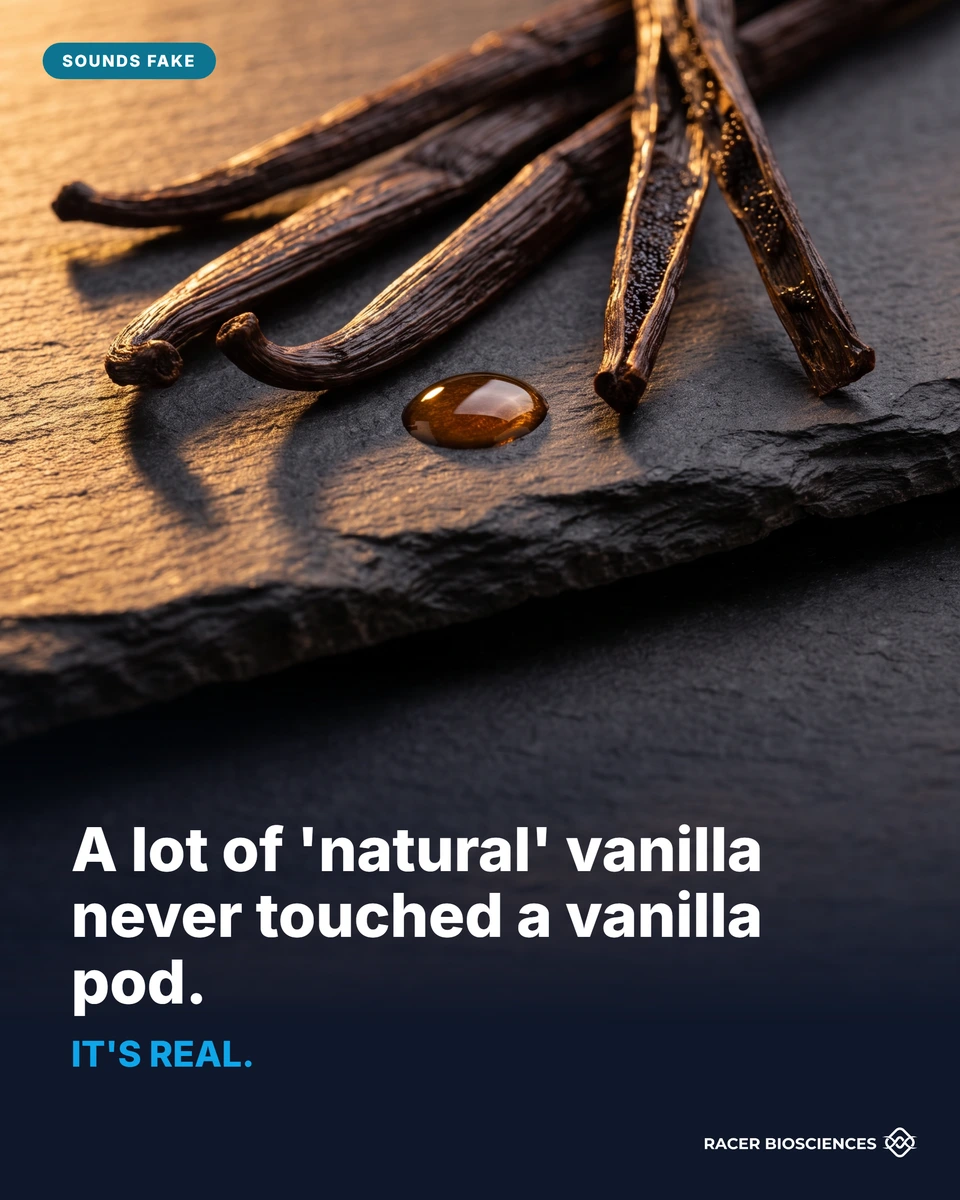 Enlarge imageEnlarge: Racer post showing vanilla pods above text about producing vanilla flavor through biotechnology.
Experience used here
Product positioning · Scientific communication · Custom Next.js & Shopify integration · Institutional PO checkout · HubSpot CRM · AI-assisted content pipelines · Editorial strategy