Telesis Bio & Eton Bioscience
Making in-house DNA production work at scale
Senior Director of Oligo Synthesis · 2022–2023
To assemble full genes reliably, Telesis Bio needed a steady internal supply of oligos—custom short strands of DNA—without staying dependent on outside vendors. While the company already had internal GenE chemical-synthesis instruments, turning that hardware into a predictable daily manufacturing operation required uniting the people, chemistry, and data systems around it.
I brought engineers, synthesis chemists, and operators together into a single 10-person production team owning the instruments, process discipline, staffing, and production records. Under that unified operation, the team completed oligo insourcing and scaled output to 6 million DNA bases per quarter, achieving above 99.8% first-pass yield and above 95% manufacturing uptime.
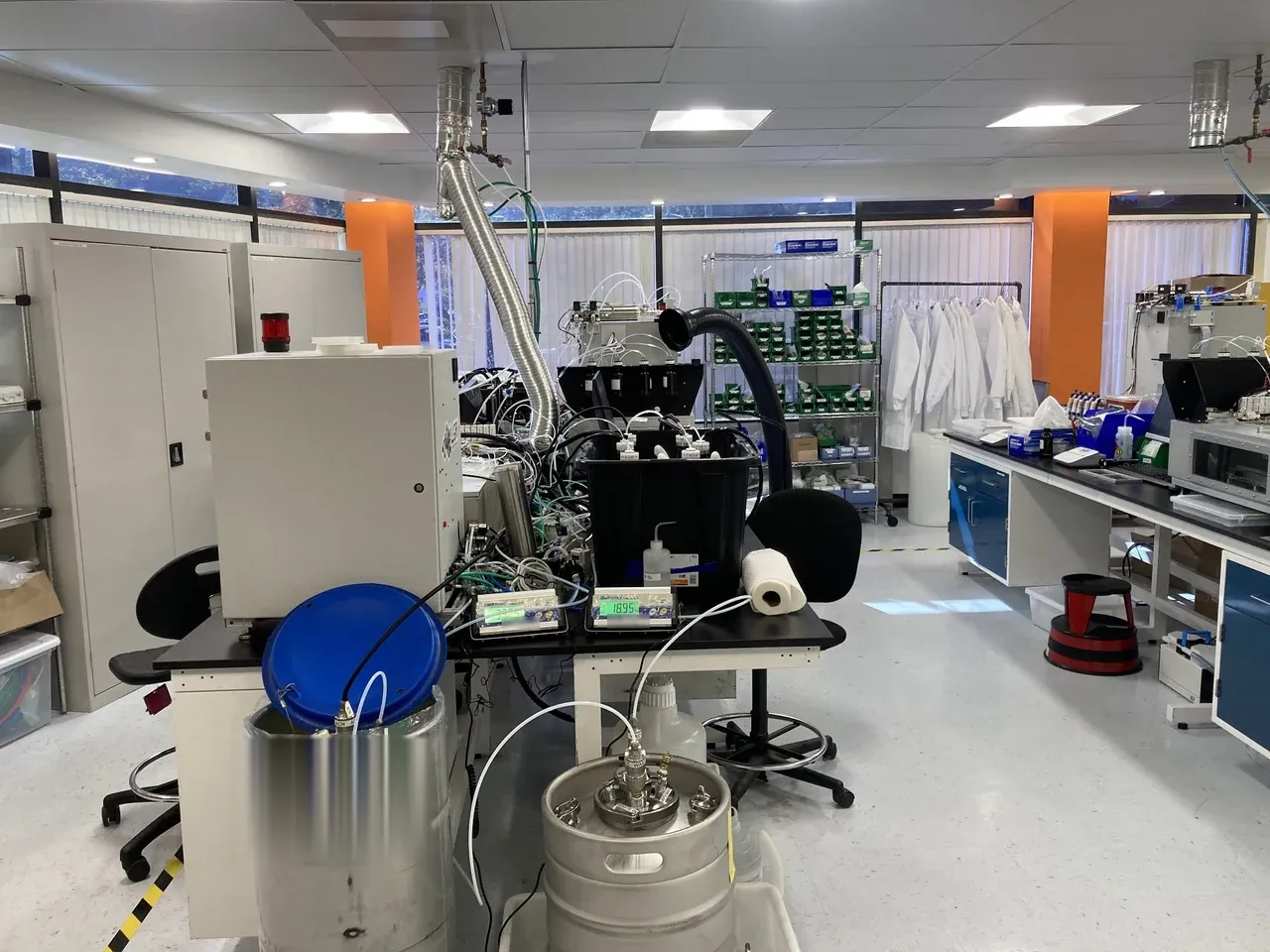 Enlarge imageEnlarge: The Telesis oligo synthesis production laboratory in 2022.
DNA bases per quarter
First-pass yield
Manufacturing uptime
Making the equipment and process repeatable
Scaling daily output required hardware engineers and synthesis chemists to solve problems together on the floor rather than working in separate silos. I aligned instrument upgrades and chemical optimization with preventive maintenance, shift staffing, chemical supply chains, and hazardous-waste workflows so daily runs stayed predictable.
Adding a second plate position on GenE offered a clear path to higher throughput, and I flagged that expansion early—while structuring the roadmap so reagent-delivery and cycle-timing improvements landed first. Doubling plate capacity only paid off once the underlying synthesis run was rock-solid.
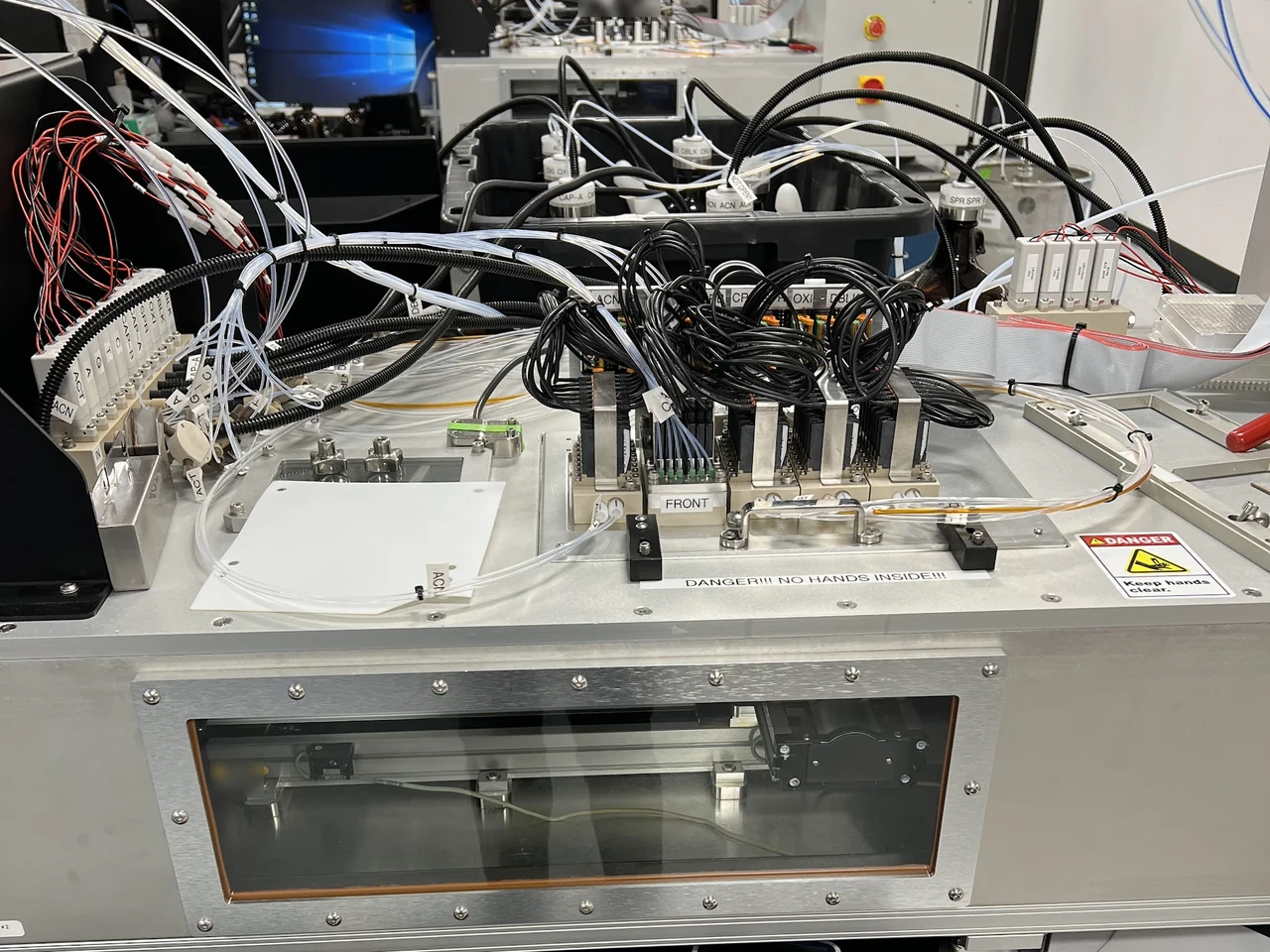 Enlarge imageEnlarge GenE production instrument
Tracking every oligo from order to quality check
Customer demand rarely mapped one-to-one onto a physical synthesis plate: several small orders might share a single plate, while one large gene build spanned several. Whenever individual strands failed a quality check, operators had to remake just those strands and route them back into the right order without losing their run history.
I defined the operational requirements for an internal laboratory information management system (LIMS) and linked database, coordinating across teammates running the analytical assays—who defined the quality assessments—and our software developers, who built the application. Together, the system connected incoming work orders, DNA sequences, plate and well coordinates, synthesis machine logs, and QC results end to end.
Keeping the bench staff directly involved in software prioritization kept development focused on what protected daily production: we prioritized QC tracking and locking active plate records once synthesis started ahead of lower-impact conveniences like automated duplicate scrubbing in run files.
Having sequence data, process logs, and quality measurements joined in one database also let the team apply machine-learning analysis to recurring failure patterns—helping engineers and chemists see whether an outlier came from a difficult DNA sequence or an instrument parameter.
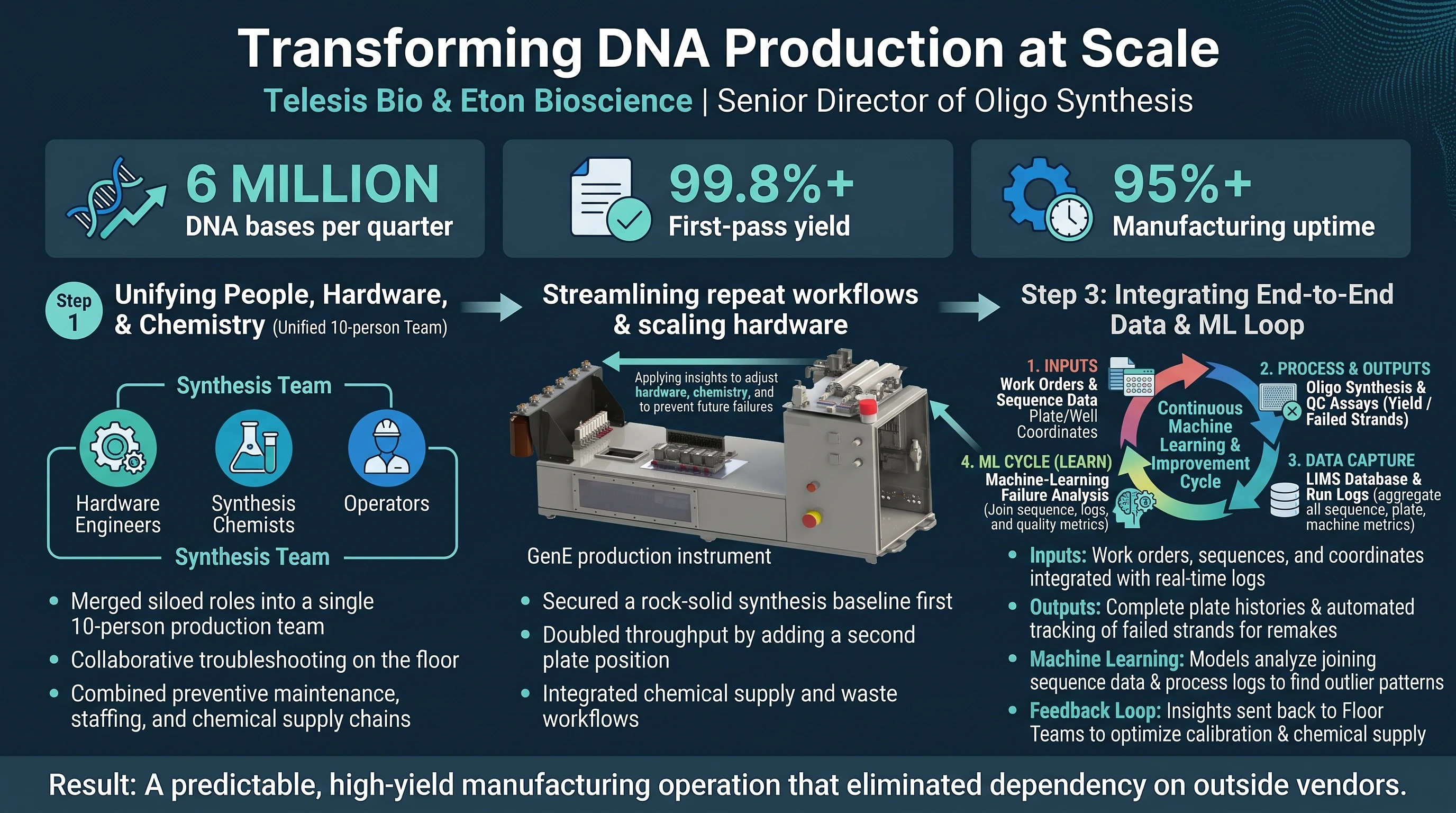 Enlarge imageEnlarge: Transforming DNA Production at Scale — Telesis Bio & Eton Bioscience
Experience used here
Production leadership · Process scale-up · LIMS requirements · Quality control · Production data analysis · Machine-learning applications · Cross-functional leadership · Supplier coordination · Operating models