Data storage
Mimulus
Co-founder & Fractional CTO · 2025–2026
Designing a DNA-storage service
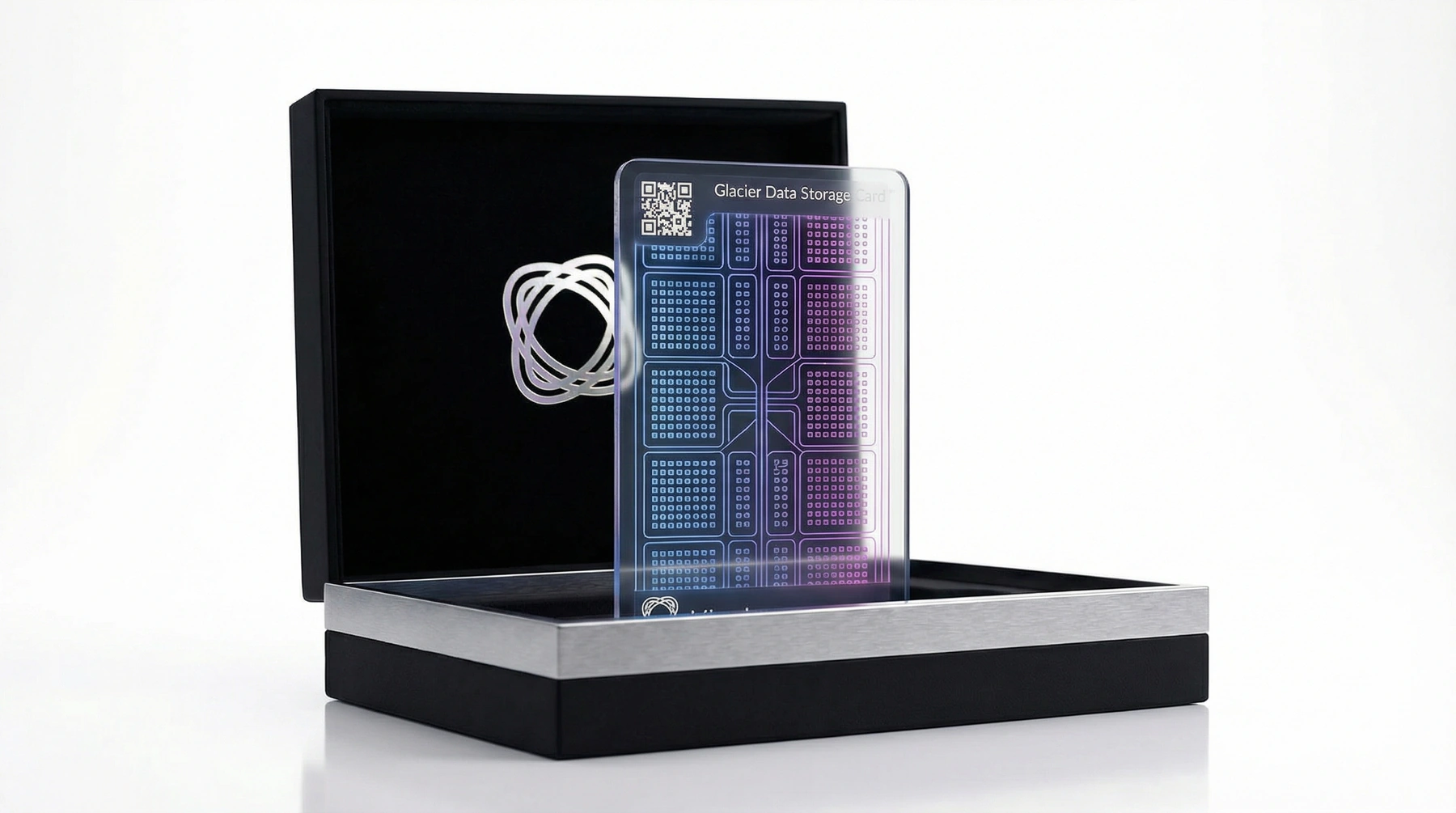 Enlarge imageEnlarge: Concept image of a transparent Glacier storage card standing in an open black presentation box.
Organizations keep huge digital archives they rarely open—film and music masters, medical records, research data—yet storing them on tape and hard drives never stops costing money as hardware wears out and files have to be migrated every few years. Mimulus set out to store those archives in synthetic DNA, with customers uploading and retrieving files online while Mimulus handled all of the laboratory work behind the scenes.
As co-founder and fractional CTO, I worked out how DNA storage could work as both a practical service and a fundable business—defining the staged product roadmap, building the long-term cost and operating models, coordinating suppliers, filing our first provisional patent application, and directing AI coding agents to build our website, cost story, and working digital encoding demonstration.
Designing a service around the archive
A digital file is a string of 0s and 1s, which can be translated into DNA’s four letters (A, C, G, and T) and manufactured as synthetic strands. In the proposed service, dried and sealed DNA would sit on a credit-card-sized cartridge for decades without electricity, using a matching DNA “key” to copy back only the file you want.
I designed the catalog and workflow connecting file encoding, synthesis orders, card wells, and recovery—pairing an external database for everyday lookups with identifying records written into the DNA itself so an archive could still be recovered if the database were lost, while keeping the readers at Mimulus across staged card generations so customers never needed lab equipment.
Connecting the economics to what we could build
Because DNA storage competes against the 30-year cost of replacing and running tape libraries rather than day-one media prices, I built a per-terabyte total-cost-of-ownership model that scaled across archive sizes and set our pricing logic. On the company side, I built the cost-of-goods and quarterly spending model, tied launch dates to real engineering timelines rather than fundraising dates, made that model the single master record across our diligence plans, and created a lean fallback plan when funding timing shifted.
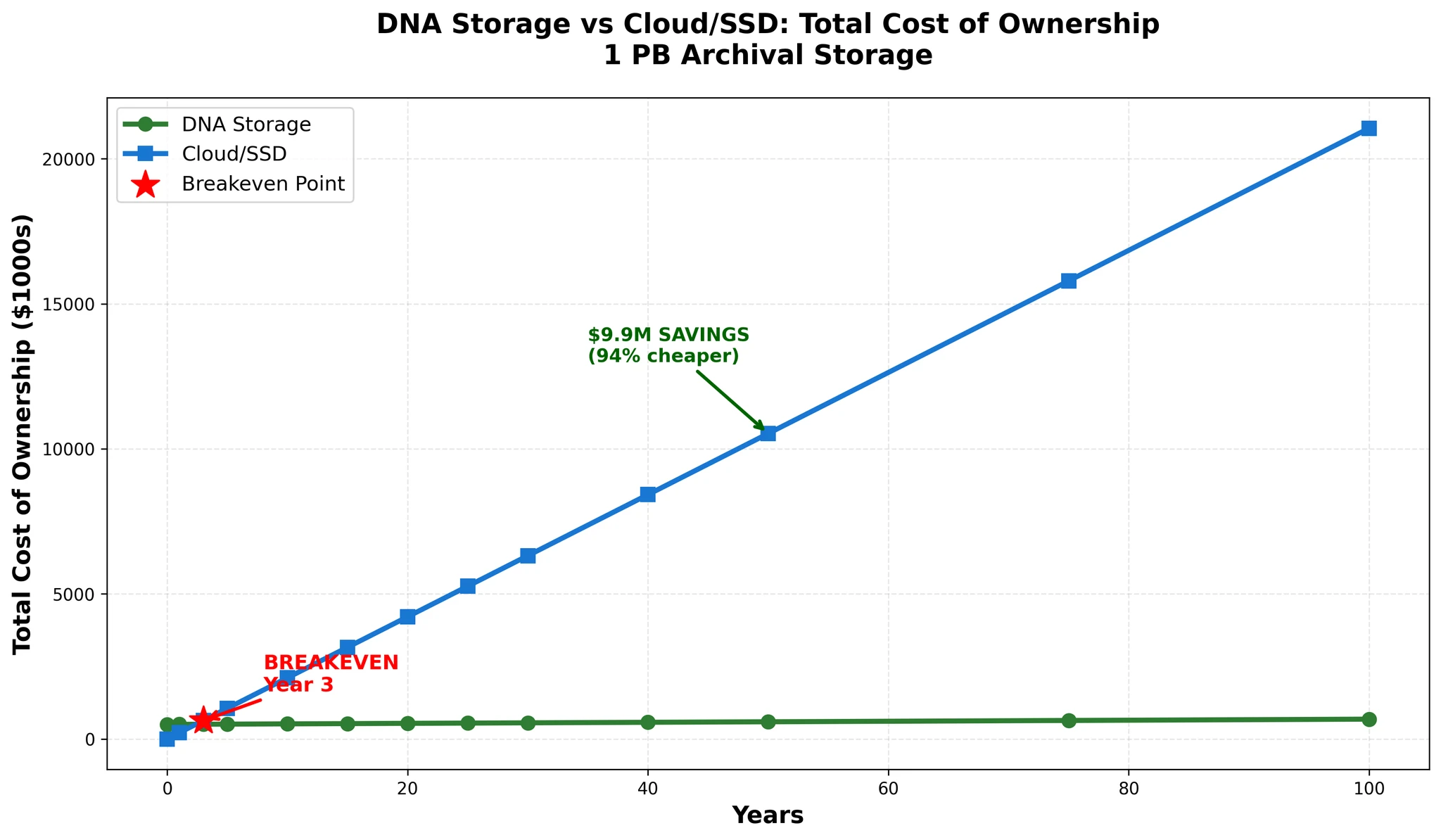 Enlarge imageEnlarge: Total cost of ownership model for a 1-petabyte archive comparing passive DNA storage against recurring cloud and SSD costs.
Making an unfamiliar technology tangible in software
While hardware work was underway with partners, I built three connected software tools with AI coding agents: an interactive cost story built for archive executives rather than spreadsheet analysts, a browser demonstration that genuinely encodes and recovers uploaded files bit for bit across three audience depth levels (while simulating the physical lab steps), and a rebuilt company website. Treating the demonstration as our living system reference also exposed places where written documents or card assumptions disagreed—including catching a drifted redundancy figure before an investor meeting.
Directing suppliers and protecting our IP
Outside partners ran the early DNA-synthesis and card-well bench tests while I defined system requirements, moved card work to milestone-tied payments, shipped DNA test plates, and flagged candidly when an unconfirmed specification on our own side was holding up a partner’s schedule. To make storing small files economical, I also designed our multi-file well-addressing approach and drafted and filed Mimulus’s first provisional patent application.
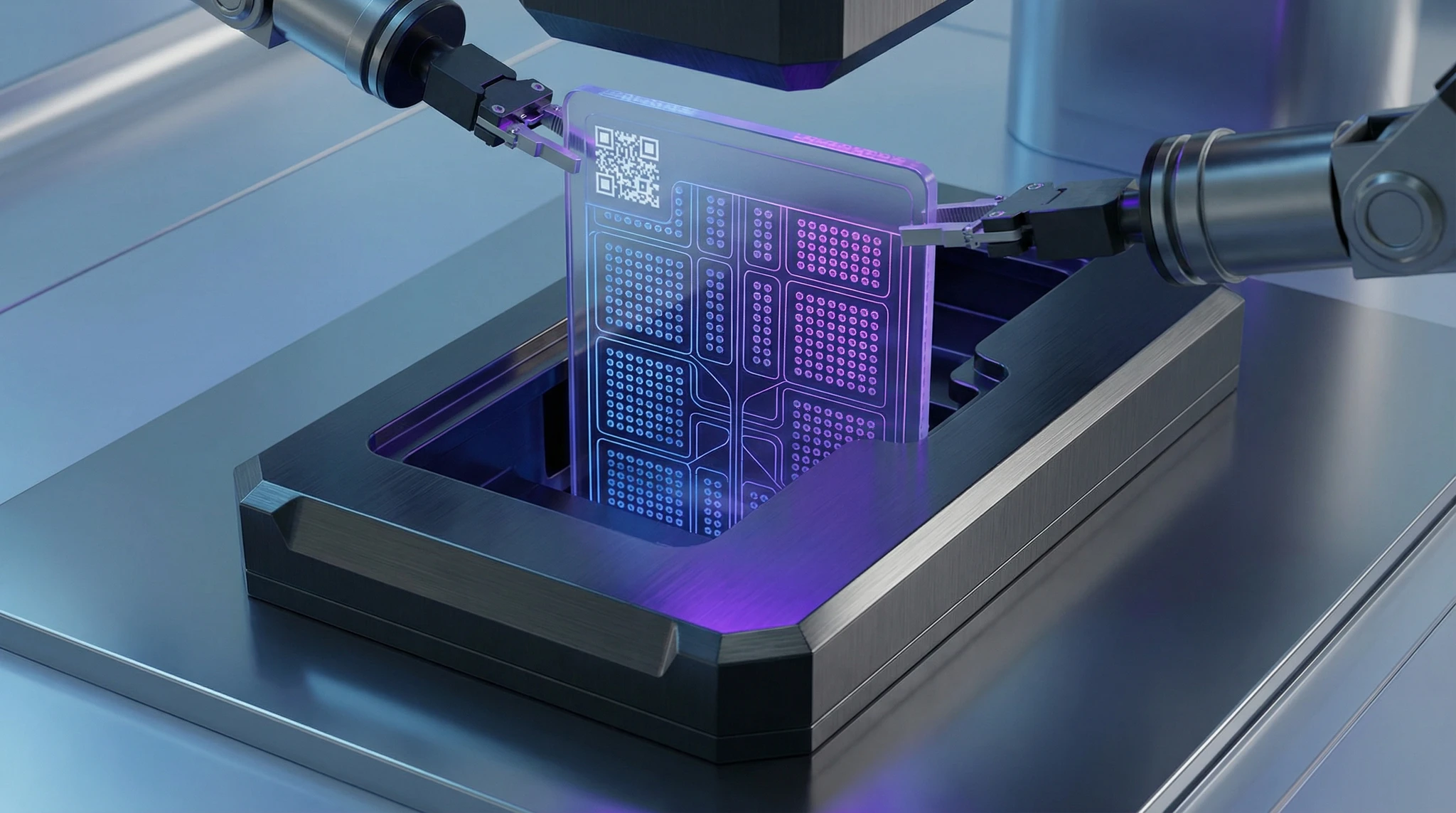 Enlarge imageEnlarge: Concept rendering of automated cartridge handling for loading a Glacier card into an optical and fluidic retrieval dock.
Experience used here
Company building · Product strategy · Systems design · Development planning · Financial modeling · AI-assisted development