DeepDiveBio · MultiTherm
Different programs. One thermal cycler
Early mechanical design and product direction · 2018–2021
Researchers testing several temperature conditions at once often had to tie up a separate thermal cycler for every small batch of samples. I led MultiTherm’s product direction and designed its early mechanics in SOLIDWORKS so independent temperature programs could run side by side across a standard 96-well plate.
As founding CEO, I aligned the mechanical, electrical, firmware, and web-software contributors to build working instruments and place prototypes in outside laboratories for pilot evaluation, using field feedback to guide the sensor and testing upgrades planned for subsequent production builds.
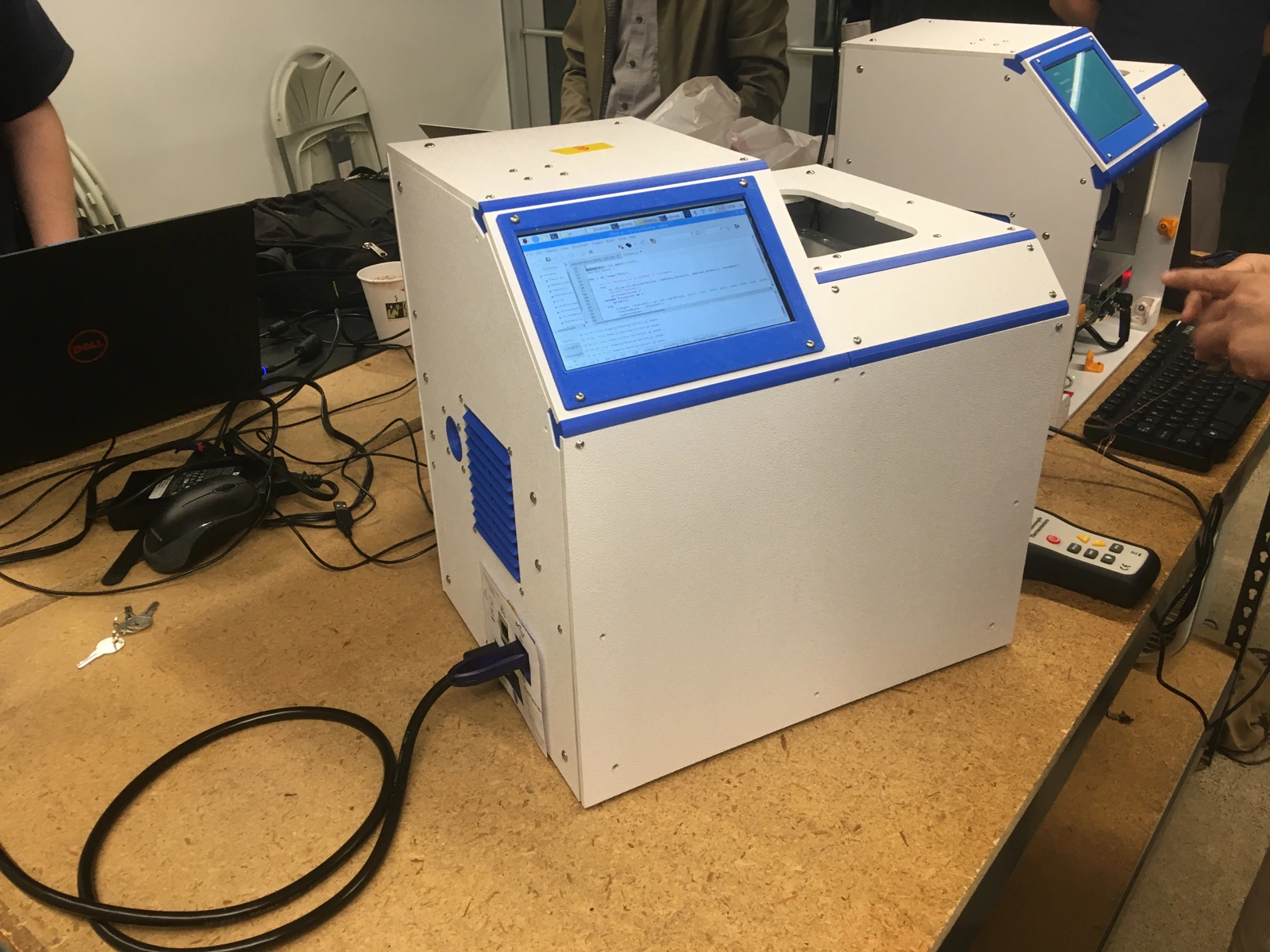 Enlarge imageEnlarge: Two MultiTherm evaluation prototypes built by the DeepDiveBio team.
Fitting independent control into 96 wells
Giving every well its own heating, cooling, and temperature sensing inside the standard 96-well footprint meant packing dense thermal and electrical hardware into tight quarters without making the machine impossible to assemble. I used SOLIDWORKS to design the early enclosure and the mechanical stackup linking the sample wells, thermoelectric elements, and circuit boards.
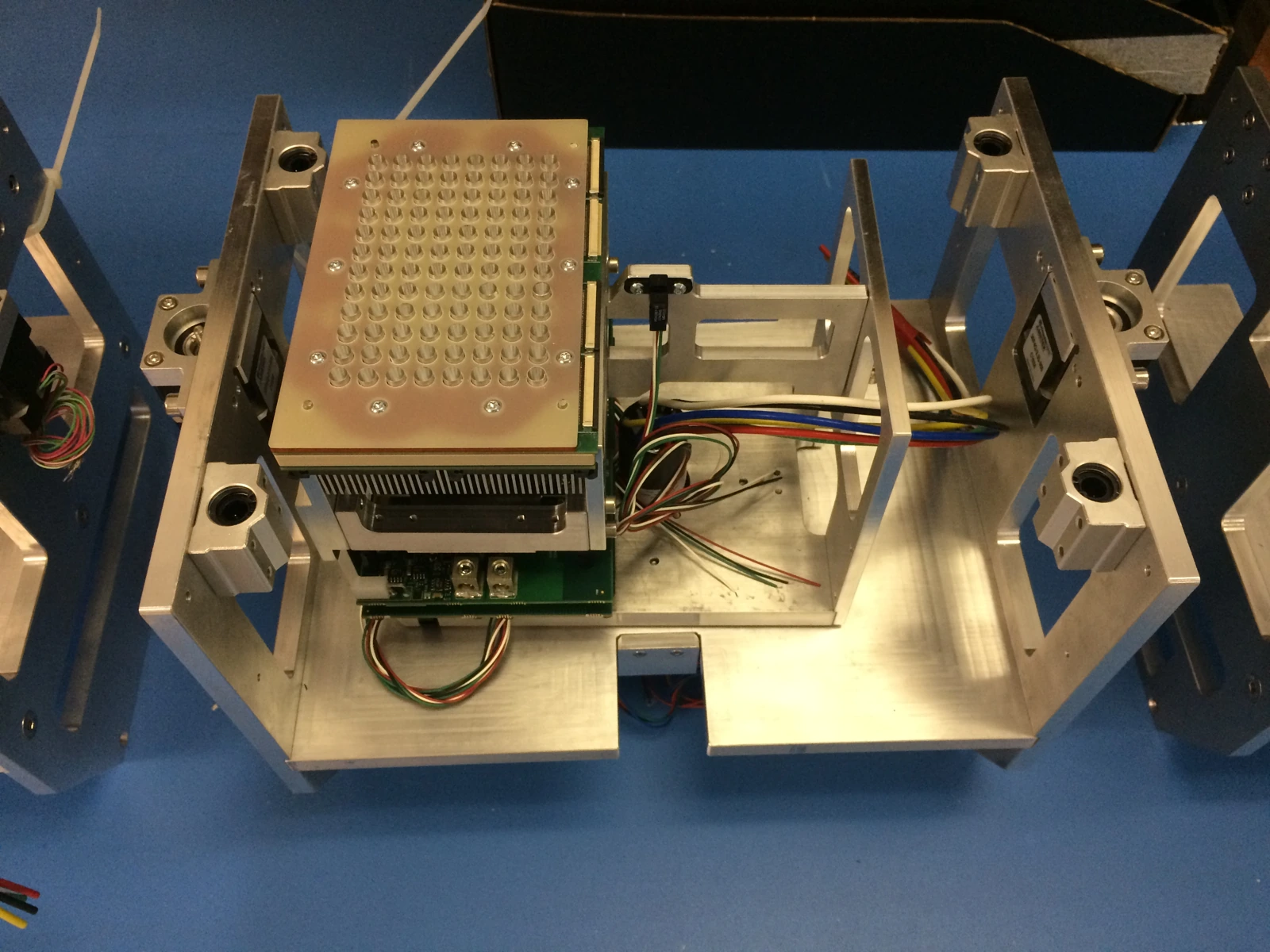 Enlarge imageEnlarge: Exposed MultiTherm core with a 96-well array, layered thermal hardware, electronics and wiring inside its frame.
Because a bad joint inside the assembled core would be buried beneath wiring and boards, our assembly procedure required verifying sensing and heating at every single well before closing up the stack. Electrical specialists designed the schematics and PCBs, while firmware, control-software, and mechanical colleagues carried the full system forward into the evaluation prototypes shown here.
The shared lid limited access
Our evaluation hardware used a single heated lid pressing across the entire plate to prevent condensation in the sample tubes. That meant that even though wells ran independent temperature profiles underneath, a researcher could not open the lid mid-run to load or pull out one small experiment without disturbing neighboring runs.
Prompted by user feedback, I explored individually heated cap concepts with the team so samples could eventually start and stop on independent schedules—keeping those new consumable and electrical requirements as a proposed next-generation upgrade while shipping our evaluation units with the proven shared lid.
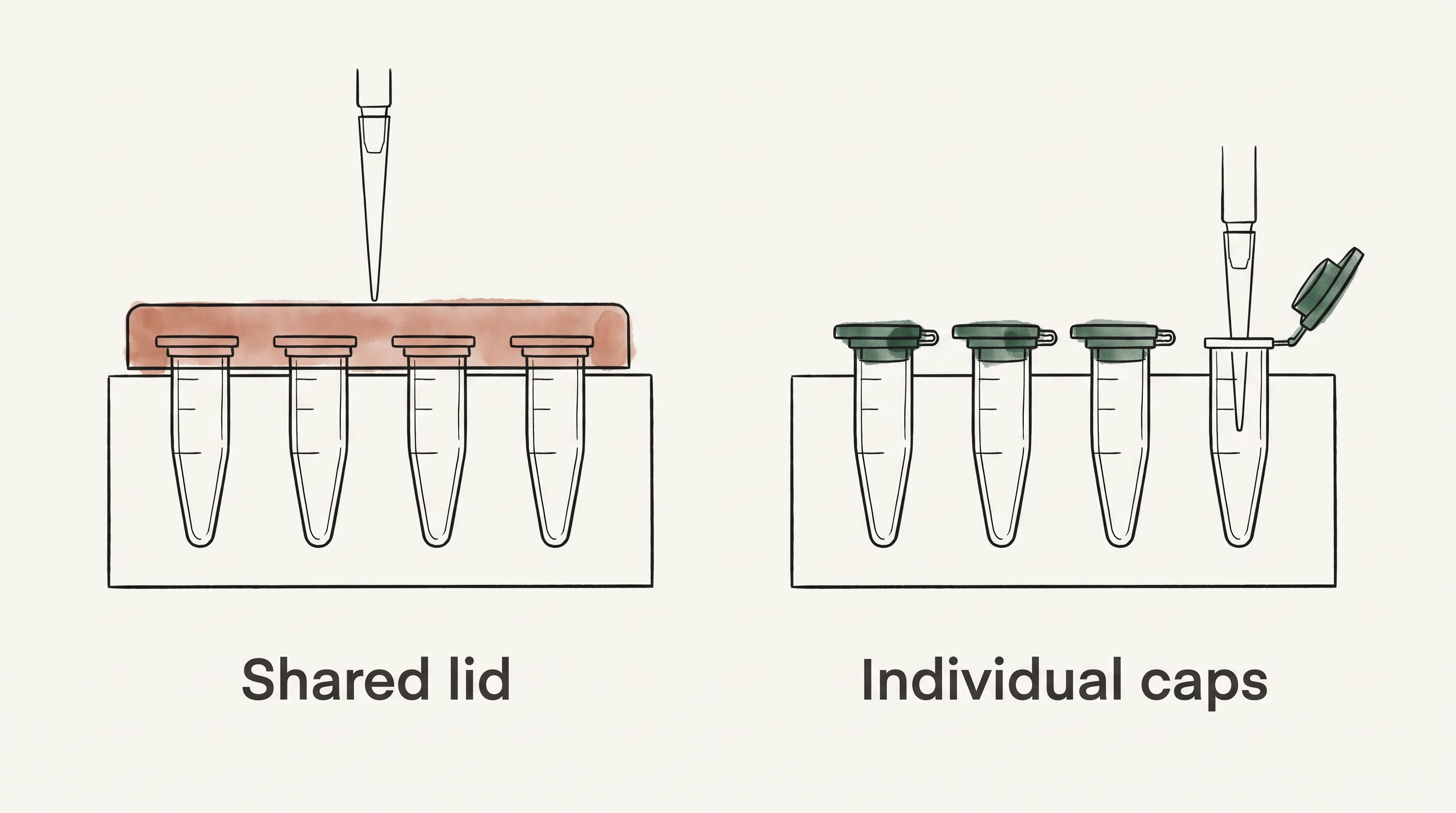 Enlarge imageEnlarge: A shared heated lid locked all 96 wells until every run finished; exploring individually heated caps pointed toward independent start-and-stop access.
Making sensor contact more repeatable
In our early builds, temperature sensors were hand-soldered and manually bonded to each of the 96 wells—delicate bench work where a stressed wire or uneven bond could knock out a well or skew its reading.
I worked with our sensor supplier to define requirements for a spring-clip sensor arrangement that would seat repeatably against each well and mate directly to a revised circuit board. Supplier engineers developed the clip design while our electrical specialists revised the board layout, establishing a manufacturable path away from manual bonding ahead of prototype validation.
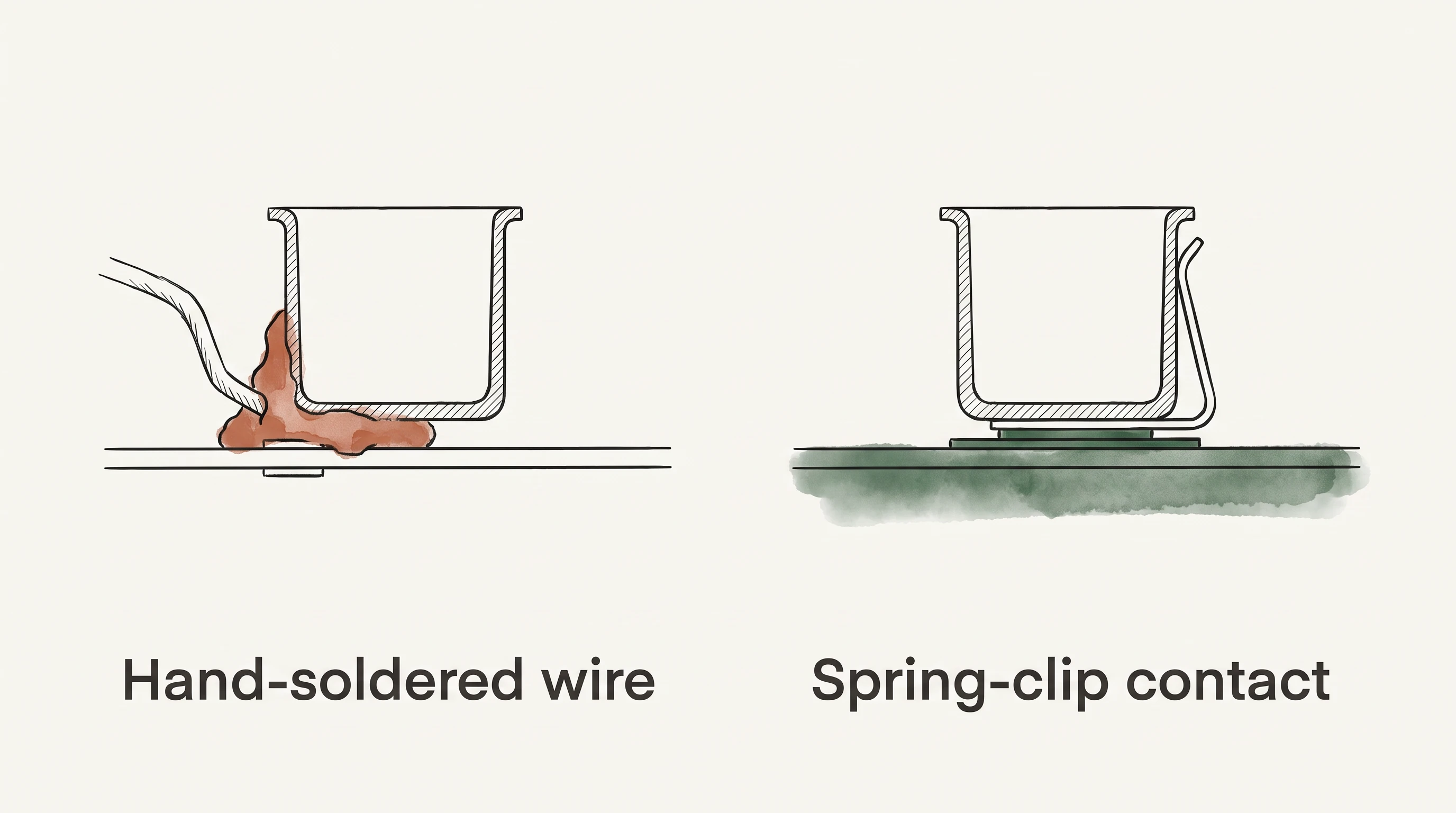 Enlarge imageEnlarge: Moving from delicate hand-soldered sensor leads to a board-mated spring clip created repeatable thermal contact without manual bonding.
Testing the complete instrument
When glitches surfaced during a live customer demonstration, I worked with the team to tighten how we qualified complete machines—moving beyond internal engineering test profiles to validate units directly against customers’ own PCR amplification protocols.
Those verification runs targeted error handling, heating and cooling ramp rates, and confirmation that earlier overheating behavior was resolved, alongside ongoing work to improve assembly consistency and validate the spring-clip sensor redesign.
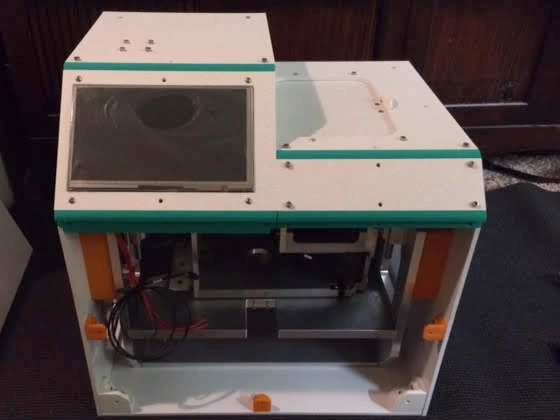 Enlarge imageEnlarge: Partially assembled MultiTherm prototype at DeepDiveBio showing the angled touchscreen bay, recessed plate deck, and open lower enclosure exposing the internal aluminum sub-chassis and harness assembly.
Supporting experiments after delivery
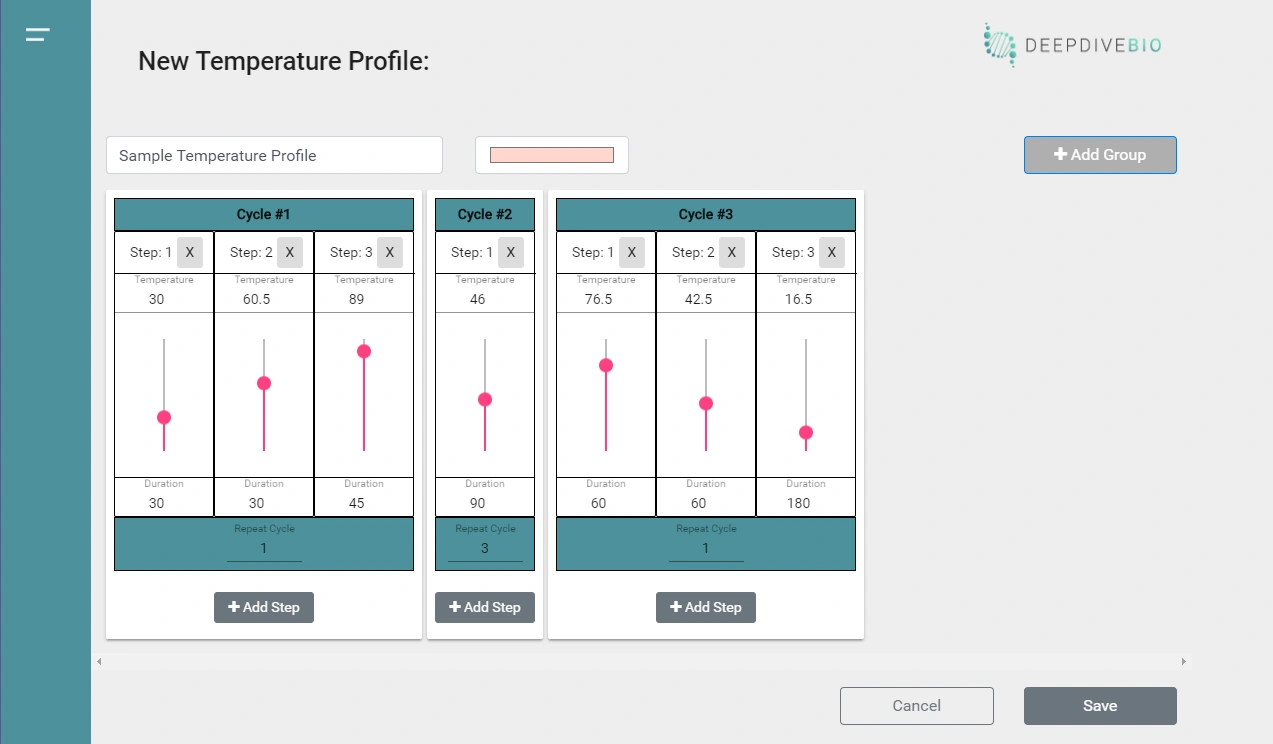
In the browser editor, researchers built protocols from target temperatures, hold durations, and repeated cycles. Because pilot units were running on benches outside our building, I made per-well calibration records, run-temperature logs, and remote software updates core evaluation requirements—connecting the web interface, embedded software, and low-level thermal controls so our team could diagnose field runs remotely.
Experience used here
Product direction · Mechanical design · SOLIDWORKS · Thermal hardware · Laboratory automation · Engineering coordination