DeepDiveBio
Building a business around MultiTherm
Co-founder and founding CEO · 2018–2021
MultiTherm let researchers run small experiments under different temperature conditions side by side in one instrument. As DeepDiveBio’s co-founder and founding CEO, I raised seed funding, built a 13-person team, and shaped the product roadmap and business plan around turning that capability into a company we could finance and put in front of customers.
Focusing our first release on the thermal cycler and its experiment-planning software meant narrowing a much larger software ambition into a practical product our seed team could actually ship.
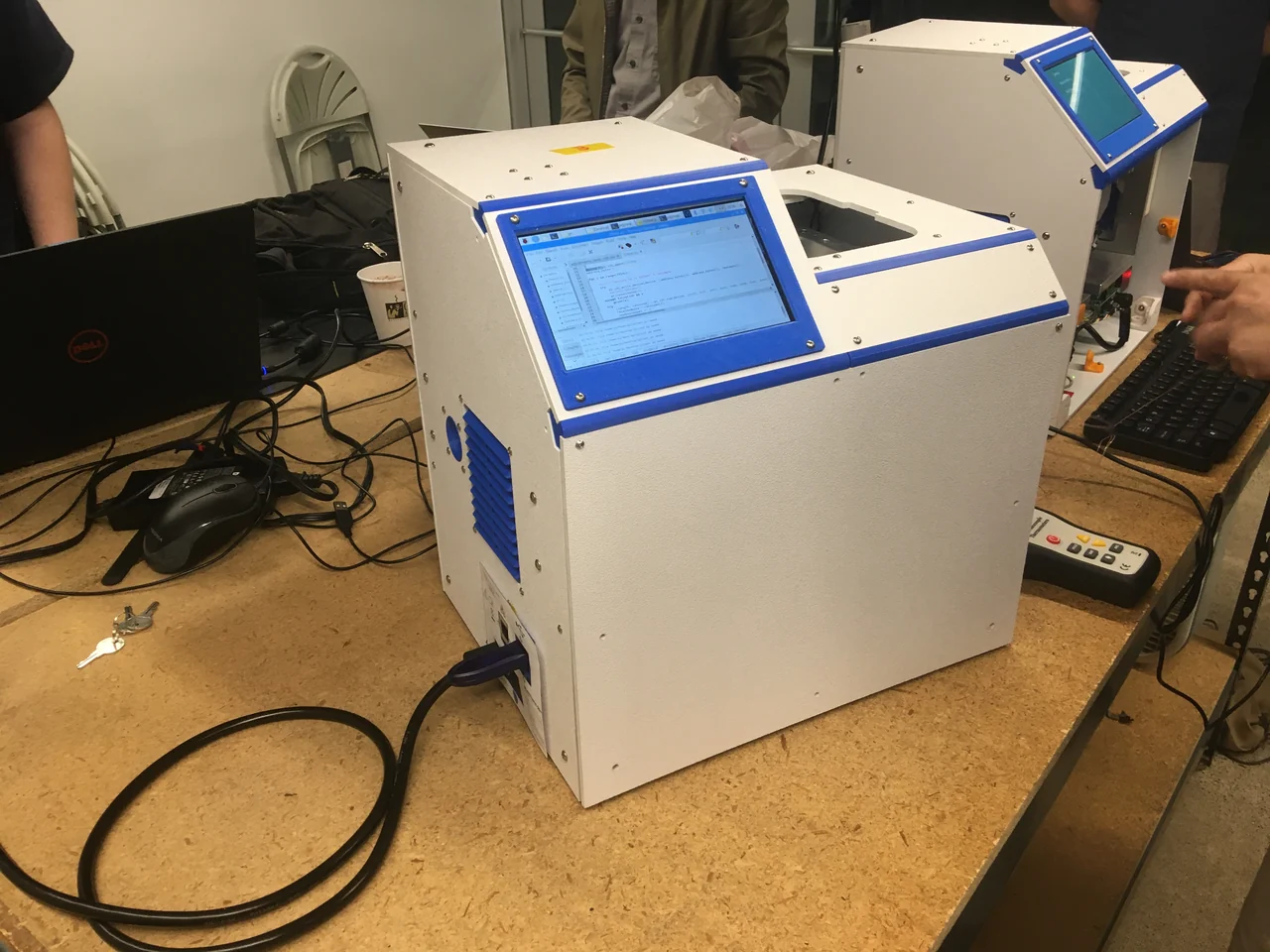 Enlarge imageEnlarge: Two MultiTherm evaluation prototypes running side by side on the laboratory bench.
Choosing the first product
Our earliest ambition went beyond temperature hardware: we wanted to link every experiment’s inputs and conditions to its outcomes so accumulated data could help recommend the next experiment. I mapped out that proposed customer workflow while a machine-learning specialist explored concepts for recommending assay conditions.
Working with our advisers, I made the call to build the multi-program thermal cycler first. Running independent protocols at the same time solved an immediate bench problem within our team’s budget, whereas laboratories did not yet have the structured starting data a learning service required.
With our software engineers, we built MultiTherm’s browser portal so researchers could create temperature profiles, set step temperatures and hold times, assign different programs visually across the 96-well grid, reuse shared team protocols, and send runs straight to the instrument—keeping the proposed DataTherm recommendation service as a later stage on the roadmap.
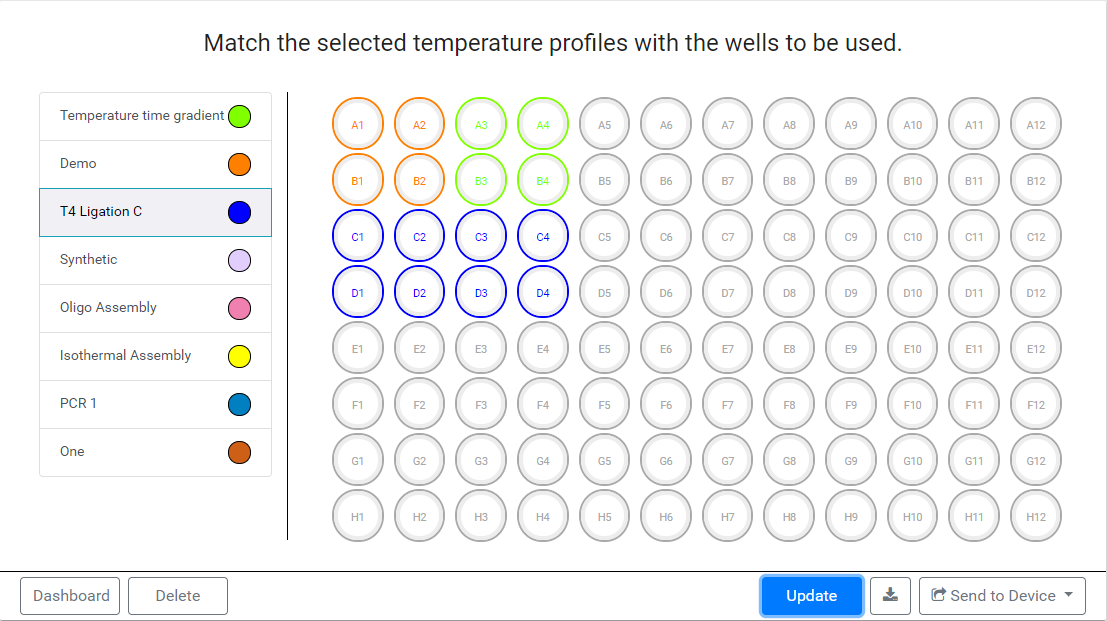 Enlarge complete interfaceEnlarge the complete MultiTherm assignment interface
Learning where MultiTherm would be useful
To avoid hearing only polite encouragement from friends of the engineering team, I brought in business-development help—including a January 2019 customer survey and structured lab interviews—to test where independent temperature control actually paid off. Those conversations overturned a naive assumption that every molecular biology lab needed 96 separate programs: labs running routine, established protocols across full plates were well served by standard cyclers, whereas teams developing and optimizing new assays frequently tied up multiple machines with small test batches.
Prospective buyers also pressed on practical workflow questions—how quickly they could edit scripts, whether the machine could connect to lab robotics and LIMS software, and seeing live runs before committing budget.
With colleagues and advisers, I took a working instrument to SynBioBeta, led application and distribution discussions at SLAS, ran live demonstrations of the web-based run editor, and placed prototype units in outside laboratories so researchers could test MultiTherm on their own assays.
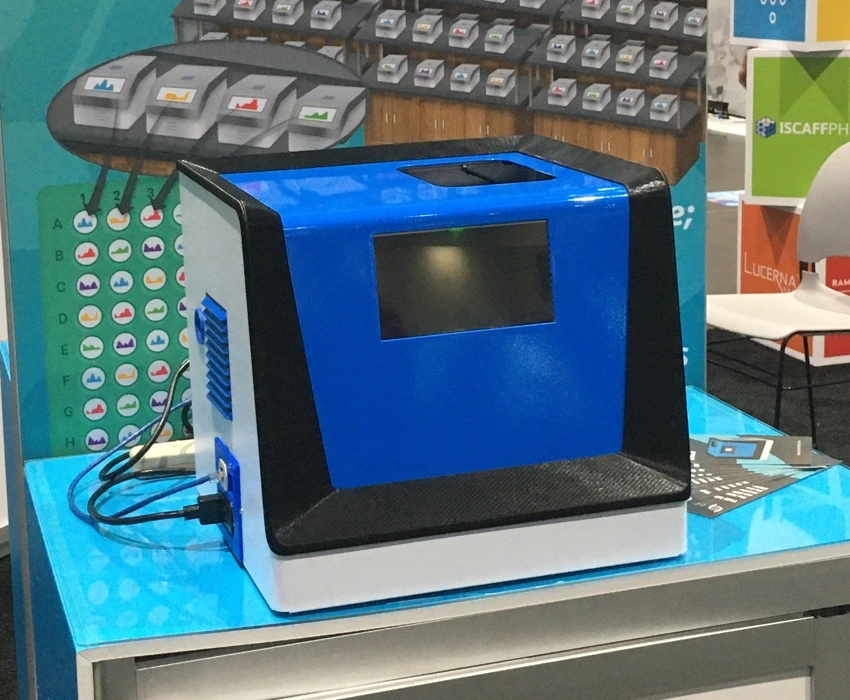 Enlarge imageEnlarge MultiTherm benchtop prototype on the exhibition table at SynBioBeta
Making the buying case
For assay-development labs juggling multiple protocols, we built return-on-investment models comparing a single MultiTherm against buying and tending a bank of conventional cyclers—factoring in reported lab workloads, equipment prices, and technician setup time as planning scenarios rather than measured savings from deployed accounts.
Pricing also had to work for the company building the hardware. With commercial and finance colleagues, I modeled unit economics covering assembly and calibration labor, warranty reserves, field service, and distributor margins, while exploring user- and application-based software revenue alongside the instrument sale.
Funding the next stage
Putting hand-built prototypes into external pilot labs and engineering a repeatable commercial instrument required very different supplier and capital commitments. Working with our engineers and finance colleagues, I built an operating plan sequencing prototype rework, calibration fixtures, and control software ahead of heavier production engineering and hard tooling.
Our operating plan tied outside production-engineering and tooling commitments to evaluation milestones and staged funding, while allowing internal engineers to explore early concepts for a second instrument without taking on external spend ahead of MultiTherm’s launch. While later commercial manufacturing still required additional capital, that discipline let our seed-stage team put working instruments and web software directly into prospective customers’ laboratories.
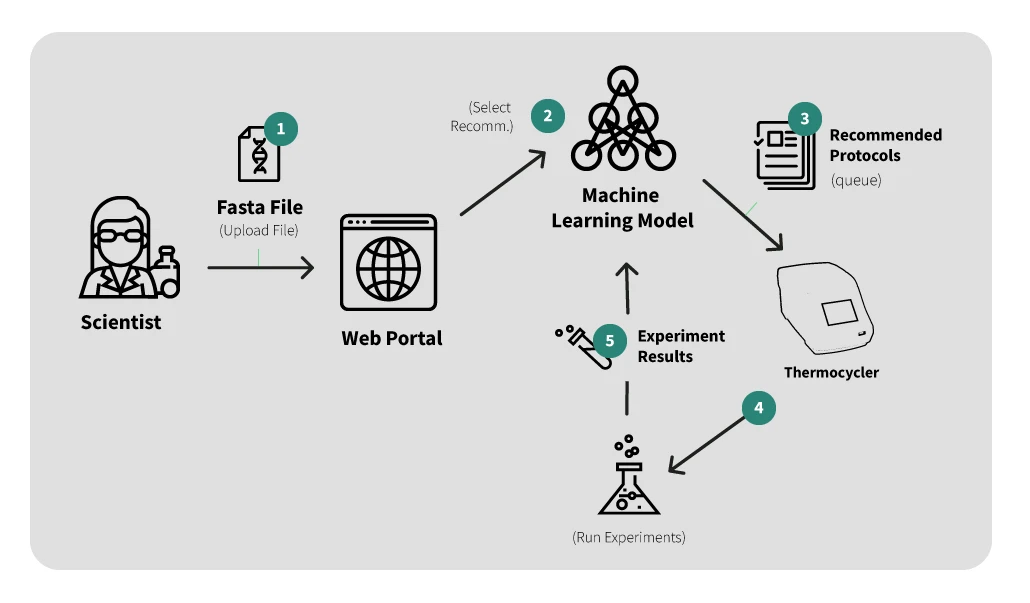 Enlarge imageEnlarge: DataTherm concept workflow connecting sequence analysis and machine-learning protocol recommendations to the MultiTherm 96.
Experience used here
Company building · Fundraising · Team leadership · Customer research · Product strategy · Pricing and financial planning