Independent projects
Alongside my company roles, I develop independent business theses and build local software prototypes to stress-test how they would actually work—from how researchers build credible evidence, to how first-check venture capital can adapt as AI makes startups cheaper to start, to practical ways of putting modular hardware and spare space to work.
Two of the concepts below—Science Graph and MicroVC—sit alongside BenchSwap as independent takes on three bottlenecks between an early idea and a working company: building credible scientific evidence, accessing physical lab space and equipment, and earning early capital. Each was designed to stand on its own merits rather than as an integrated platform; Science Graph and MicroVC exist today as documented business models with local demonstration-data prototypes, while the modular harness and logistics concepts were developed as product and fund proposals.
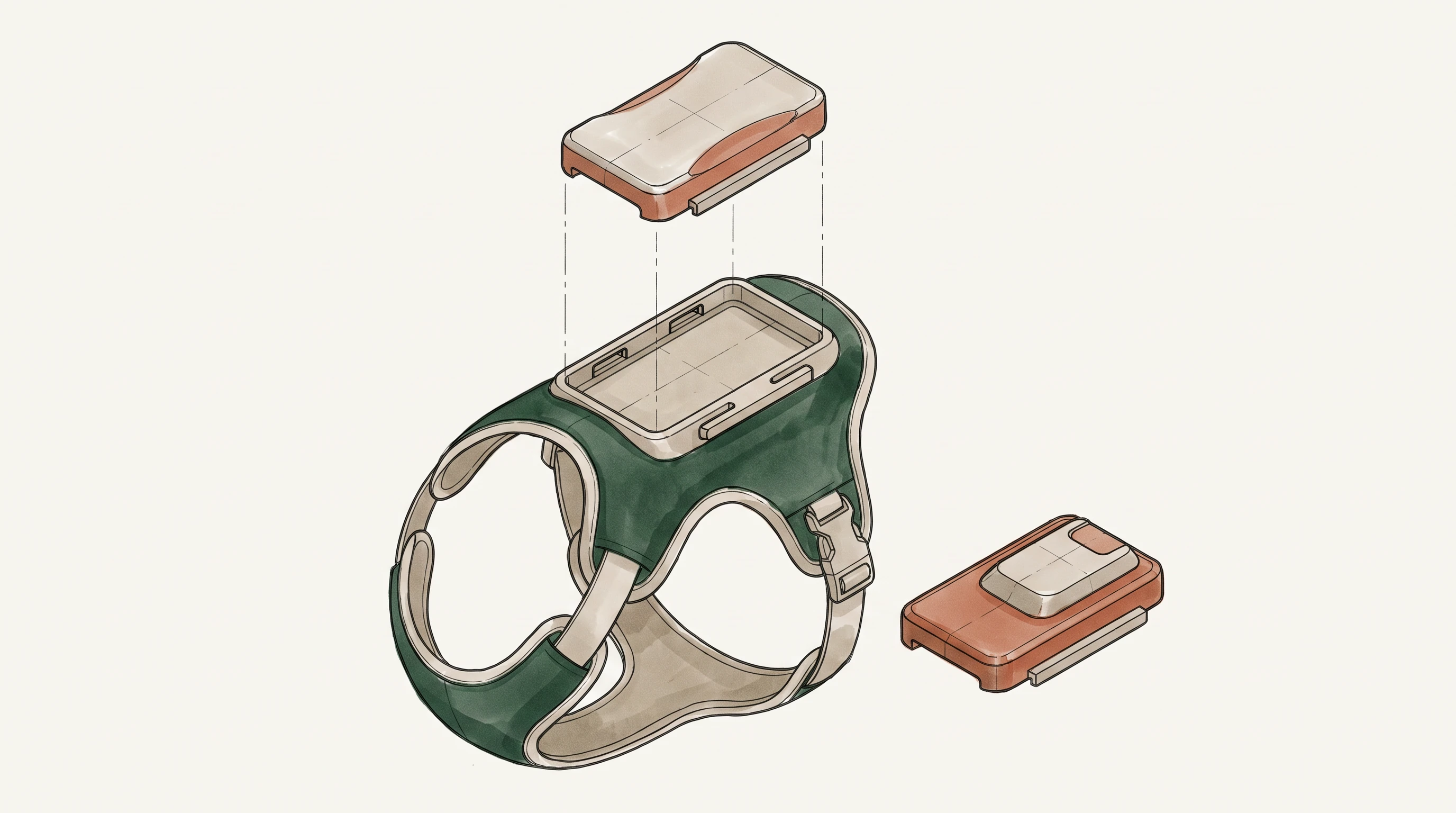 Enlarge imageEnlarge: Exploratory modular harness concept pairing one everyday base harness with interchangeable snap-in training and tracking attachments.
Science Graph · Business thesis & software prototype · 2026
Science Graph — earning scientific credibility through evidence
Scientific discovery isn’t just limited by ideas—it is slowed down by how research gets recorded and recognized. Day-to-day context gets scattered across lab notebooks, code scripts, spreadsheets, shared drives, and manuscripts, while a researcher’s standing still depends heavily on institutional prestige and slow journal cycles—leaving negative results and incremental findings buried. I conceived Science Graph (originally explored as Social Network for Science) around a different premise: what if a researcher could build portable credibility from documented, reproducible bench work rather than institutional affiliation alone?
My initial concept looked like a “GitHub for science,” where researchers published findings openly to build reputation. Early feedback from an academic researcher with a PhD exposed a career-level flaw in that model: researchers doing promising unpublished work have the most to lose if sharing early gets them scooped and costs them first-author priority.
Rather than trying to force a social network that worked against researchers’ own incentives, I flipped the business model to doing-science-first—starting with a low-friction, private workspace that helps a single researcher organize experiments with zero followers, and treating granular disclosure controls and priority records as prerequisites before anyone shares publicly.
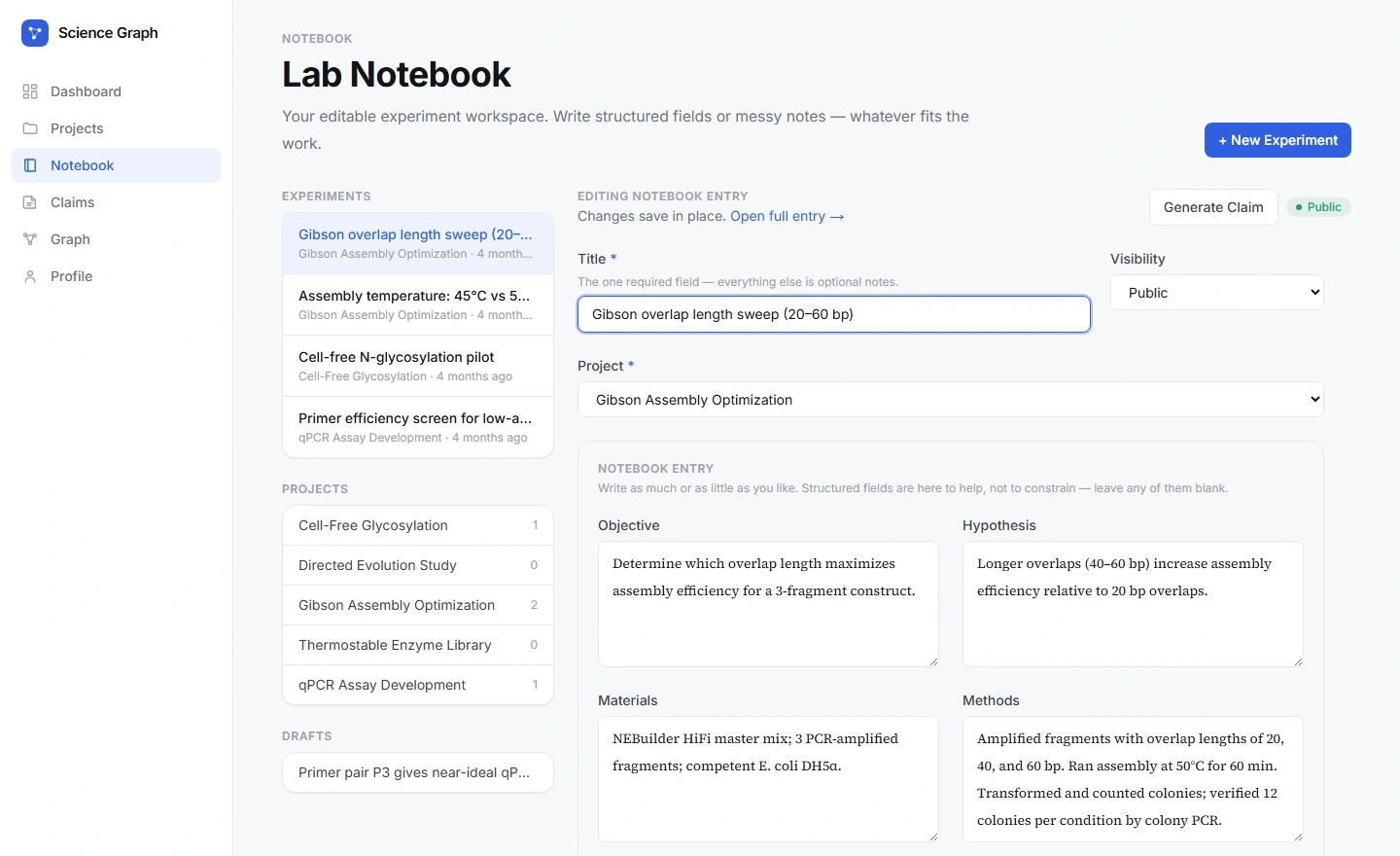
Linking daily bench work to narrow, inspectable claims
Instead of forcing labs to rip out tools they already use—like Jupyter, Benchling, or protocols.io—Science Graph was designed as a connective layer that keeps hypotheses, messy or structured notes, and external resource references tied together. When a researcher is ready to share a result, the unit of knowledge isn’t an engagement-chasing social post or a multi-year paper; it is a narrow, inspectable claim (“under these conditions, X produced Y”) wired directly to the experiments behind it, with no likes, follower counts, or popularity rankings.
To test that workflow, I directed AI coding agents to build a local prototype in June 2026 covering projects, editable lab notes, external reference metadata, and draft-to-published claims—enforcing a strict rule that the provenance links between a claim and its supporting experiments stay intact as projects evolve.
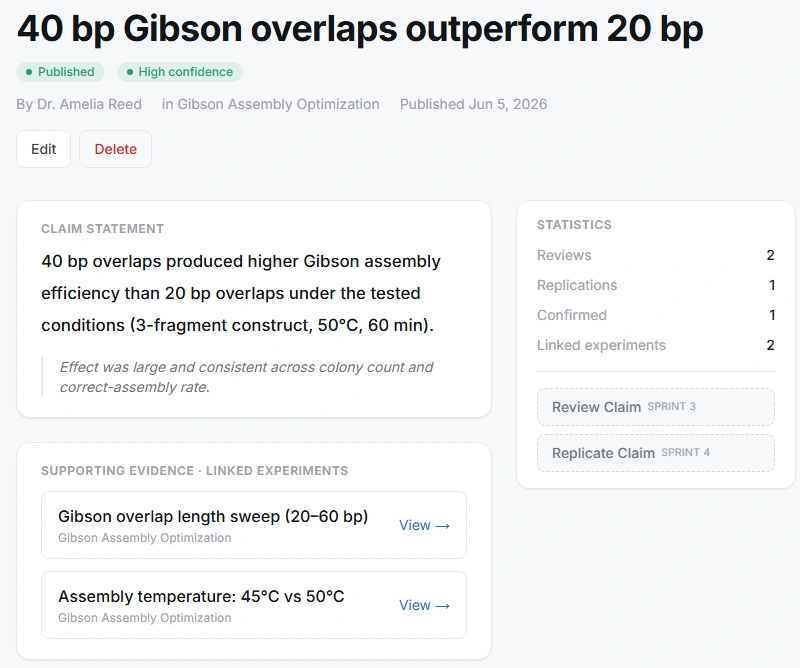
Designing AI critique and monetization around researcher trust
That early researcher feedback also reshaped our product roadmap and commercial model. People at the bench didn’t want AI to rewrite their lab notes; the real value was an optional AI critic that challenges an experimental plan before money and weeks are spent at the bench—flagging missing controls, possible confounders, or weak sample sizes under human review—paired with opt-in introductions to collaborators with complementary skills.
Because monetizing attention or training outside models on private R&D would destroy trust, the business model pairs a free private workspace with paid individual Pro, lab-team, and institutional tiers—leaving multi-user security, cryptographic priority receipts, peer replication, and optional links to BenchSwap or MicroVC as future roadmap stages beyond the local demo.
MicroVC · Venture thesis & software prototype · 2026
MicroVC — rethinking venture capital for the first check
Early-stage startup funding has a growing blind spot: AI coding, research, and design tools are making it dramatically faster and cheaper for a resourceful founder to build a working product, yet traditional venture capital still relies on partner-heavy diligence and fund math that only pencil out for large checks. A founder can incorporate a U.S. company, put in months of unpaid work, ship a prototype, and start customer conversations—and still be too early for a conventional seed fund when a modest first check would unlock their next real milestone.
I developed MicroVC as a proposed AI-native, first-check investment firm—not a SaaS dashboard for other VCs or a public crowdfunding portal. Rather than placing a few binary bets on polished pitch decks or multi-billion-dollar market slides, the thesis backs incorporated, already-active U.S. startups in scalable markets (starting around $250M+ across software and eventually hardware and biotech), takes small, legally documented initial positions to buy learning and optionality, and deploys reserved follow-on capital selectively as verified execution accumulates.
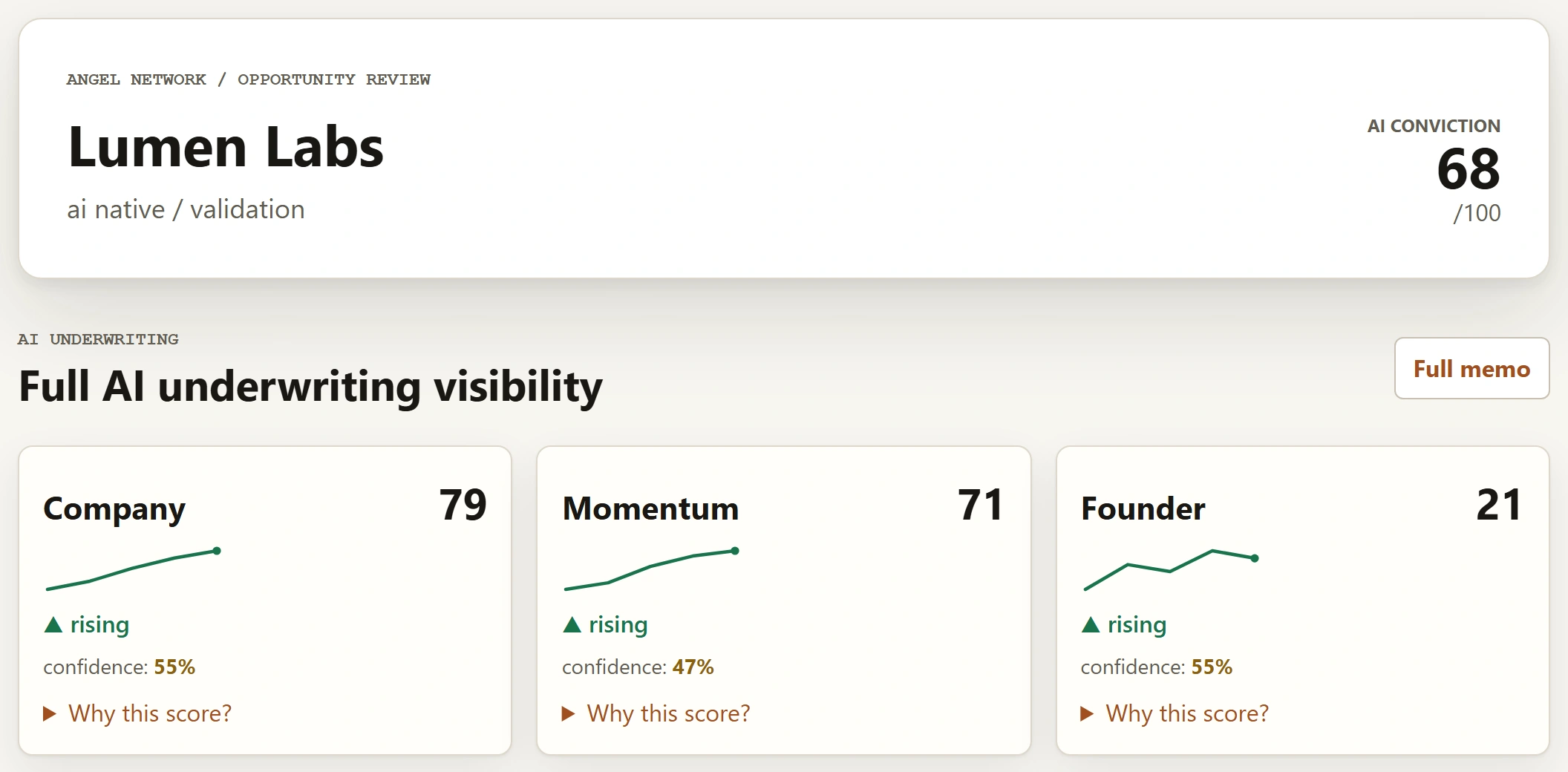
Rewarding trajectory over snapshots—and keeping uncertainty visible
A single fundraising snapshot blurs three very different questions: a well-funded startup can stall for months, while a scrappy founder on a shoestring budget compounds fast. MicroVC separates Founder execution (agency and resourcefulness over pedigree), Company quality (customer problem, demand proof, and unit economics), and Momentum (verified progress per dollar and week), while treating missing evidence and uncertainty as explicit outputs rather than hiding behind false decimal precision.
AI structures the screening, milestone tracking, and underwriting memo at low marginal cost, while human managers retain override authority—with logged reasoning—and control every binding legal or financial commitment.
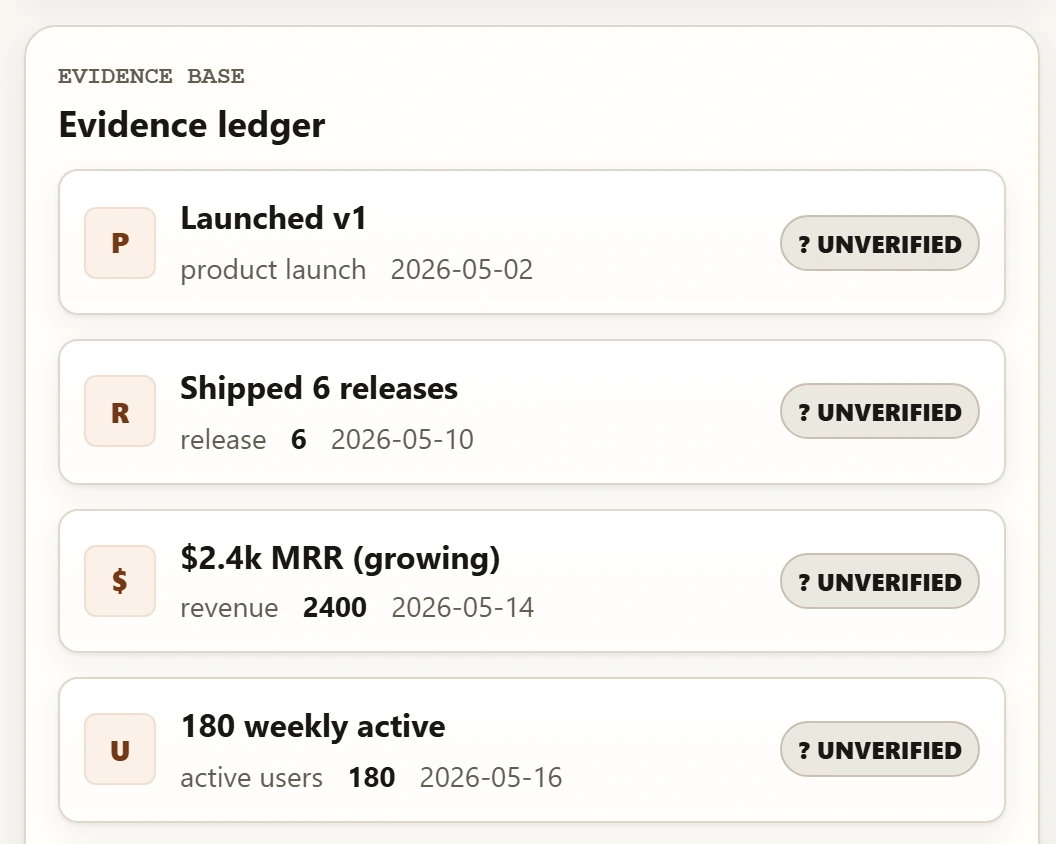 Enlarge imageEnlarge: Selected synthetic product launch, release, revenue and activity entries in the MicroVC evidence ledger.
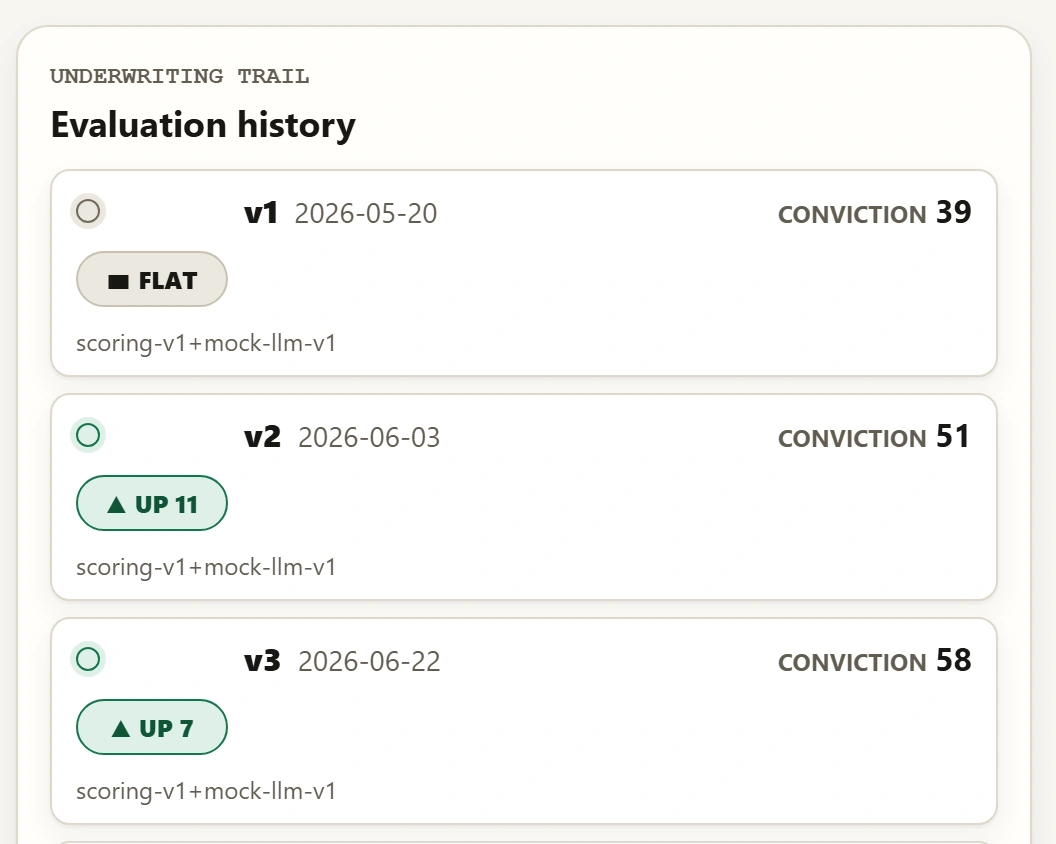 Enlarge imageEnlarge: Three successive evaluations of the same synthetic company, with earlier scores retained.
Building an investment firm, not just a scoring dashboard
Making tiny first checks viable is ultimately a unit-economics and legal-rights problem: closing and tracking costs have to stay low enough not to eat the check, and early stakes need durable, financeable economic and follow-on rights so later institutional rounds cannot casually wipe out early risk. I sequenced the proposed rollout from a small proprietary-capital validation pilot to a managed pooled fund for accredited investors—choosing centralized fund allocation over an earlier deal-by-deal investor-picking concept so LPs get diversified early exposure without underwriting startups one by one.
When early builds of our local prototype produced disconnected menus (Investment Desk, Operations) and simulated balances that didn’t map to real jobs, I pushed the software back to clear role-based journeys for Founders, Accredited Investors, and MicroVC Operators—keeping analytical approvals strictly separate from signed instruments and wired cash. MicroVC remains a pre-launch business model and local prototype running on synthetic company records, rules-based scoring, and deterministic simulated AI responses, with fund formation, legal instruments, and underwriting returns still to be validated.
Modular smart harness · Product concept · 2025
A common harness with interchangeable modules
Dog owners often end up buying separate gear for everyday walks, training, and GPS tracking. In 2025, I designed an exploratory dog-harness concept built around one comfortable base harness with snap-in mechanical and electronic modules, letting an owner swap in training attachments or a location tracker without replacing the entire harness.
I put the proposal together and approached an established pet-products manufacturer, where a warm referral brought the concept to its product-development team for review.
Business concepts · 2024
Two proposals for using existing capacity
In September 2024, I developed and submitted two independent operating proposals to the Amazon Industrial Innovation Fund—one built around neighborhood storage in spare space, and one around renting durable goods suited for repeat shipping.
Separating the host’s space from the warehouse operation
To stage frequently ordered goods closer to customers without leasing full warehouses, the micro-warehousing concept split real estate from daily operations. A homeowner or property host would simply provide spare space and power—paid through a mix of fixed base rent and activity fees—while the operator supplied the storage equipment, inventory tracking, access control, security, and insurance rather than expecting a homeowner to run a warehouse.
Rental goods that can survive the return trip
For the rental concept, I focused strictly on durable tools and seasonal outdoor gear tough enough—and compact enough—to be shipped back and forth repeatedly. Making the unit economics work meant accounting for rental frequency, cleaning and inspection turnaround between borrowers, and shipping weight, since bulky items would quickly lose their rental margin to freight costs.